Zum Hauptinhalt springen

Frogs of Borneo

Frogs of Borneo

Frogs of Borneo

Frogs of Borneo

Frogs of Borneo

Frogs of Borneo

Frogs of Borneo

Frogs of Borneo

Frogs of Borneo

Frogs of Borneo

Frogs of Borneo

Ansonia longidigita

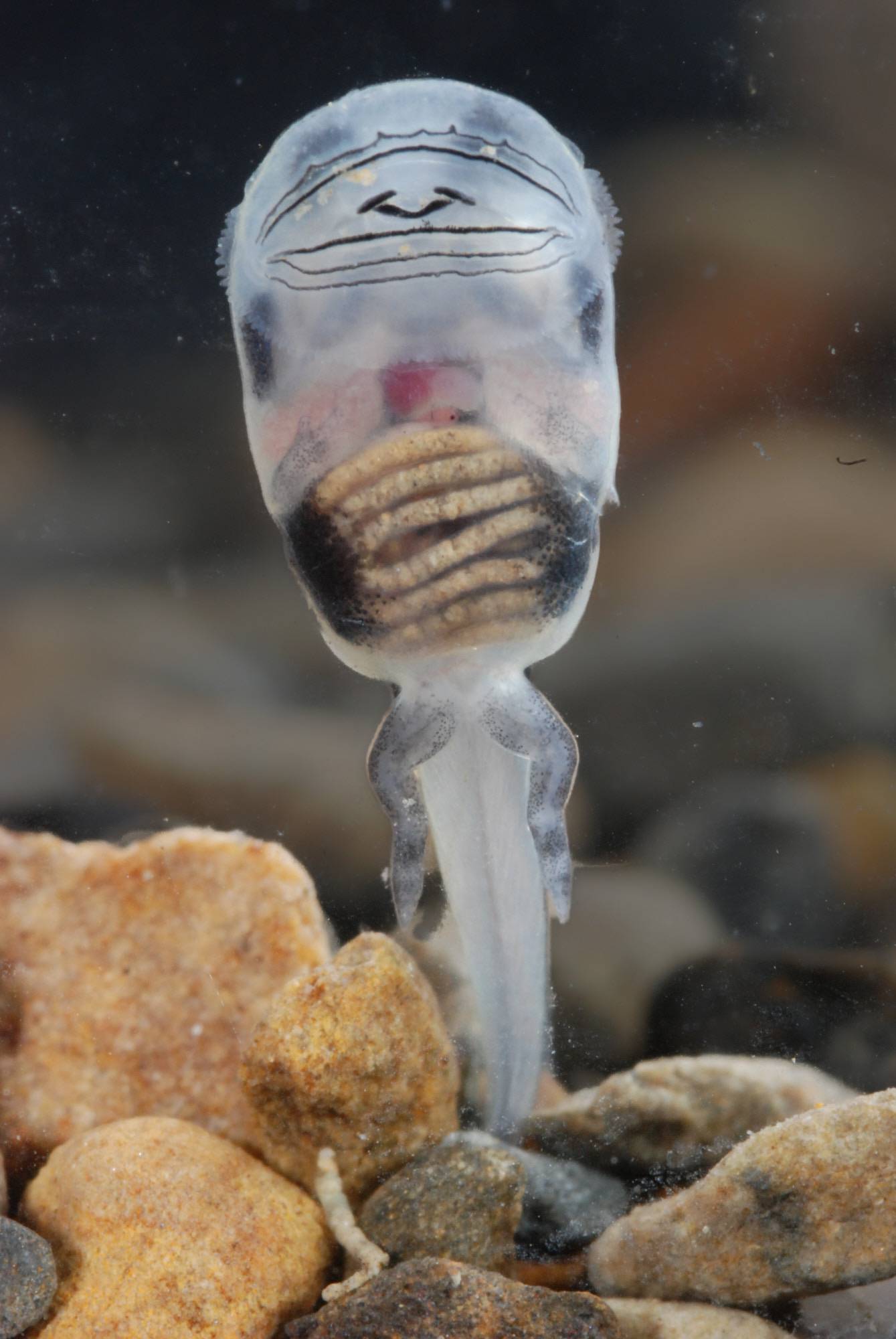
A small tadpole inhabiting lowland to high-elevation streams, typically in sections with moderately fast currents. It adheres to rocks while feeding on algal growth. Compared with A. leptopus, it prefers faster currents and continuously maintains its position by attaching its oral sucker to the substrate. Tadpoles rarely occur in abundance, and their small size often requires careful searching in suitable habitats.
  • Family:
    Bufonidae
  • Genus:
    Ansonia
  • Ecomorph:
    exotrophic, lotic, rheophilous, suctorial
  • Waterbody Type:
    flowing
  • Water Column:
    rock surface
  • Feeding Type:
    feeding, hard surface grazer, omnivorous, rasping
  • Size:
    14 mm
  • Development:
    larva, tadpole
  • Adult:
    Ansonia

Coloration

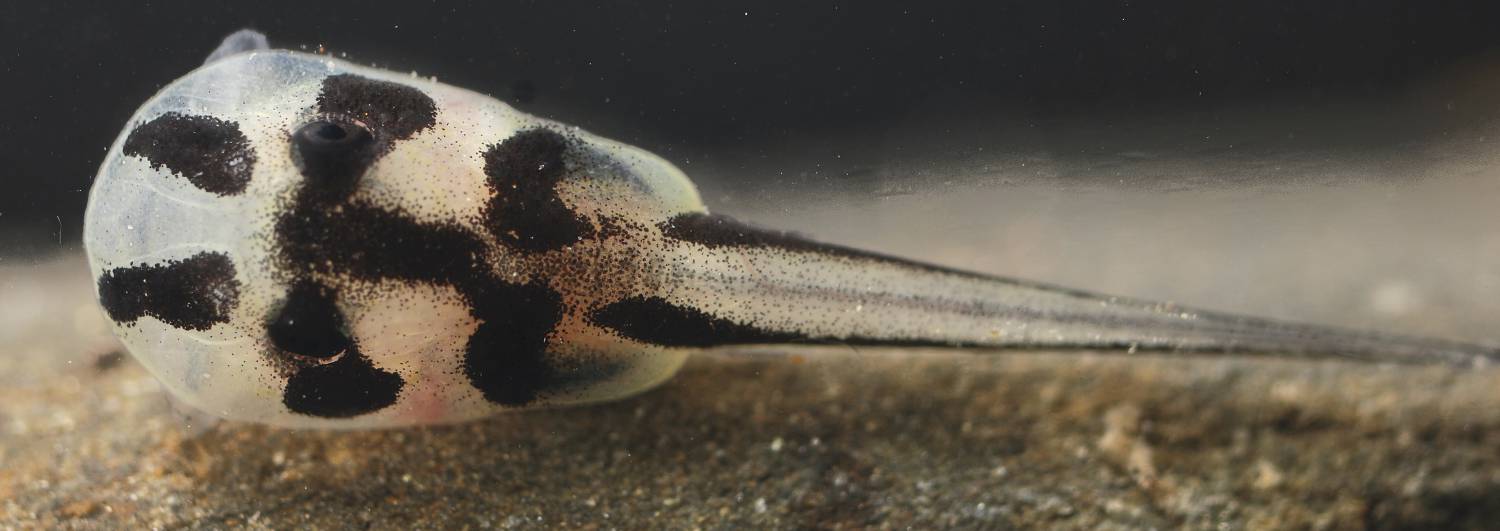
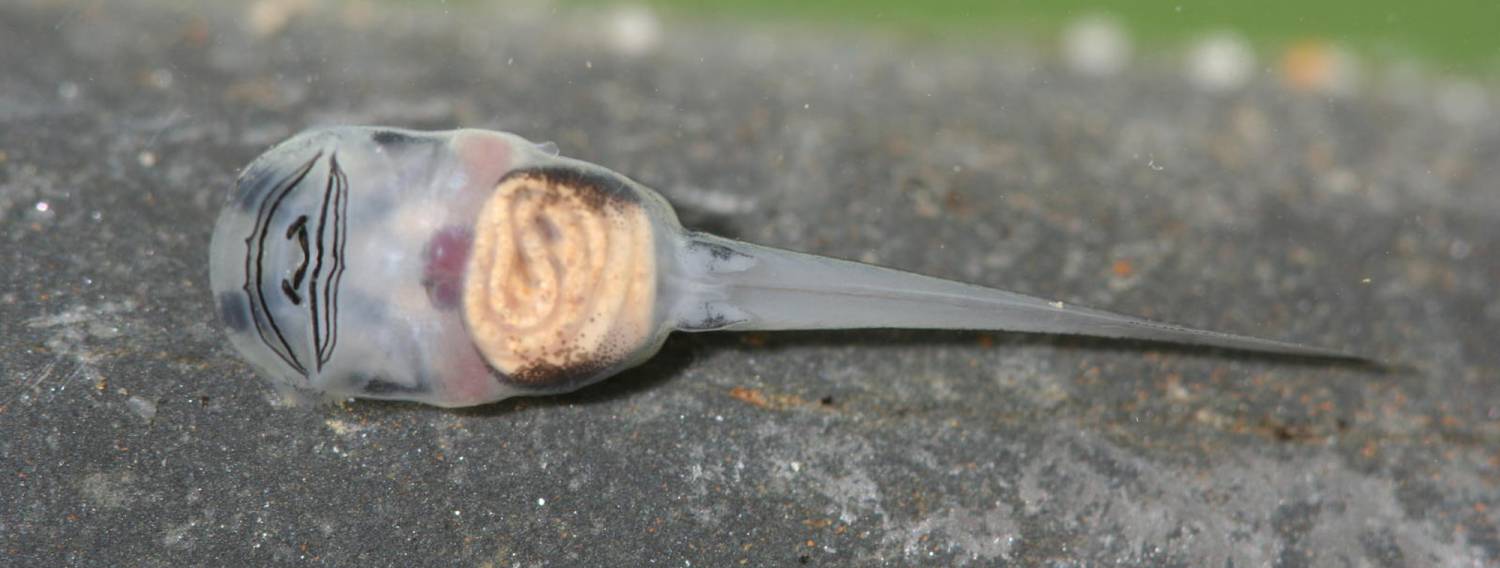
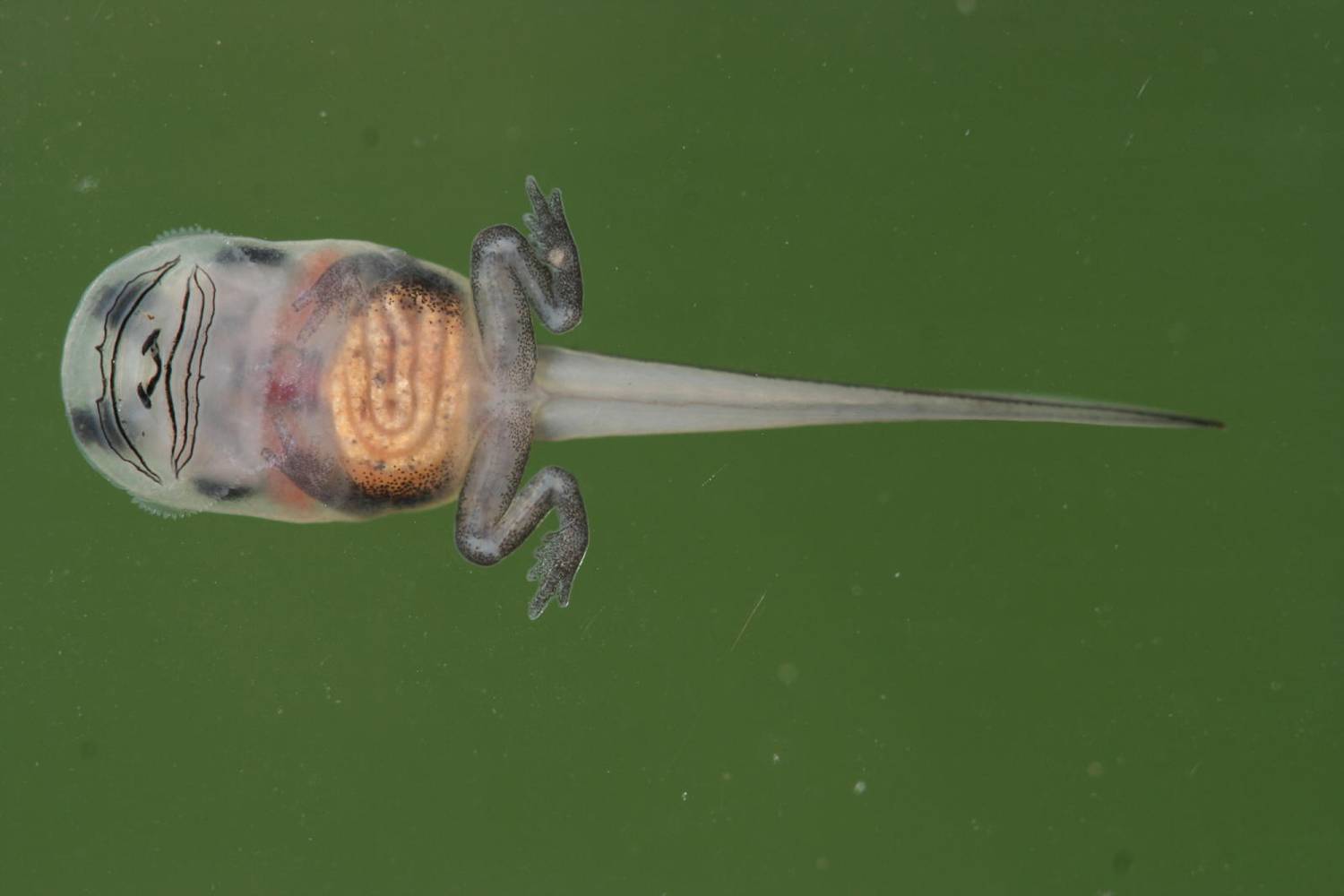
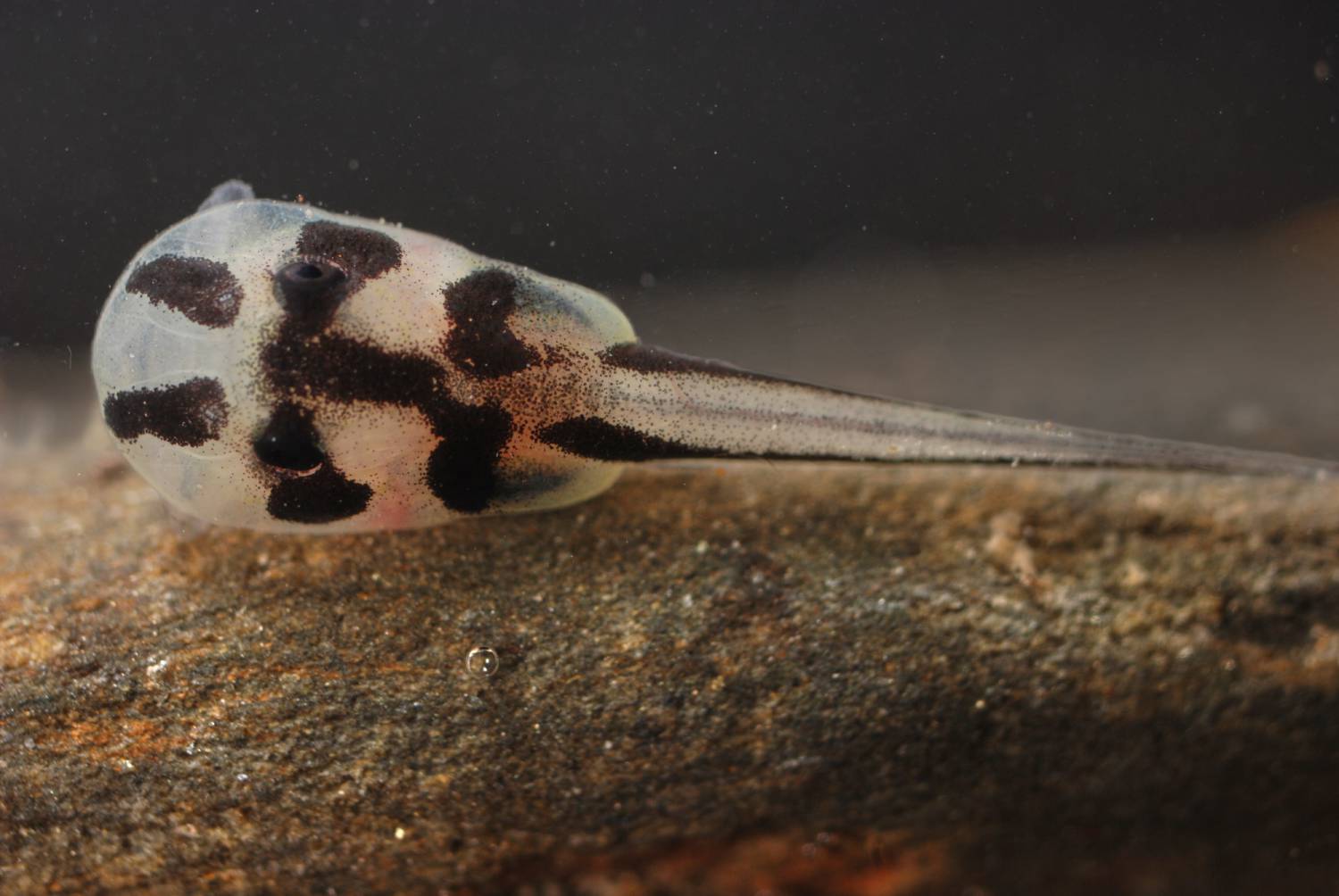
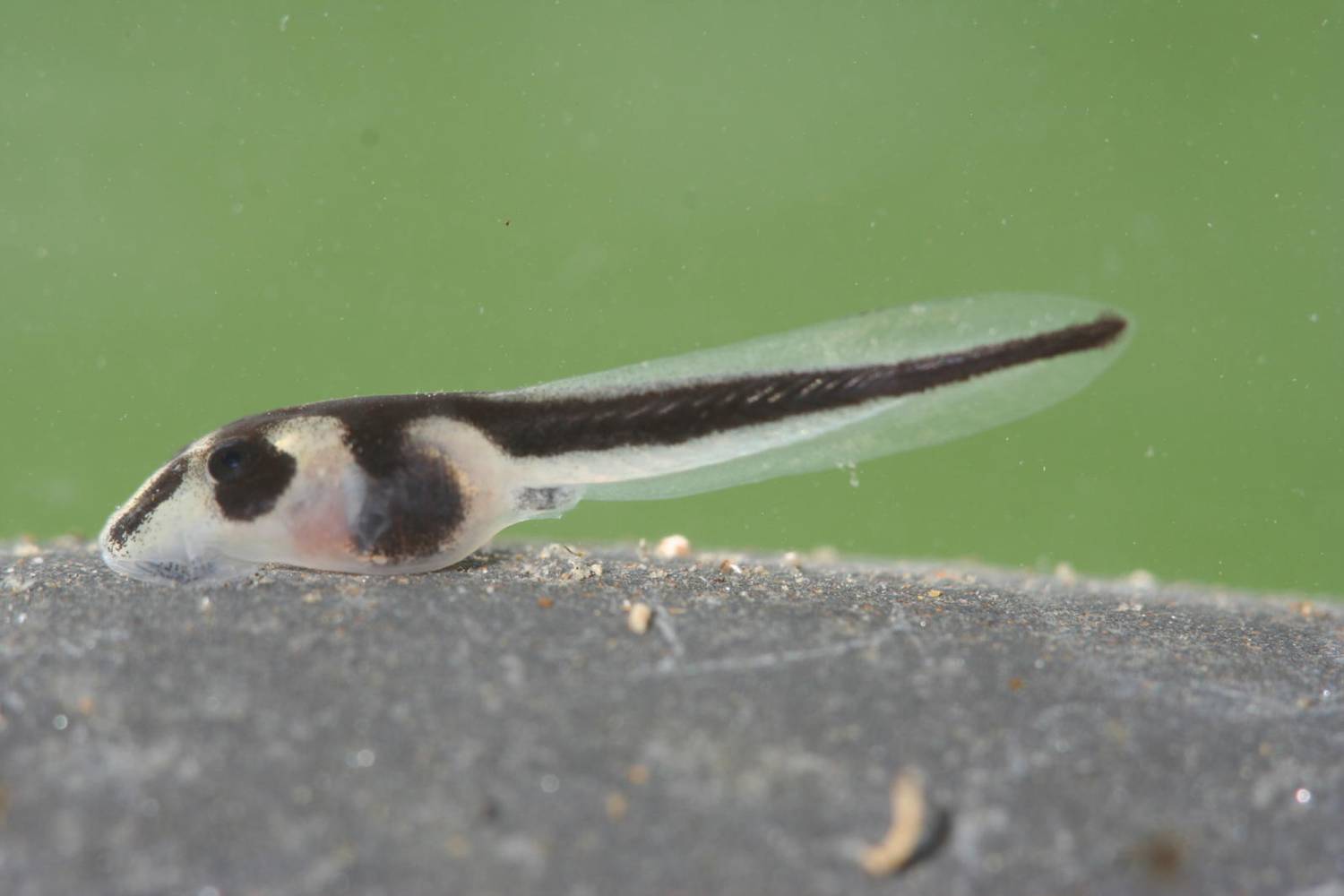
Pale cream with characteristic black “cruciform” markings on the body and tail: a medial black stripe on the head and trunk with extensions toward and beyond the eyes, continuing posteriorly along the flanks. A second blotch surrounds the nostrils and extends rostrally and laterally. A thick black stripe covers the lateral musculature of the tail. Tail fins are clear; the venter is mostly unpigmented. The gut is visible ventrally and winds in a distinctive transverse pattern.

Snout

Body expanded and sloping in lateral view, streamlined overall.

Oral Disc

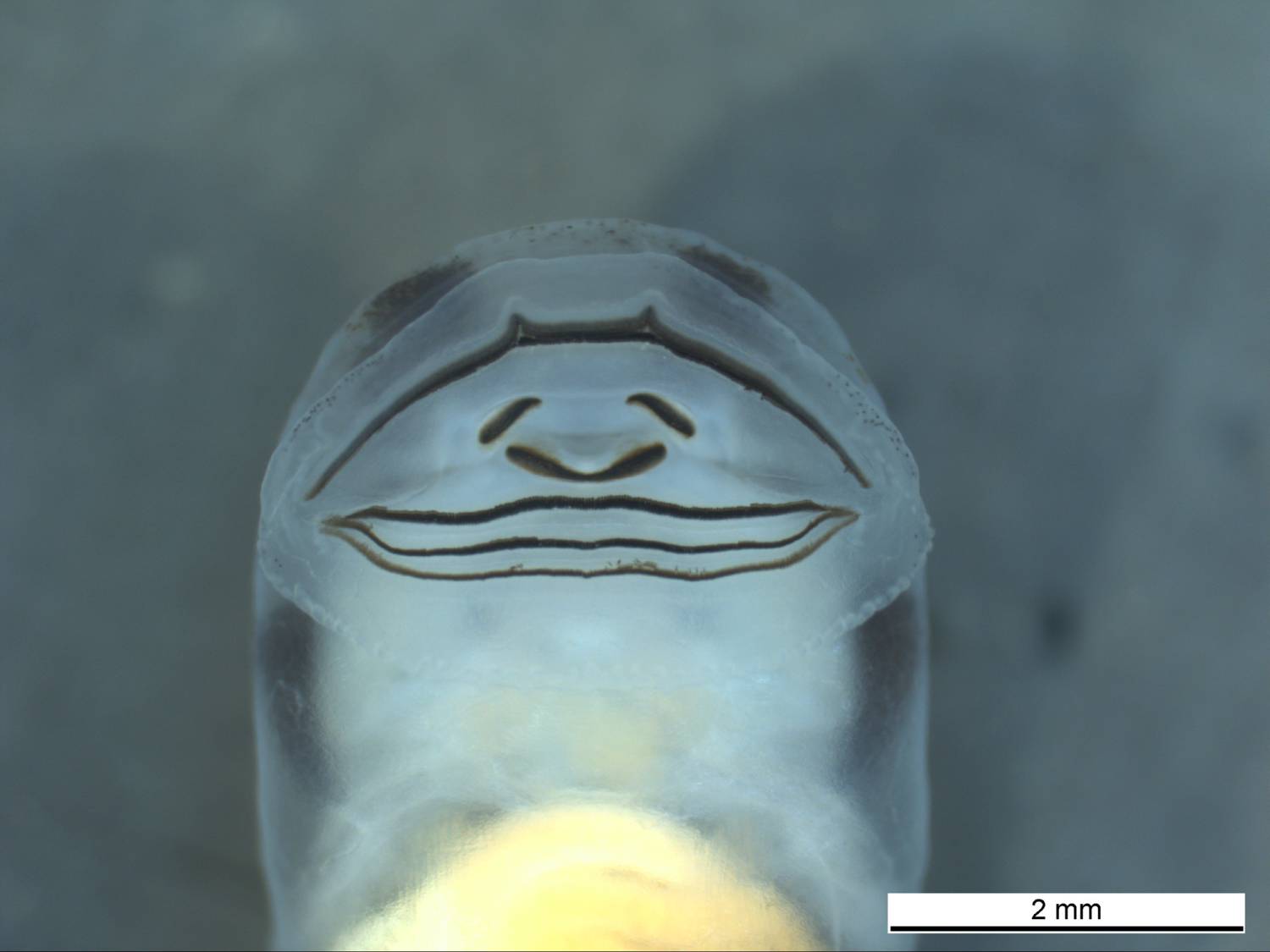
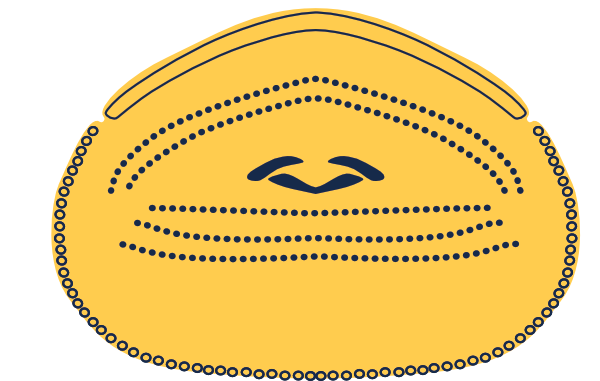
Ventral sucker large, as wide as or slightly wider than maximum body width, extending beyond the body contour in dorsal view. Lower lip margin and lateral portions of the upper lip uniserially papillated; most of the upper lip forms a soft bulge lacking papillae. Submarginal papillae absent. Two undivided labial keratodong rows on the upper lip and three on the lower lip (LTRF 2/3). Upper labial keratodont rows do not wrap laterally around the lower rows. Upper beak divided; lower beak undivided.

Body

Body depressed and streamlined in lateral view; inverted droplet-shaped in dorsal view. Broadest at the level of the oral sucker, tapering gradually toward the tail base without a pronounced constriction. Spiracle low on the flank, well below the mid-body axis.

Eyes & Nostrils

Nostrils small, much closer to the eyes than to the tip of the snout, embedded within the black blotch. Eyes dorsolateral; iris and sclera black.

Tail

Tail less than two-thirds of total length. Muscular portion moderately robust, exceeding 50% of body height in lateral view. Fins low; upper fin originates shortly posterior to the trunk-tail junction and increases moderately in height. Tail fins roughly parallel through the middle and distal thirds of the tail, ending in a rounded tip.

Similar Species

The conspicuous color pattern and transverse gut orientation are unique features of A. longidigita tadpoles. Ansonia leptopus tadpoles appear superficially similar but differ in body shape, black marking pattern, much smaller oral disc, and a more pond-type tadpole morphology. Currently, these two species are the only known Ansonia with strongly contrasting black-and-white tadpoles.

Literature

Males call from rocks and boulders at the shores of or in clear streams. Males can call solitary or in small aggregations. The call is a forceful highpitched trill.
Haas, A., Wolter, J., Hertwig, S.T., Das, I. (2009) Larval morphologies of three species of stream toads, genus Ansonia (Amphibia: Bufonidae) from East Malaysia (Borneo), with a key to known Bornean Ansonia tadpoles. Zootaxa 2302: 1–18.