Frogs of Borneo

Frogs of Borneo

Frogs of Borneo

Frogs of Borneo

Frogs of Borneo

Frogs of Borneo

Frogs of Borneo

Frogs of Borneo

Frogs of Borneo

Frogs of Borneo

Frogs of Borneo
Filter
Hoplobatrachus rugulosus
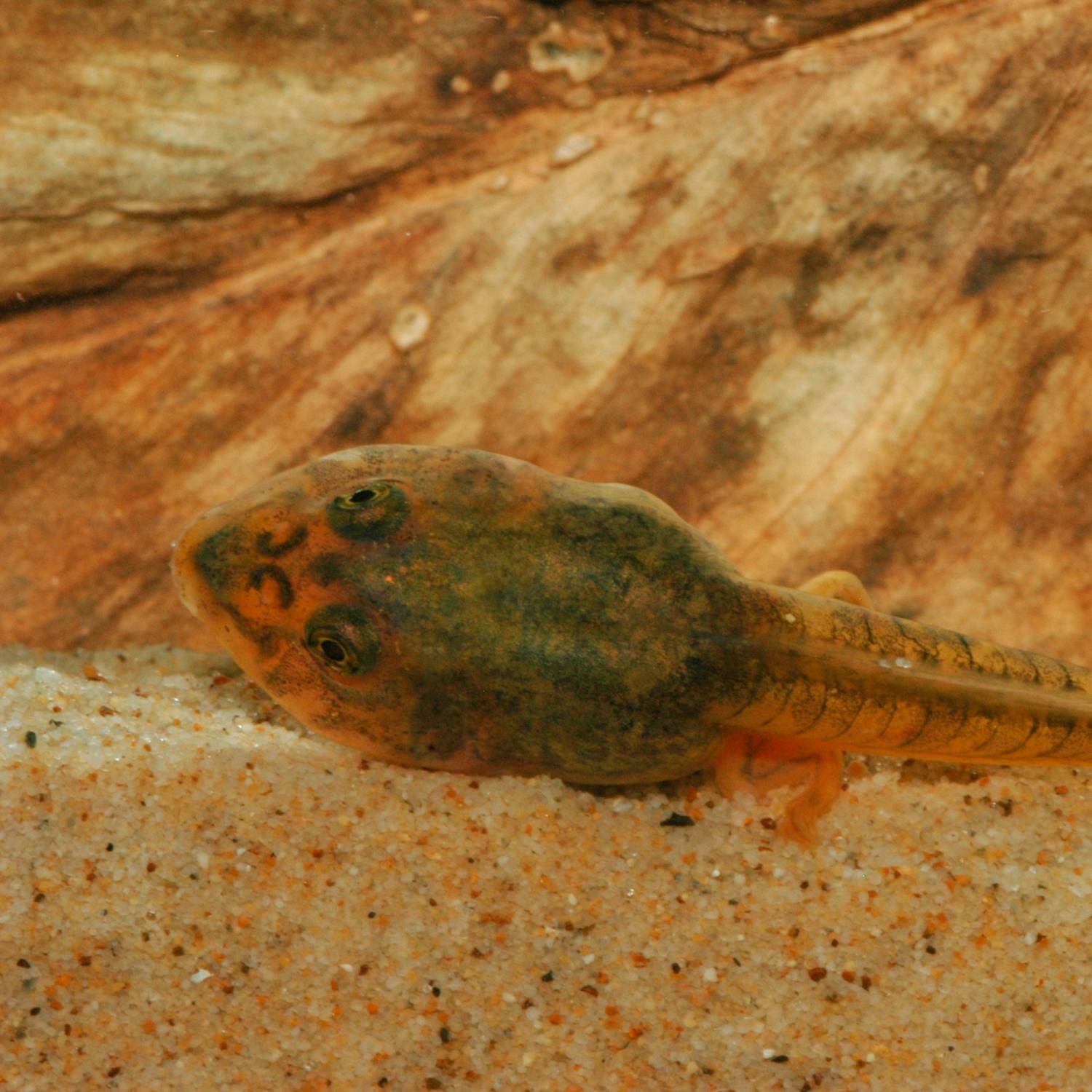
Hoplobatrachus rugulosus was most likely introduced to Borneo in the 1960s as a food source. The species occurs in agricultural and urban environments. Tadpoles inhabit temporary pools, flooded depressions, construction sites, and rice paddies. With their robust jaws, they are capable of preying on smaller tadpoles occurring in the same disturbed habitats.
-
Family:Dicroglossidae
-
Genus:Hoplobatrachus
-
Ecomorph:carnivorous, exotrophic
-
Waterbody Type:stagnant
-
Water Column:bottom
-
Feeding Type:feeding, carnivorous, generalist
-
Size:54 mm
-
Development:larva, tadpole
-
Adult:Hoplobatrachus
Coloration
Generally brown, gray, or olive dorsally, with an irregular pattern of diffuse darker and lighter areas. This mottling extends onto the sides of the body and the upper muscular portion of the tail. Along the sides, a sharp transition leads to the silvery-white ventral coloration. Belly opaque; gut coil not visible; gills mostly concealed. Upper fin bears some pigmentation, while the lower fin is mostly clear.
Snout
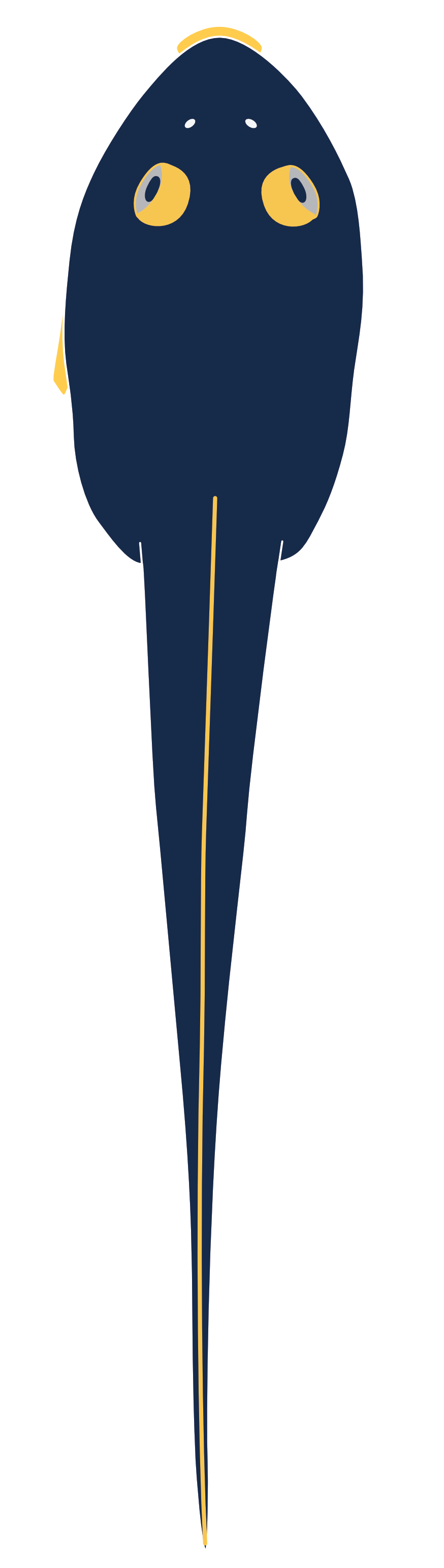
Smoothly triangular in dorsal view and slightly pointed. In lateral view, snout long, sloping downward from the eyes anteriorly with a convex profile. Oral disc slightly projects beyond the snout in dorsal view.
Oral Disc
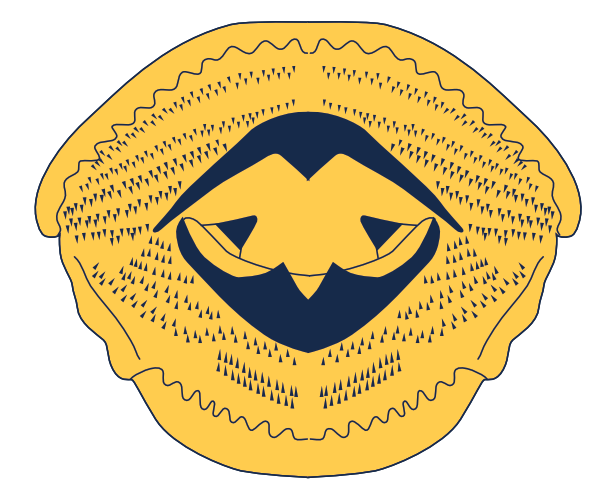
Moderately wide and positioned anteroventrally to terminally; upper lip projects beyond the snout contour. A clear emargination separates upper and lower lips. Disc bears a continuous row of blunt, nearly indistinct marginal papillae. Submarginal papillae absent. LTRF 4(3–4)/5(1–4). Labial ridges bear double rows of conical, needle-like keratodonts. Beaks strongly keratinized; upper jaw sheath with a medial sharp, tooth-like projection, lower jaw sheath with two projections, and additional spurs set back within the oral cavity.
Body
Oval in dorsal view. Head wider than the trunk. Body widest at the level of the gill region. Head shape a smooth triangle in dorsal view. Body dorsoventrally depressed. Spiracle sinistral, opening posteriorly or posterolaterally, below the body axis in lateral view. Medial rim of the spiracular orifice distinct, forming a short free tube. Lateral line organs indistinct.
Eyes & Nostrils
Eyes positioned dorsolaterally with moderate interorbital distance. Nostril slightly rimmed, closer to the eye than to the snout. Iris brass to gold. Iridocytes form a complete ring around the pupil.
Tail
Tail up to 65% of total length. Muscular part of the tail strong, exceeding half of body height in lateral view, and approximately half of maximum trunk width in dorsal view. Upper fin originates at the trunk-tail junction or slightly anterior. Upper fin forms a convex arch of moderate height. Lower fin straighter than upper fin and lower in height. Tail tip narrowly rounded. Lateral tail vein and myoseptal vessels in the first quarter of the tail accentuated by melanocytes.
Similar Species
The mouthparts of H. rugulosus are unique among Bornean tadpoles: strong jaw sheaths with tooth-like projections, keratinized spurs in the oral cavity, and double labial keratodont rows. These features allow unequivocal identification. Apart from the mouthparts, the overall body shape and coloration resemble those of F. limnocharis or F. cancrivora, which occur in similar open or disturbed habitats; however, H. rugulosus tadpoles grow nearly twice as large as Fejervarya species.
Literature
The call consists of a series of up to 20 raspy, guttural notes.
Grosjean, S., Vences, M., Dubois, A. (2004) Evolutionary significance of oral morphology in the carnivorous tadpoles of tiger frogs, genus Hoplobatrachus (Ranidae). Biological Journal Linnean Society 81: 171–181.