Zum Hauptinhalt springen

Frogs of Borneo

Frogs of Borneo

Frogs of Borneo

Frogs of Borneo

Frogs of Borneo

Frogs of Borneo

Frogs of Borneo

Frogs of Borneo

Frogs of Borneo

Frogs of Borneo

Frogs of Borneo

Hylarana picturata

Hylarana picturata often prefers rocky streams, whereas H. signata has been observed more regularly along streams with soft substrates. Further research is required to determine the extent of possible ecological overlap between the two species. Tadpoles of H. picturata have been collected from rock troughs and side pools that are partially or completely disconnected from the main stream and filled with leaf litter. Tadpoles are wary, avoid daylight, and hide deep beneath leaf litter. At night, they emerge to feed among the leaves. The species has been recorded up to 750 m a.s.l. and tolerates disturbed forest habitats.
  • Family:
    Ranidae
  • Genus:
    Hylarana
  • Ecomorph:
  • Waterbody Type:
    flowing
  • Water Column:
    bottom|leaf litter
  • Feeding Type:
    feeding, generalist
  • Size:
    46 mm
  • Development:
    larva, tadpole
  • Adult:
    Hylarana

Coloration

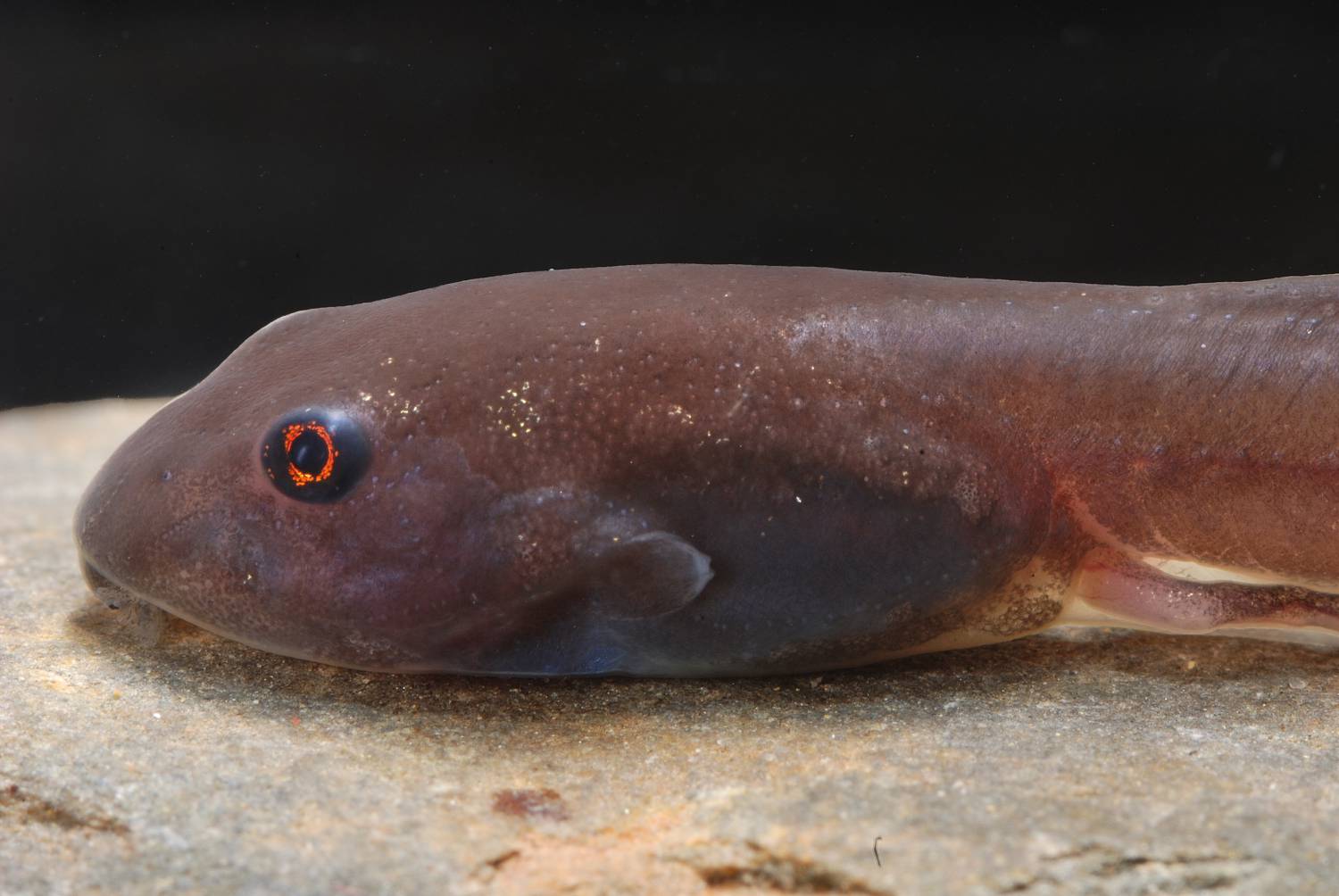
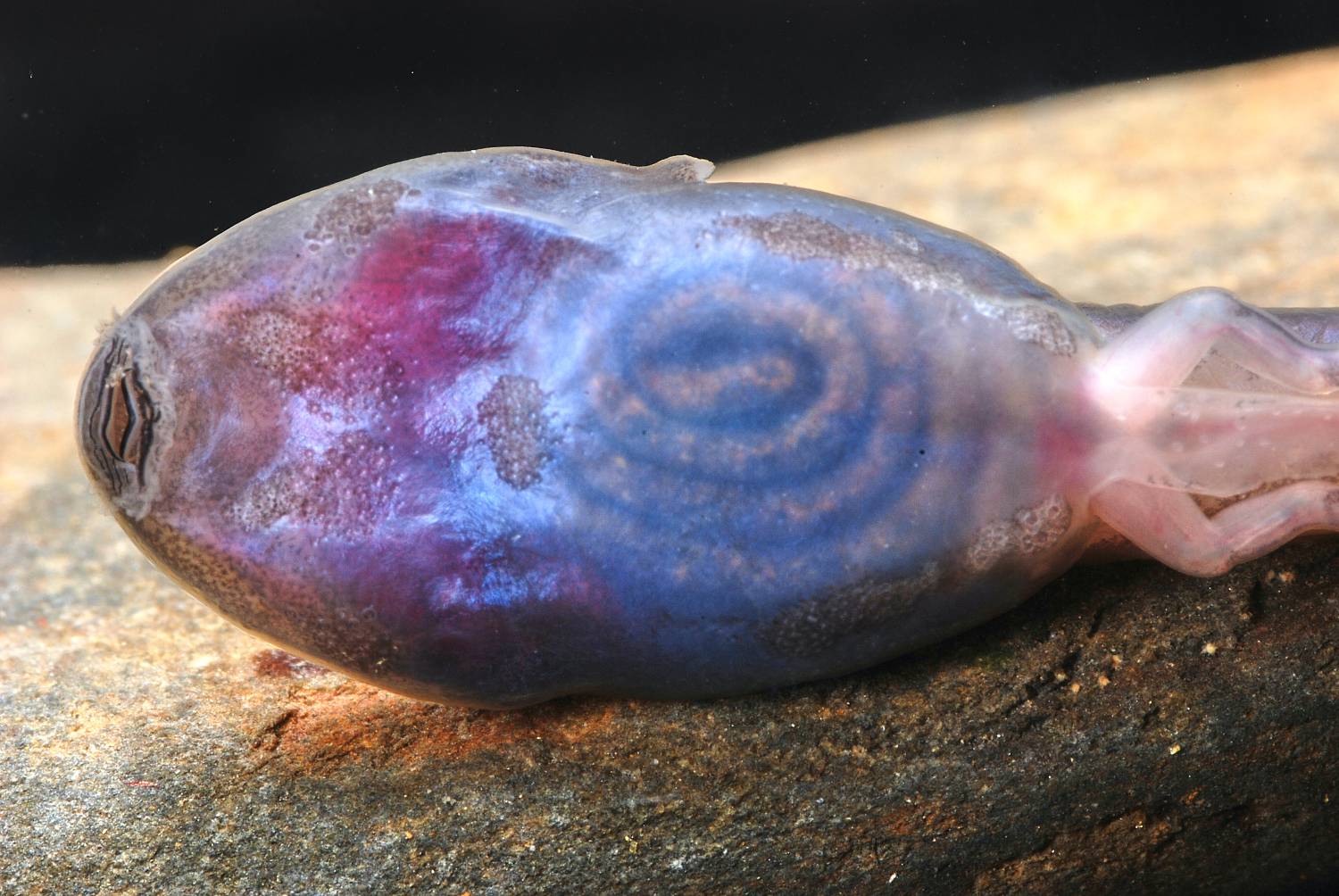
Body and tail uniformly black dorsally in daylight; markings absent. The dark coloration renders skin glands difficult to discern. Skin exhibits bluish iridescence in living specimens. Fins are darkly pigmented. Ventral skin of the body semitransparent with bluish iridescence in life (lost in preserved specimens). Oral disc pigmented; papillae bearing groups of melanocytes near their tips. Buccal region dusted with melanocytes. Red gills and heart, as well as the gut, visible through the skin. Abdominal wall laterally with scattered melanocytes.

Snout

Snout rounded in dorsal view and slightly tapering; narrowly rounded in lateral view; moderately long.

Oral Disc

Oral disc anteroventral; width less than half the body width. Emarginations present at the lateral margins between upper and lower lips. Upper lip devoid of papillae across a broad medial region but bearing a single row of marginal papillae laterally. Lower lip with one continuous row of marginal papillae along its margin. Marginal papillae moderately long, with a few longer papillae on the lower lip. Submarginal papillae absent.

Body

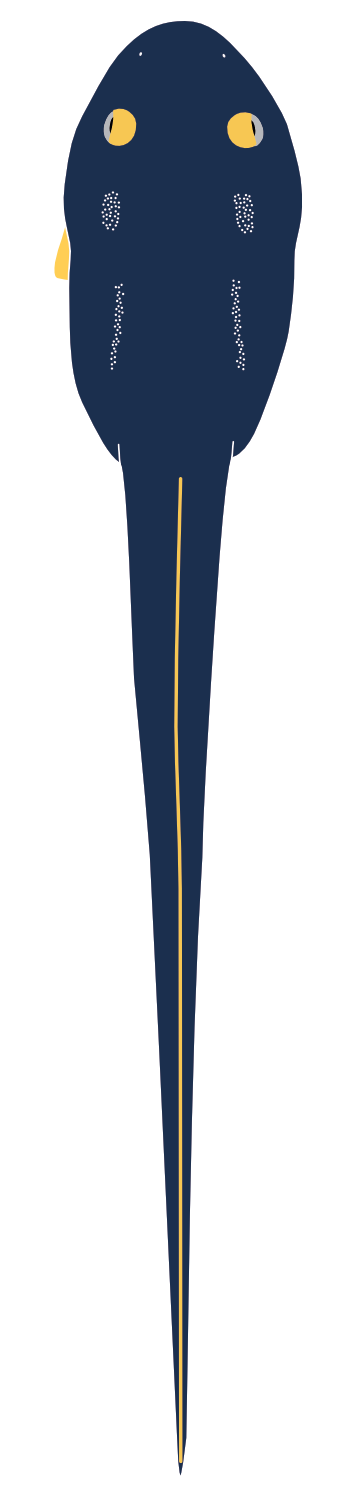
Body elongate oval, medium to large in size. In lateral view, body depressed, smoothly convex dorsally and ventrally. Body widest at the level of the gills, posterior to the eyes. Spiracle sinistral; spiracular tube opening posteriorly and well below the longitudinal body axis in lateral view. Spiracular orifice free from the body wall, forming a short tube. Lateral line organs present and visible. Extensive clusters of skin glands present: paired fields on the dorsum approximately at the level of the posterior head; longitudinal dorsal fields above the flanks; scattered glands dorsally between the eyes; paired clusters ventrally in the anterior buccal area; a single field in the posterior buccal region; and scattered glands laterally on the abdomen.

Eyes & Nostrils

Eyes dorsolateral. Iris bright red around the pupil and black toward the periphery. Nostrils small, positioned closer to the snout than to the eyes.

Tail

Tail long, comprising two-thirds or more of total length. Muscular portion strong and high, slightly lower than body height in lateral view. Upper fin originating at or slightly posterior to the trunk-tail junction (approximately 10% of tail length). Both tail fins moderately high, arching with slight convexity; lower fin lower than upper fin. Tail tip triangular and pointed. Maximum tail height located anterior to the midpoint of tail length. Tail fins bearing numerous scattered skin glands.

Similar Species

Tadpoles of Hylarana picturata and H. signata are similar and share a dark body coloration combined with a conspicuous red iris ring. Clear distinguishing characters have not yet been established. Some differences observed in our picturata/signata samples include the origin of the dorsal tail fin, density of skin glands, and keratodont rows on the upper lip. These differences may fall within the range of intraspecific variation and require further investigation. Tadpoles of H. picturata and H. signata can be distinguished from those of H. raniceps and H. megalonesa (which also possess skin glands) by their black coloration, less broad body, relatively longer tail, and lower tail fins. Larvae of H. glandulosa are similarly black but have more elongate bodies, dense submarginal papillae, and attain a larger size. Tadpoles of Staurois, Odorrana, and Pelobatrachus may occur in the same leaf litter as H. picturata and H. signata but differ in mouthpart morphology, coloration, and the absence of skin glands, particularly on the tail fins.

Literature

Males of Hylarana picturata call from very near to the water (1 m). Often, they sit elevated on rocks, twigs or roots at the base of steep banks of small to mediumsized streams. Calls consist of several repeated low notes of decreasing intensity.
Inger, R.F. (1985) Tadpoles of the forested regions of Borneo. Fieldiana Zoology new series 26: 1–89. [P. signata].

Inger, R.F., Stuebing, R.B., Grafe, T.U., Dehling, J.M. (2017) A field guide to the frogs of Borneo. 3rd ed. Natural History Books, Kota Kinabalu. 228 pp.