Zum Hauptinhalt springen

Frogs of Borneo

Frogs of Borneo

Frogs of Borneo

Frogs of Borneo

Frogs of Borneo

Frogs of Borneo

Frogs of Borneo

Frogs of Borneo

Frogs of Borneo

Frogs of Borneo

Frogs of Borneo

Ingerophrynus divergens

Tadpoles of Ingerophrynus divergens have been observed in forest-floor puddles, pools of intermittent forest streams, and nearly stagnant sections of small forest streams. We encountered the tadpoles primarily in quiet sections of small streams. They are benthic dwellers that feed on fine particles at the bottom of sandy or silty side pools, including microbes, algae, protozoans, and decaying plant matter.
  • Family:
    Bufonidae
  • Genus:
    Ingerophrynus
  • Ecomorph:
    benthic, exotrophic, lentic
  • Waterbody Type:
    stagnant
  • Water Column:
    bottom
  • Feeding Type:
    feeding, generalist
  • Size:
    17 mm
  • Development:
    larva, tadpole
  • Adult:
    Ingerophrynus

Coloration

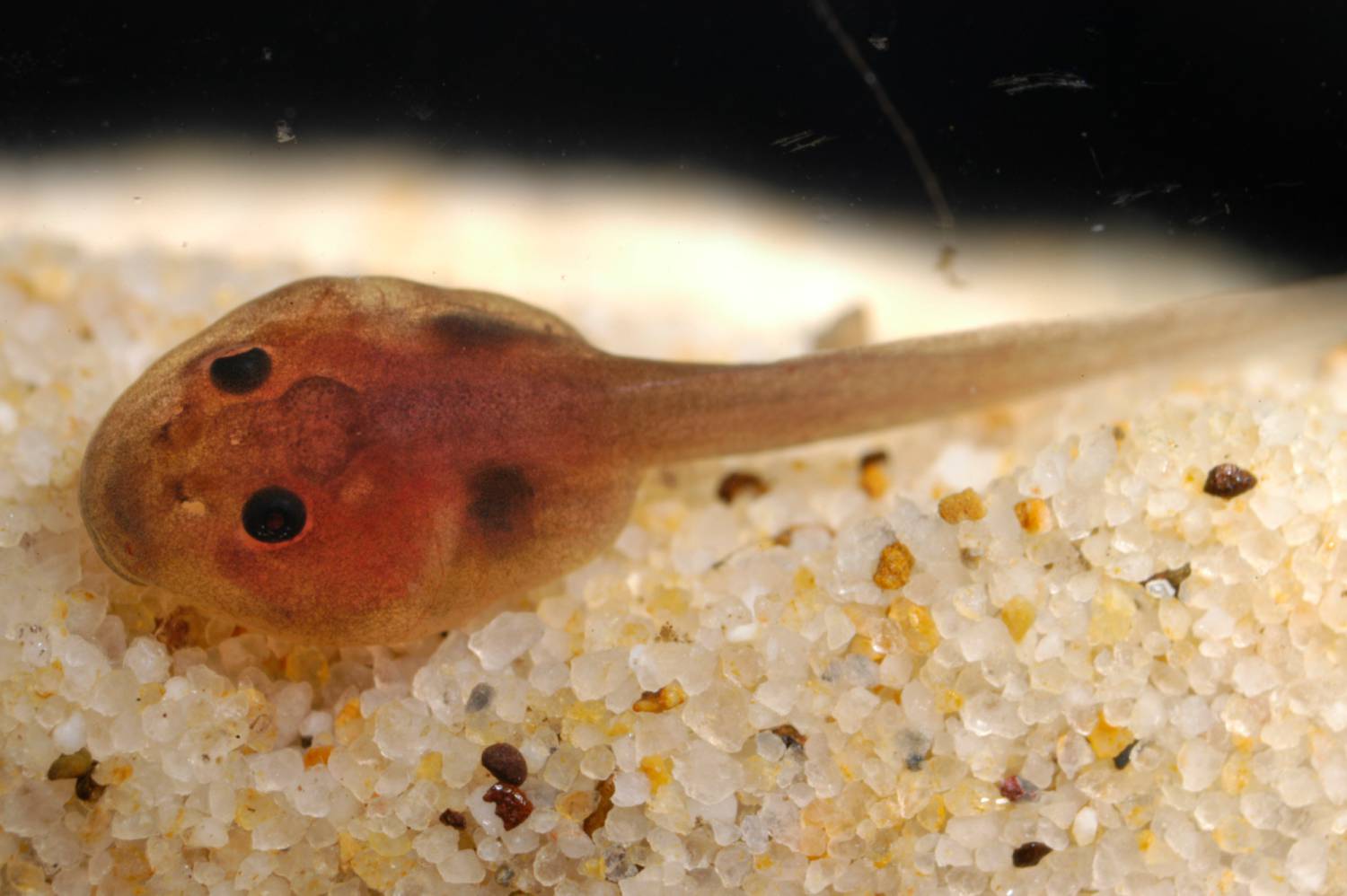
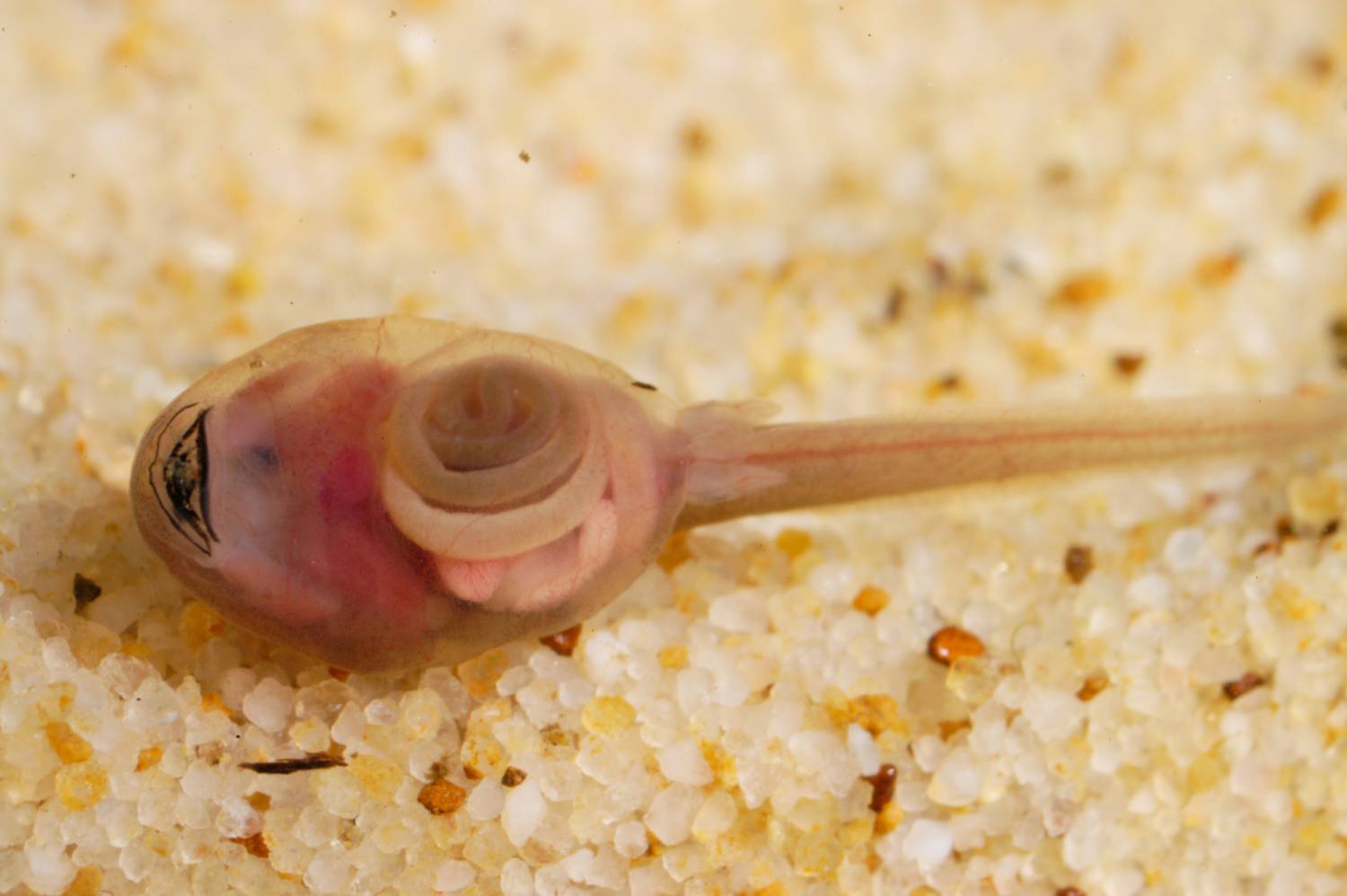
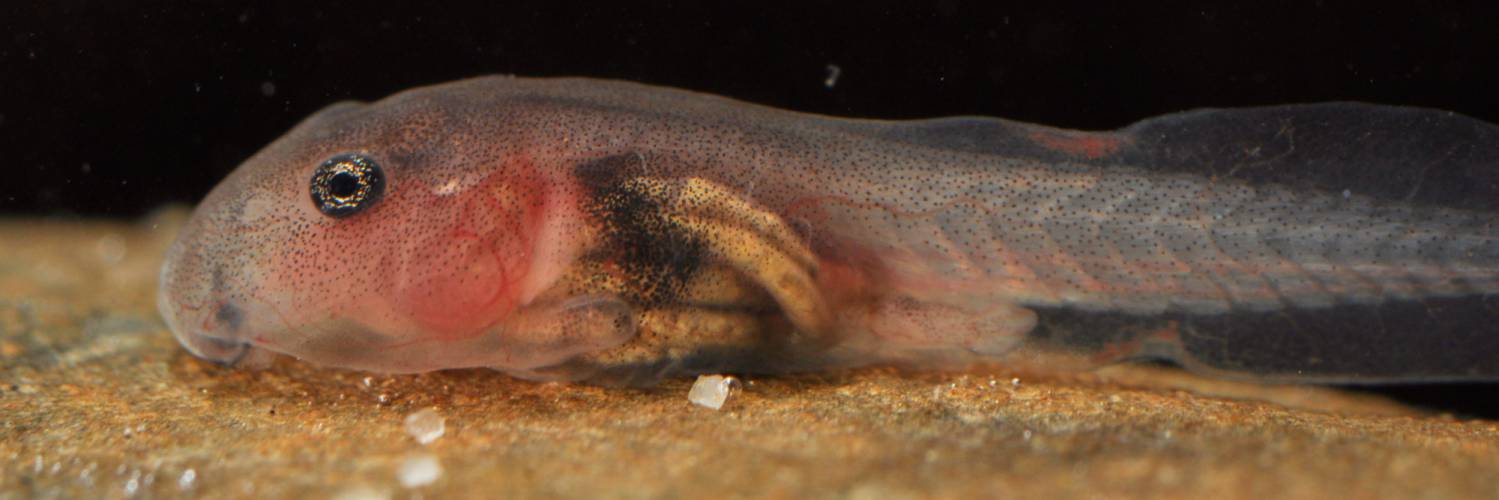
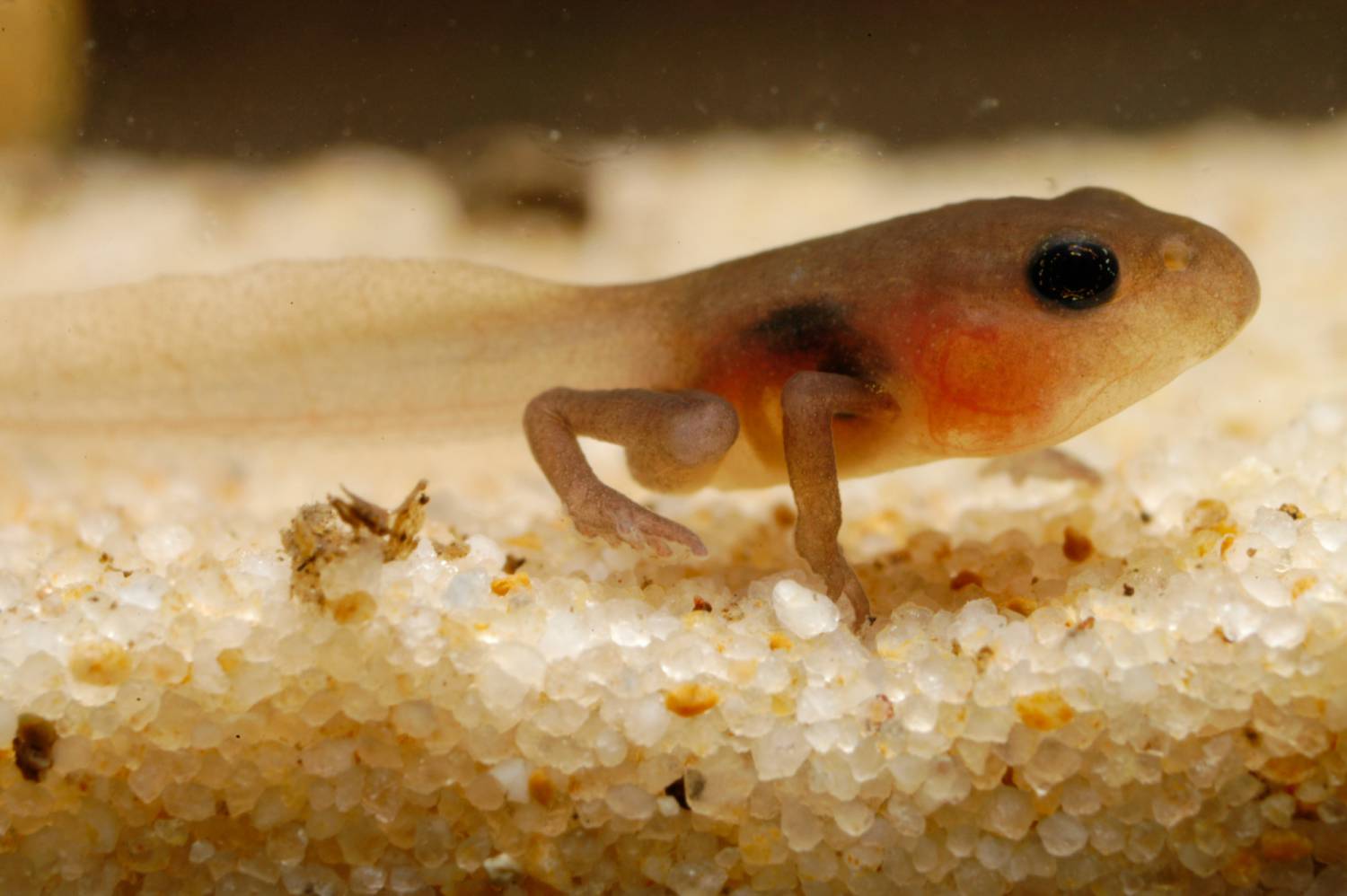
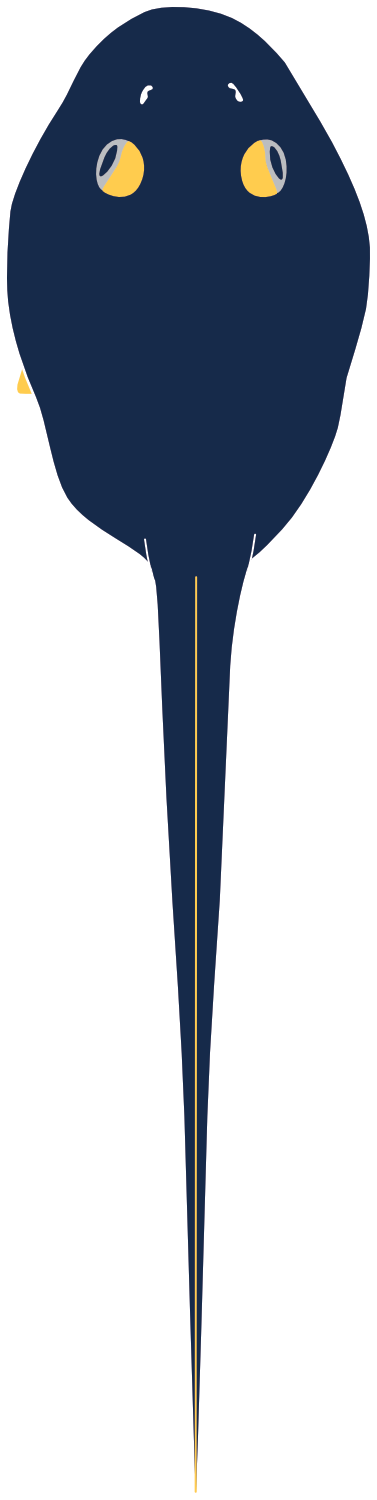
Dorsal coloration dark brown. Braincase (between and posterior to the eyes) darkly pigmented. Diffuse paired dark spots present dorsally on the upper flanks. Brown pigmentation extends onto the tail but fades toward the tail tip. Ventral surface unpigmented, with internal organs visible through the skin.

Snout

Snout slightly tapering but broadly rounded at the tip in dorsal view. Profile smoothly rounded and moderately long.

Oral Disc

Oral disc ventral in orientation. Papillation on both lips restricted to lateral regions, with broad medial areas of both lips lacking papillae. A distinct lateral indentation separates the upper and lower lips. Submarginal papillae present on both lips, more numerous on the lower lip. Two undivided labial keratodont rows on the upper lip and three on the lower lip; the second upper row with a minute medial gap (LTRF 2(2)/3). Upper and lower beaks undivided; beaks narrow and moderately robust.

Body

Body small, depressed, and ovoid in lateral view; weakly rhomboid in dorsal view, with a slight constriction at the head-trunk transition. Body wider than high, i.e., slightly dorsoventrally flattened. Widest point of body silhouette located posterior to the eyes. Spiracle sinistral, attached to the body wall, and positioned below the mid-body axis in lateral view.

Eyes & Nostrils

Nasal openings moderately large to large and rimmed; dorsal rim with a triangular process. Nostrils positioned closer to the eyes than to the tip of the snout. Eyes dorsolateral. Iris black with scattered iridophores.

Tail

Tail moderately long, comprising less than two-thirds of total length. Tail musculature weak; muscular portion thin relative to body width in dorsal view. Tail fins originating at the trunk-tail junction, becoming moderately high and relatively flat in contour, and terminating in a blunt, rounded tip. Overall fin shape slightly lanceolate.

Similar Species

The tadpole resembles that of Ingerophrynus quadriporcatus, which lacks the dark blotch on the upper flank posterior to the gill region. Duttaphrynus melanostictus is similar in general body silhouette but is uniformly black, including ventrally. Ecological differences further separate these species: larvae of I. quadriporcatus occur in peat swamps, whereas I. divergens inhabits lowland dipterocarp and alluvial forests; D. melanostictus occurs exclusively in open habitats near or within human settlements. Rentapia hosii is restricted to medium-sized clear lowland streams. With the exception of R. hosii, these species share the presence of broad, unpapillated medial regions on both upper and lower lips. Tadpoles of Kurixalus chaseni (Rhacophoridae) are superficially similar in their small size and general body shape and occur in forest ponds and puddles; however, they differ from Ingerophrynus tadpoles by their fully papillated lower lip, different keratodont arrangement, and overall coloration.

Literature

Males call close to the breeding body of water, often in groups that form choruses. The call is a rasping trill. Calling congregations are loud and can be heard from the distance. Males clasp females around the armpits (axillary amplexus). Hundreds of eggs are laid in mucous strings.
Inger, R.F. (1985) Tadpoles of the forested regions of Borneo. Fieldiana Zoology new series 26: 1–89.