Frogs of Borneo

Frogs of Borneo

Frogs of Borneo

Frogs of Borneo

Frogs of Borneo

Frogs of Borneo

Frogs of Borneo

Frogs of Borneo

Frogs of Borneo

Frogs of Borneo

Frogs of Borneo
Filter
Ingerophrynus quadriporcatus
Tadpoles of Ingerophrynus quadriporcatus were found in pools within flooded terrain of coastal forests. These pools were peaty and contained leaf litter. The tadpoles were observed to be benthic dwellers, feeding on various fine particles at the bottom of the pools they inhabit.
-
Family:Bufonidae
-
Genus:Ingerophrynus
-
Ecomorph:benthic, exotrophic, lentic
-
Waterbody Type:stagnant
-
Water Column:bottom|leaf litter
-
Feeding Type:feeding, generalist
-
Size:21 mm
-
Development:larva, tadpole
-
Adult:Ingerophrynus
Coloration
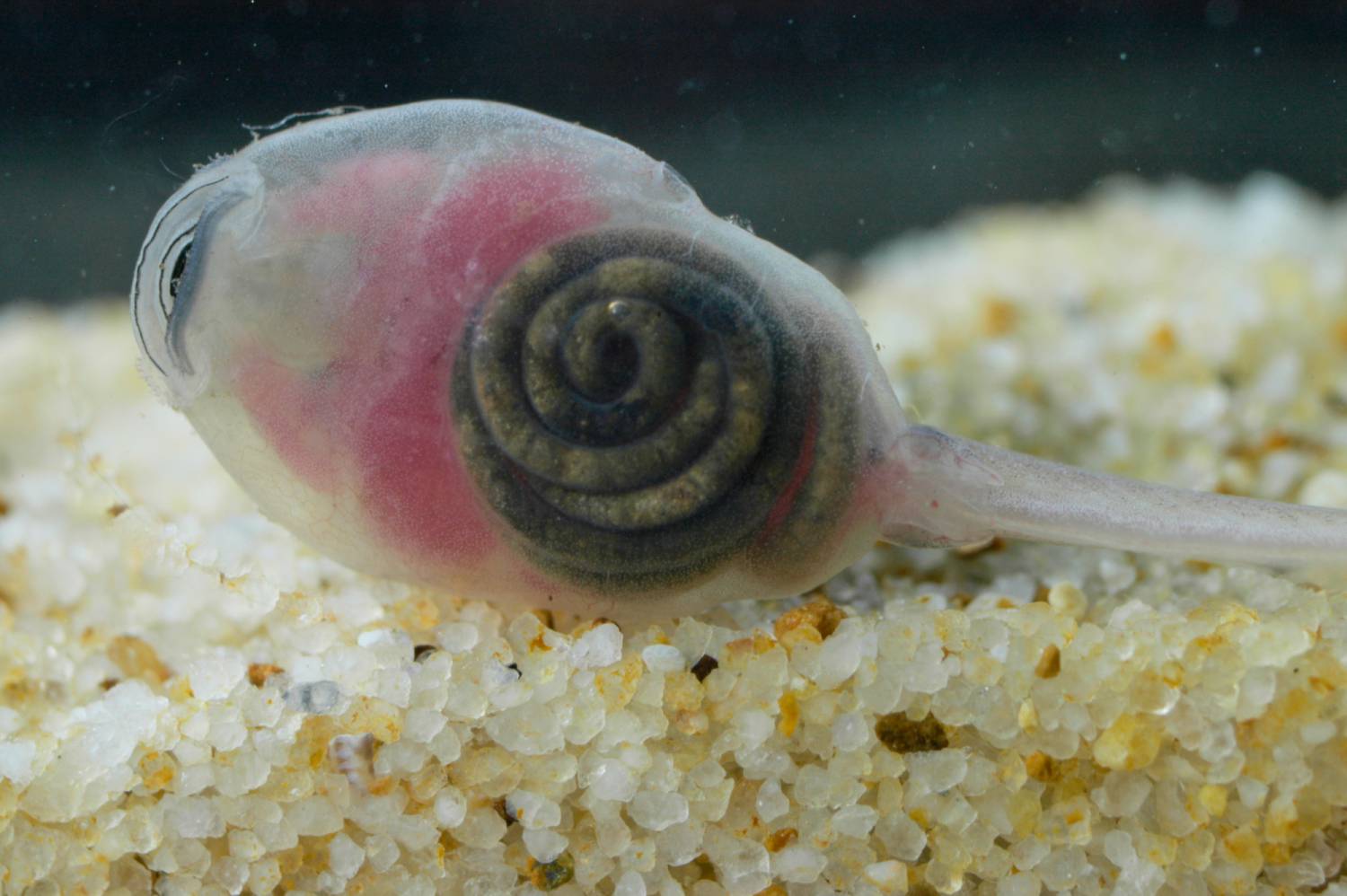
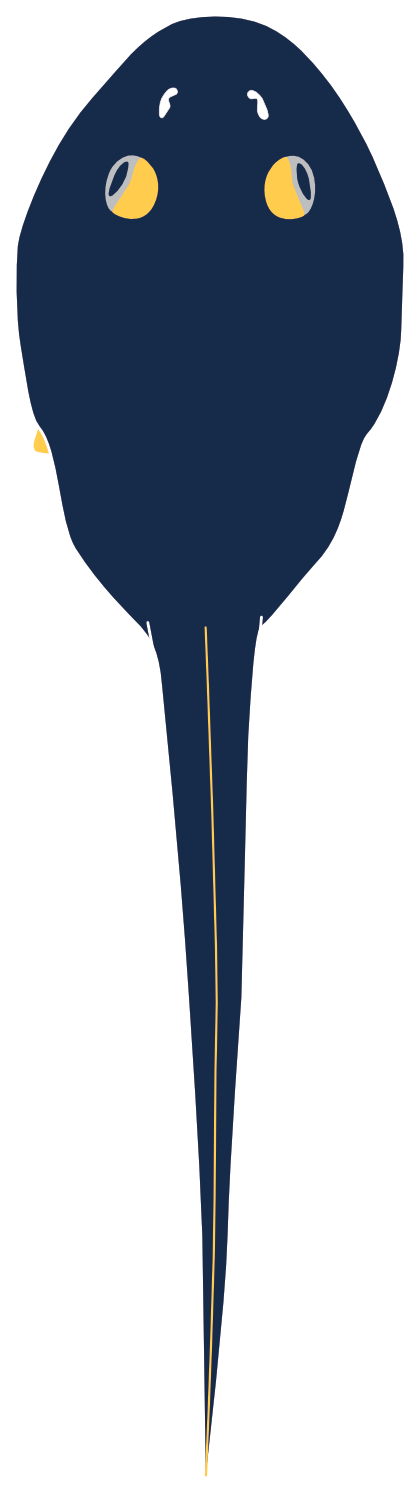
Dorsal coloration dark brown. Braincase (between and posterior to the eyes) pigmented black. Brown pigmentation extends onto the tail but fades toward the tail tip. Tail fins mostly unpigmented. Ventral surface unpigmented, with internal organs visible through the skin.
Snout
Snout tapering but rounded in dorsal view; moderately long and smoothly rounded in lateral view.
Oral Disc
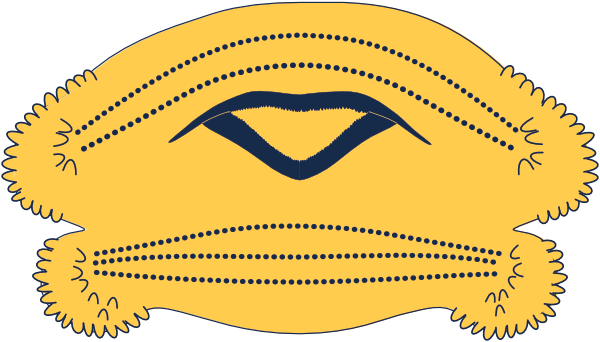
Oral disc ventral to anteroventral in orientation and much narrower than maximum body width. Marginal papillae present on both lips only laterally; papillae small. Up to five submarginal papillae may be present where keratodont rows terminate. A distinct lateral indentation separates the upper and lower lips. Two undivided labial keratodont rows on the upper lip and three on the lower lip (LTRF 2/3). Upper and lower beaks undivided and narrow; beak edges bearing very fine serrations. Upper beak weakly arched and slightly M-shaped; lower beak forming a wide, open V.
Body
Body ovoid in lateral view; wider than high and slightly dorsoventrally depressed. In dorsal view, body near rhomboidal, with a slight constriction at the head-trunk transition. Widest point of the head-trunk silhouette located posterior to the eyes. Spiracle sinistral, attached to the body wall, and positioned below the mid-body axis in lateral view.
Eyes & Nostrils
Nostrils conspicuously large; medial rim with a triangular process. Nostrils positioned closer to the eyes than to the tip of the snout. Eyes dorsolateral. Iris black, with scattered iridophores around the pupillary margin.
Tail
Tail short, approximately 60% of total length. Muscular portion moderate to narrow. Tail fins originating at the trunk-tail junction; upper fin remaining low for a short distance before arching upward. Fins becoming relatively high and terminating in a blunt, rounded tip. Overall tail-fin shape resembling a spear blade.
Similar Species
The tadpole resembles that of Ingerophrynus divergens, which, however, possesses a dark blotch on the upper flank posterior to the gill region. Although based on limited material, the snout in I. quadriporcatus appears slightly broader, the oral disc more anteroventral, and the dorsal tail fin more strongly convexly arched than in I. divergens. Duttaphrynus melanostictus is similar in body silhouette but uniformly black dorsally and ventrally, with fine white spotting. Ecological differences further separate these species: larvae of I. quadriporcatus occur in peat swamp habitats, whereas I. divergens inhabits lowland dipterocarp and alluvial forests; D. melanostictus is restricted to human-modified environments; and Rentapia hosii occurs exclusively along medium-sized, clear, lowland streams in primary or secondary forest.
Literature
No pertinent details on reproduction are available for this species.
Leong, T.M., Chou, L.M. (1999) Larval diversity and development in the Singapore Anura (Amphibia). The Raffles Bulletin of Zoology 47: 81–137.