Zum Hauptinhalt springen

Frogs of Borneo

Frogs of Borneo

Frogs of Borneo

Frogs of Borneo

Frogs of Borneo

Frogs of Borneo

Frogs of Borneo

Frogs of Borneo

Frogs of Borneo

Frogs of Borneo

Frogs of Borneo

Kurixalus chaseni

The species occurs from lowland primary and secondary forests up to at least 1060 m a.s.l. Larvae inhabit swampy areas and are typically found in stagnant, water-filled muddy depressions within forests or along forest edges. Such depressions are sometimes used by pigs as wallows; however, an association with pig activity does not appear to be required for reproduction. Water depth of breeding pools is typically around 50 cm. When canopy gaps allow direct sunlight, shallow water warms rapidly and tadpole development proceeds quickly.
  • Family:
    Rhacophoridae
  • Genus:
    Kurixalus
  • Ecomorph:
    exotrophic, lentic
  • Waterbody Type:
    stagnant
  • Water Column:
    bottom
  • Feeding Type:
    feeding, generalist
  • Size:
    26 mm
  • Development:
    larva, tadpole
  • Adult:
    Kurixalus

Coloration

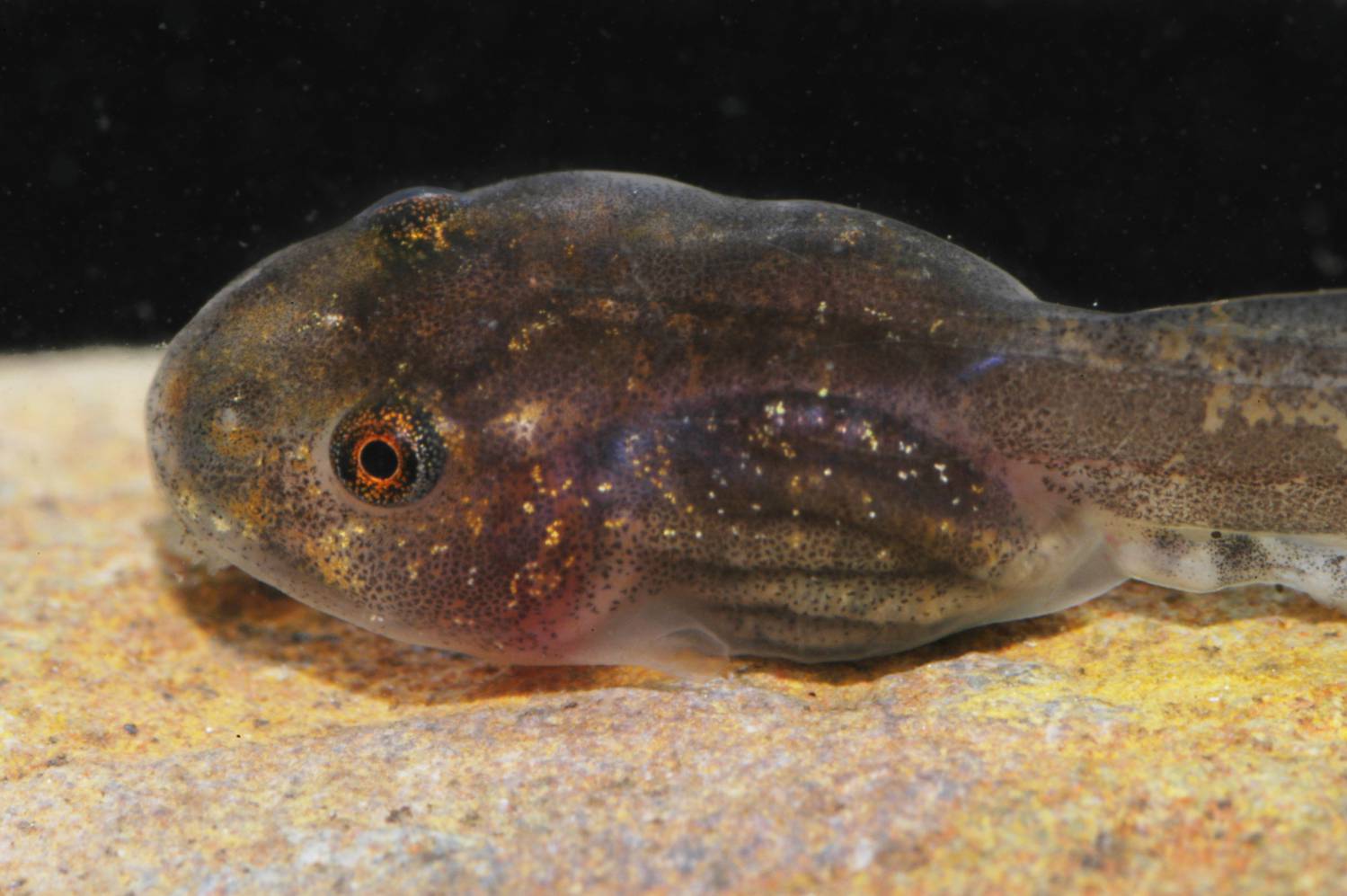
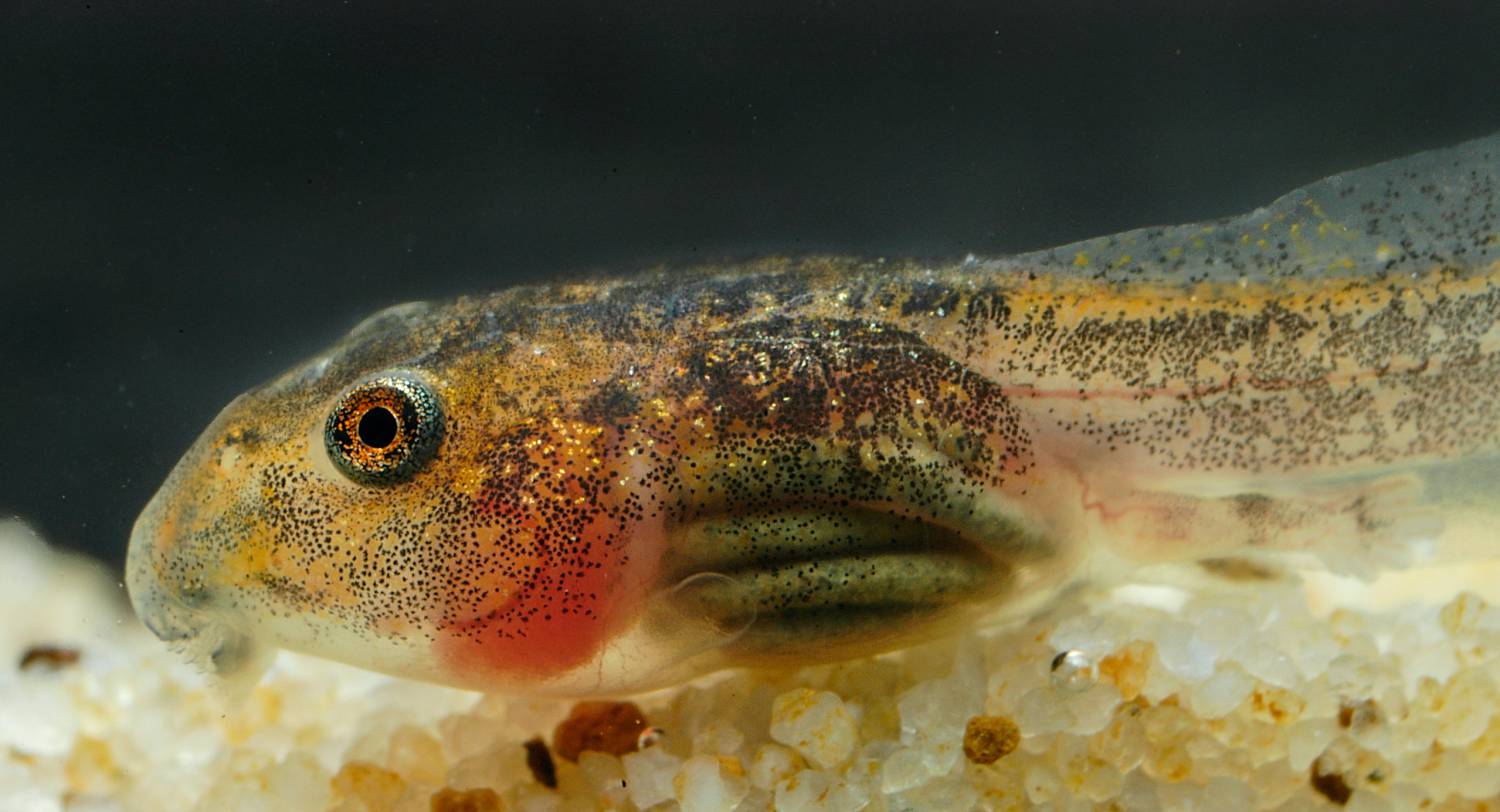
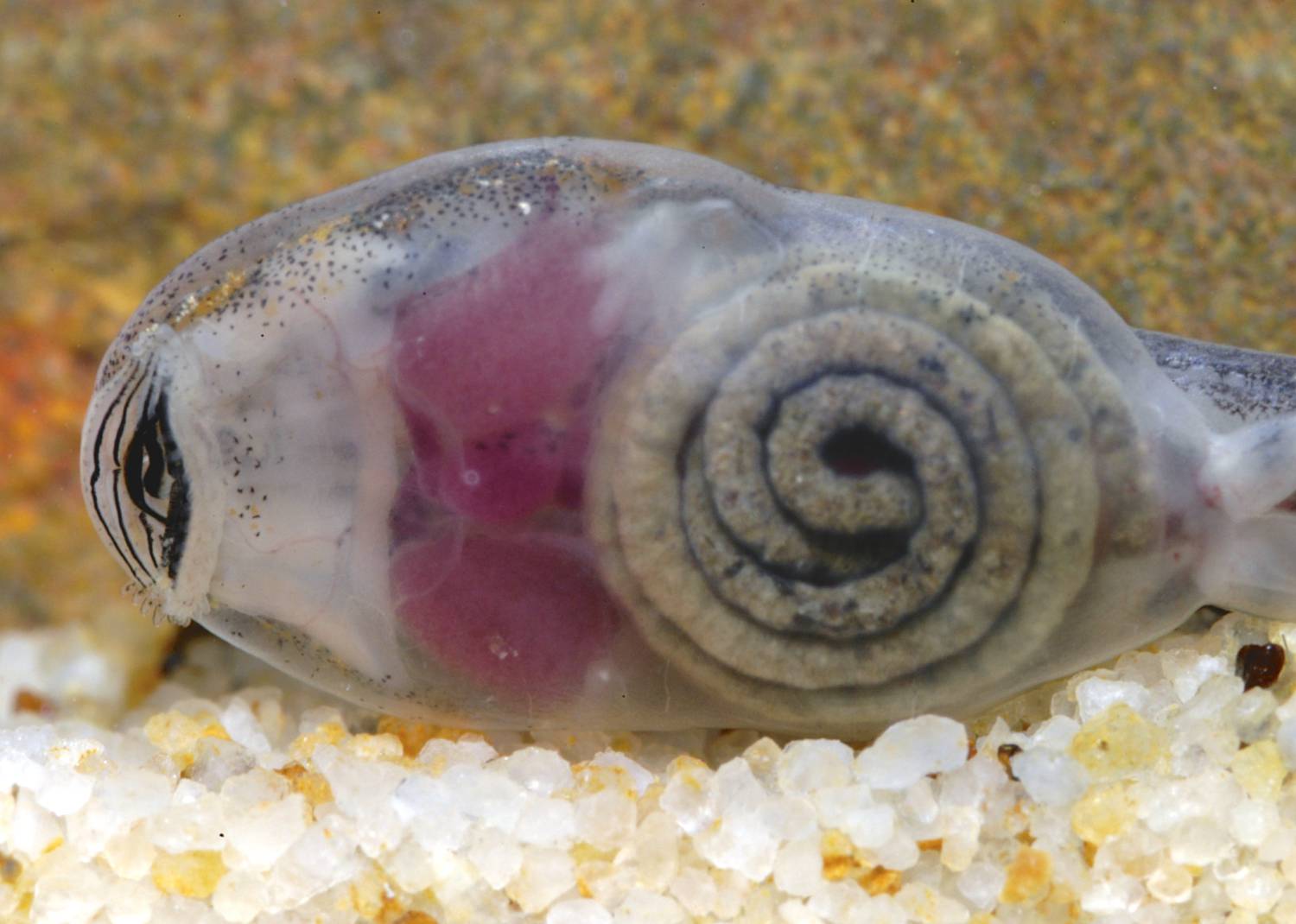
Brown dorsally; under close inspection, dark brown and yellow marbling is discernible. Scattered bronze pigment cells may be present on the cheeks, lateral gill region, and lateral trunk. Along the flanks, dark pigmentation gradually fades toward the venter; ventral skin transparent. Gills, heart, and gut coils clearly visible. The muscular tail marbled dark brown, sometimes with yellow pigment cells along the proximal dorsal tail musculature. Marbling extends onto the tail fins, more prominently on the upper fin than on the lower fin, the latter mostly clear. In the proximal half of the tail, the lateral vein usually visible. Metamorphosing specimens develop beige spots at the knees and limb joints.

Snout

Sloping in lateral view, rounded but slightly tapering in dorsal view.

Oral Disc

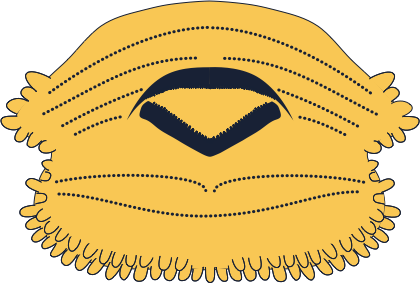
Oriented anteroventrally. Marginal papillation with a broad gap on the upper lip; gap absent on the lower lip. Marginal papillae arranged in a single row on the lateral portions of the upper lip and in double rows on the lower lip, except for a narrow medial area with a single row. Marginal papillae moderately long and blunt. Lateral oral disc indentations present. Labial ridges bear uniserial keratodont rows. LTRF 4(2–4)/3(1) or 3(2–3)/3(1). Jaw sheaths well keratinized and moderately robust. Upper jaw sheath broadly and shallowly arched; lower jaw sheath widely V-shaped. Beak edges finely serrated.

Body

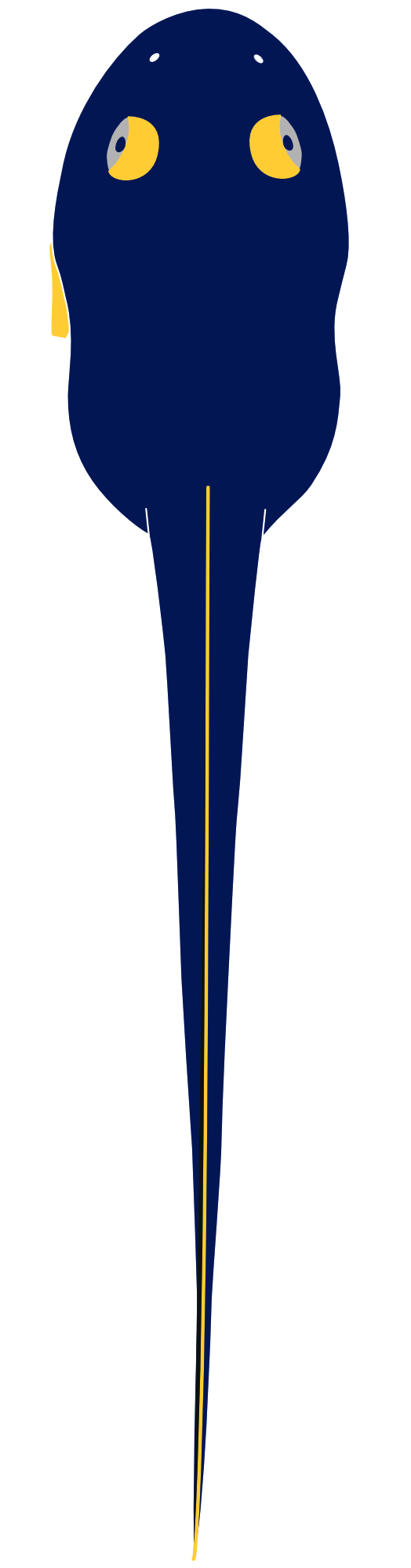
Rhomboid to inversely pear-shaped in dorsal view. Gill region wider than trunk. Body dorsoventrally depressed. Spiracle sinistral. Spiracular tube fused to the body and directed posterolaterally. Spiracular opening positioned very low, well below the longitudinal body axis in lateral view.

Eyes & Nostrils

Nostrils round, directed anterolaterally, slightly elevated, and located approximately equidistant between the eye and the snout in lateral view. Eyes moderately large, positioned and facing dorsolaterally. Iris densely dusted with coppery iridophores (sometimes golden) on a black background. Sclera densely covered with coppery and golden shiny iridophores.

Tail

Approximately 66–68% of total length. Upper tail fin originates at the trunk-tail junction. Tail fins shallowly arched and gradually tapering toward a narrowly rounded tip. Fin shape variable, with lanceolate forms most common. Upper and lower fins subequal in height. Maximum tail height at approximately 35% of tail length. Lateral tail vein visible but indistinct. Tail myosepta discernible in the distal portion of the tail.

Similar Species

Kurixalus chaseni shares small size, preference for stagnant water, and general body shape with some bufonids. However, it is readily distinguished from superficially similar bufonids (e.g., Ingerophrynus divergens or Duttaphrynus melanostictus) by having three to four upper-lip keratodont rows, compared with two in bufonids.

Literature

Males call from low to moderately high vegetation (1–4 m) above a pool. Males commonly aggregate in calling groups. These groups seem fairly stationary as calling males can be found frequently at pools that have dried up temporarily, awaiting the next rainfalls. The call is complex, starting with raspy clicks, followed by longer notes. Eggs are deposited in a foam nests attached to twigs or leaves above the water.
Inger, R.F. (1985) Tadpoles of the forested regions of Borneo. Fieldiana Zoology new series 26: 1–89. [as Rhacophorus appendiculatus]

Leong, T.M. (2004) Larval descriptions of some poorly known tadpoles from Peninsular Malaysia (Amphibia: Anura). The Raffles Bulletin of Zoology 52: 609–620.