Zum Hauptinhalt springen

Frogs of Borneo

Frogs of Borneo

Frogs of Borneo

Frogs of Borneo

Frogs of Borneo

Frogs of Borneo

Frogs of Borneo

Frogs of Borneo

Frogs of Borneo

Frogs of Borneo

Frogs of Borneo

Leptomantis angulirostris

Tadpoles of this species are known from Sabahan primary forests at elevations of approximately 500–1650 m a.s.l. They inhabit clear mountain streams and are typically encountered at low densities. The larvae occur in stony pools with moderate current. Although they are capable of clinging to rocks and maintaining their position in flowing water, they do not appear to be adapted to very strong currents or cascades.
  • Family:
    Rhacophoridae
  • Genus:
    Leptomantis
  • Ecomorph:
    exotrophic, lotic, rheophilous
  • Waterbody Type:
    flowing
  • Water Column:
    bottom
  • Feeding Type:
    feeding, hard surface grazer, omnivorous, rasping
  • Size:
    36 mm
  • Development:
    larva, tadpole
  • Adult:
    Leptomantis

Coloration

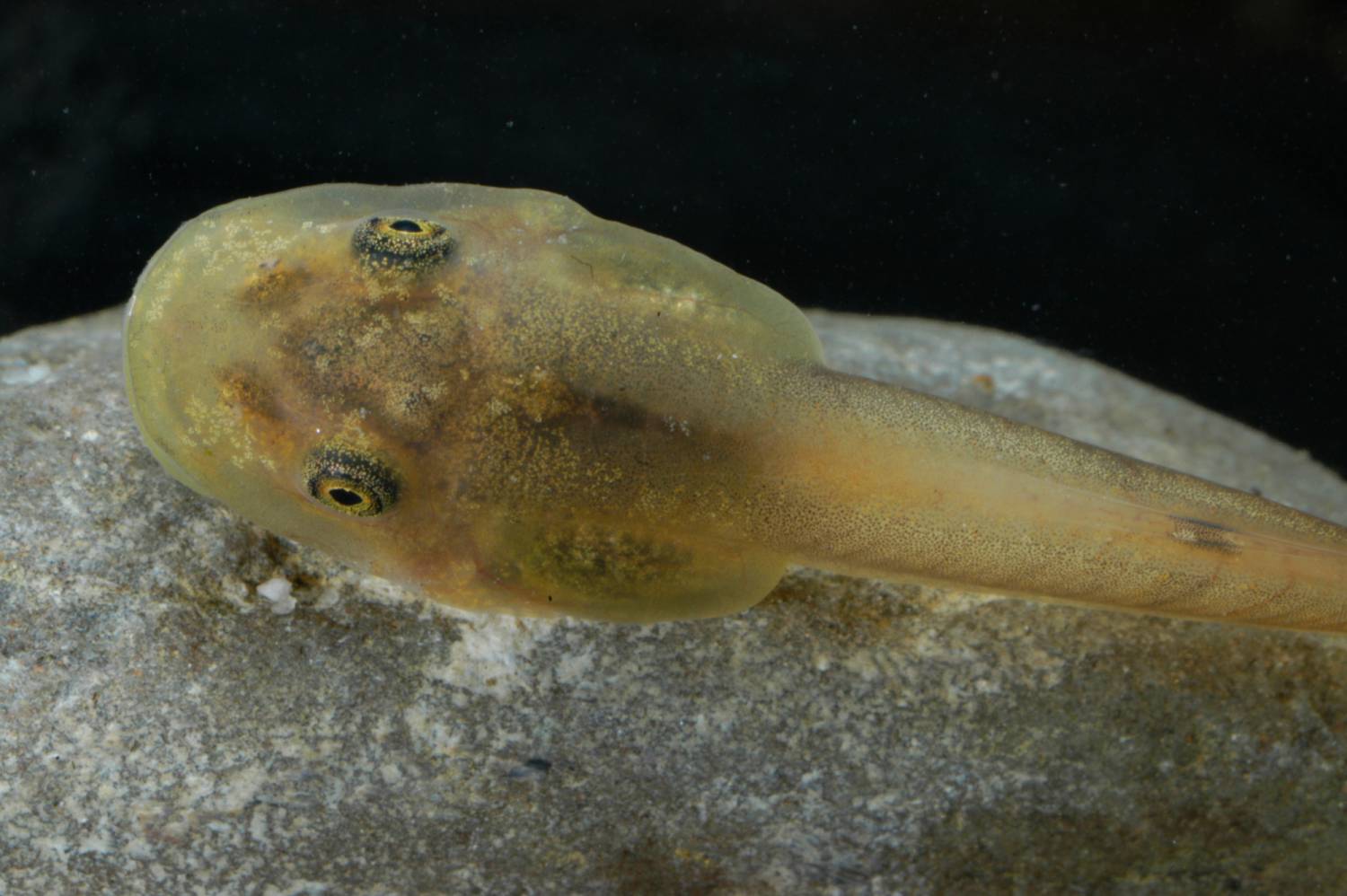
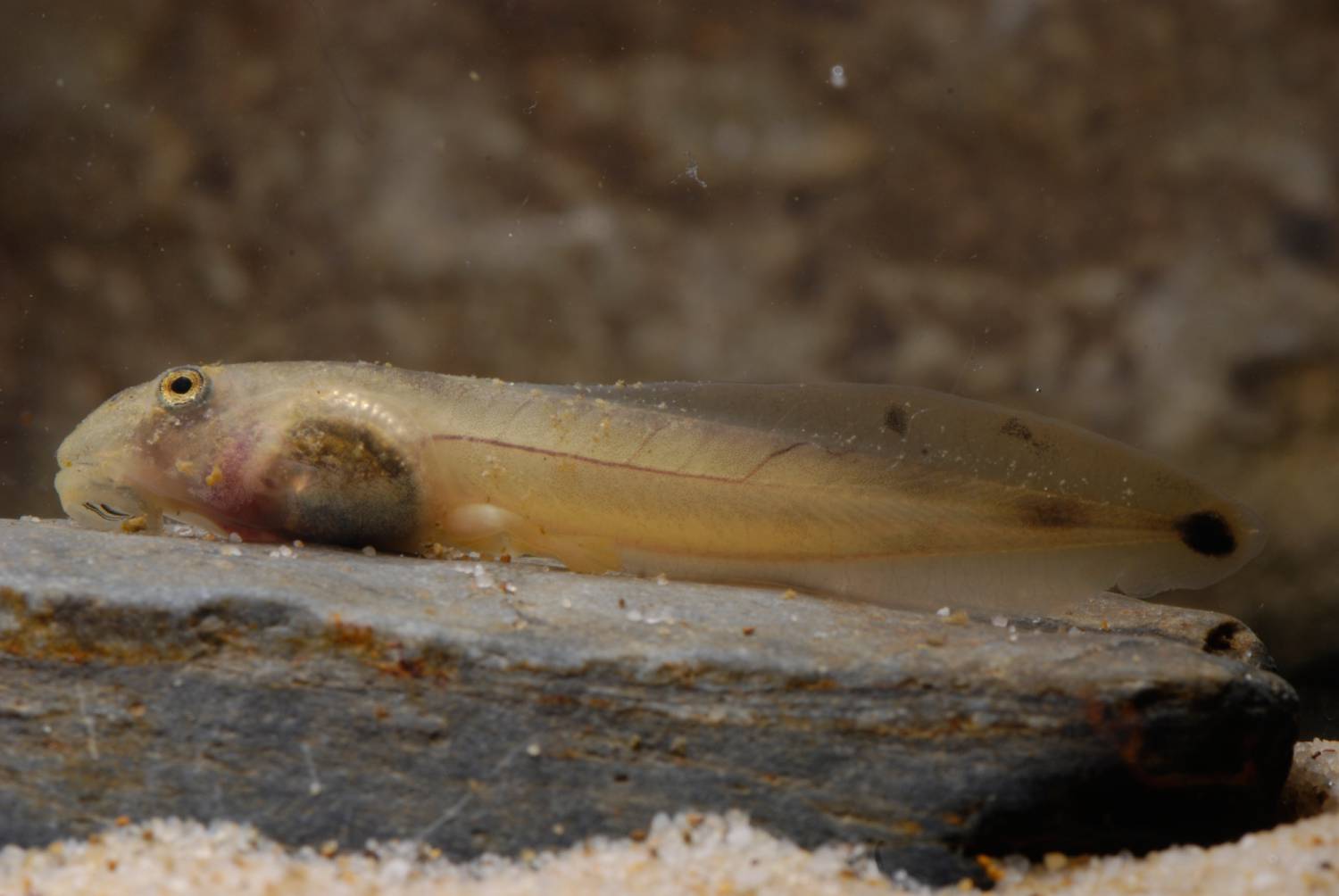
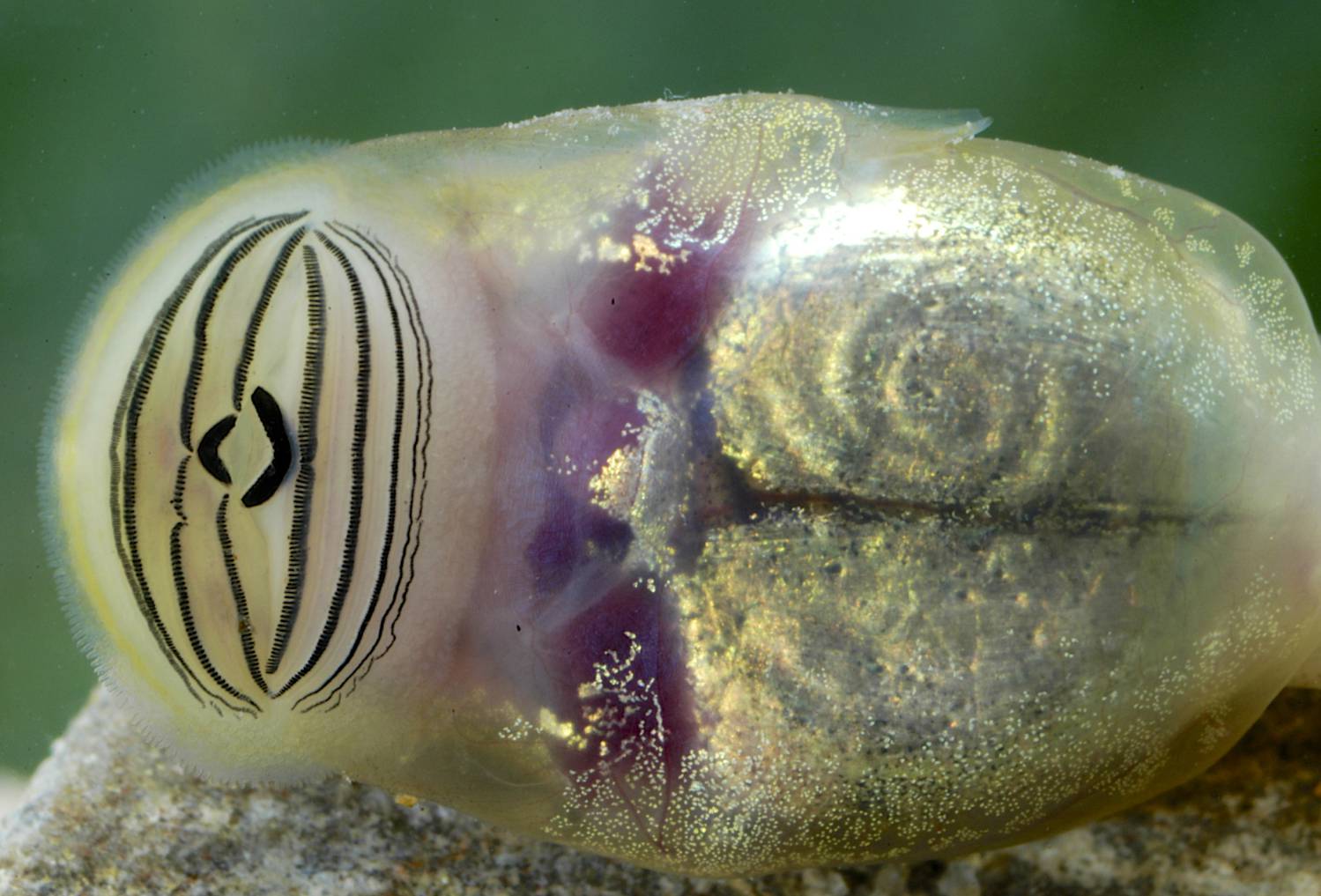
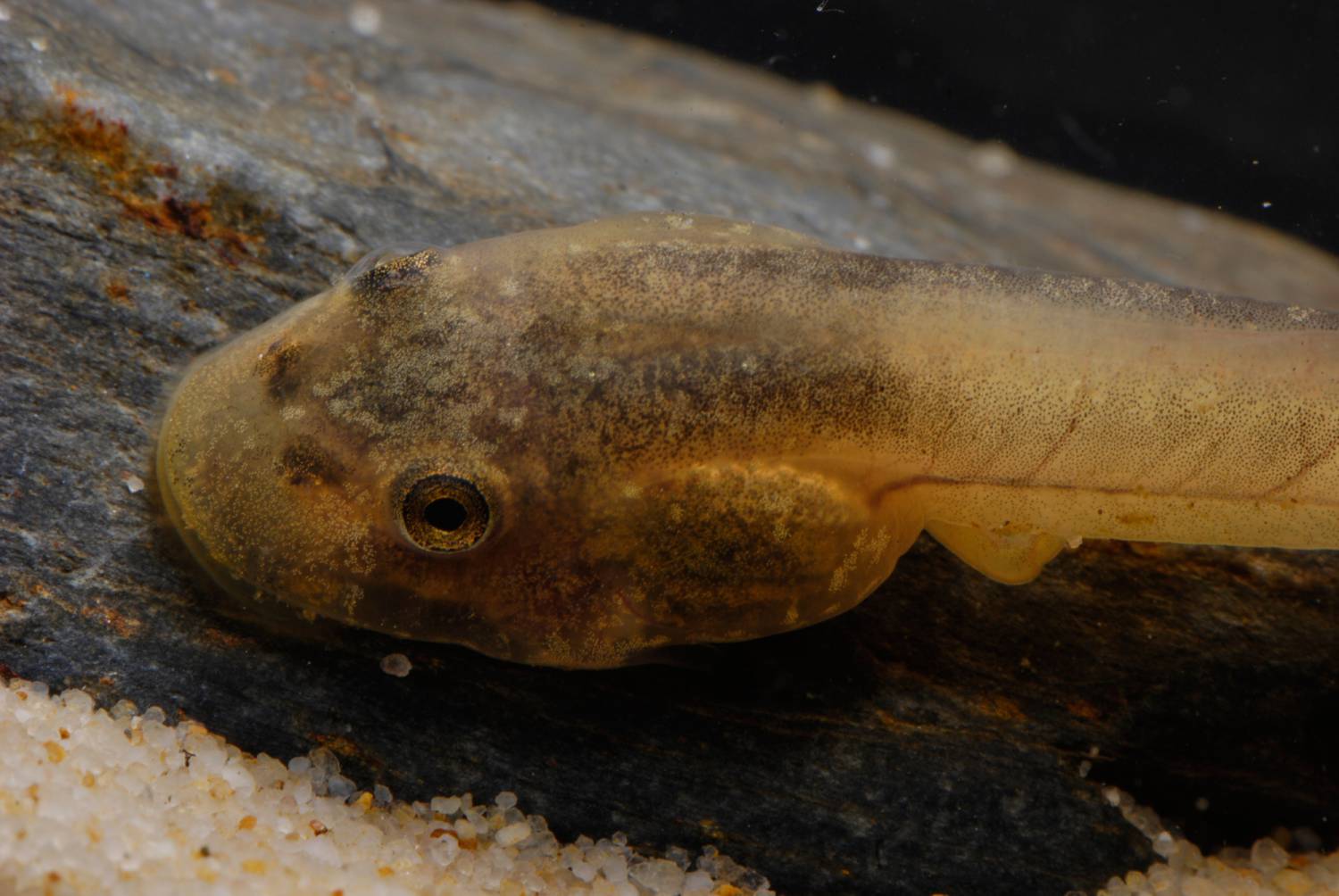
Overall coloration ranges from light to dark brown, with grayish or olive hues dorsally. Fine dark brown dusting is present on the trunk and the muscular portion of the tail. Scattered iridophores may occur on the snout, cheek, and flanks. Red gills are visible through the cheek skin. Gills and heart can be seen through the translucent ventral skin, although each is partly obscured by patches of iridophores. The abdomen is opaque silver. A longitudinal streak corresponding to the vena abdominalis runs along the ventral midline. Gut coils are not clearly discernible. A few round black spots are present on the tail fins; otherwise, the fins are clear. The major tail vein and some myosepta are visible.

Snout

Expanded and broadly rounded. In profile, the snout slopes in a smooth, convex curve.

Oral Disc

Ventral and wide, measuring approximately 80% of maximum body width. The sucker lacks emargination between the upper and lower lip. The lower and lateral portions of the lips bear multiple rows of papillae, which are reduced on the upper lip. The marginal row consists of fine, pointed papillae, whereas papillae closer to the mouth are blunt and progressively shorter. The keratodont formula ranges from LTRF 4(3–4)/4 to 4(3–4)/5. Upper and lower keratodont rows are long and extend across most of the oral disc. Relative to disc size, the jaw sheaths are small but strongly built and black. The keratinized portion of the upper jaw is much narrower than that of the lower jaw. Jaw edges bear coarse, blunt serrations.

Body

Streamlined in lateral view. In dorsal view, the body contour is oval and dorsoventrally depressed. The head is broader than the trunk and reaches maximum width posterior to the eyes. The spiracle is sinistral and positioned low, below the mid-body axis in lateral view. The spiracular orifice is free and not fused to the body wall, and the spiracle is directed posteriorly.

Eyes & Nostrils

The nostril is positioned closer to the eye than to the snout. Eyes are dorsolateral and do not protrude beyond the body contour. The iris and sclera outside the iris are densely stippled with pale golden iridocytes on a black background. Toward the pupil, the golden iridocytes merge into a solid golden ring.

Tail

Very long and strongly muscular, comprising approximately 68% of total length. The tail base is nearly as deep as the trunk at their junction. The dorsal fin originates slightly posterior to the trunk-tail junction and exceeds the lower fin in height. Maximum tail height occurs at approximately mid-tail. Fin contours are shallowly convex. Both fins taper gradually and terminate in a moderately narrow, rounded tip.

Similar Species

Among Bornean species, tadpoles of Leptomantis penanorum are most similar to those of L. angulirostris. Further comparisons are provided under the description of L. penanorum.

Literature

Malkmus et al. (2002) reported that males perch on vegetation in 1–4 m hight above water at streams of Gunung Kinabalu. Males call from approximately 6 pm to 5:30 am. The call is similar to arboreal crickets of the subfamily Pseudophyllinae. Males are brown above, whereas the larger females are green.
Malkmus R, Manthey U, Vogel G, Hoffmann P, Kosuch J (2002) Amphibians & Reptiles of Mount Kinabalu (North Borneo). Koeltz Scientific Books, Königstein. 424 pp.

Inger, R.F., Tan, F.L. (1990) Recently discovered and newly assigned frog larvae (Ranidae and Rhacophoridae) from Borneo. The Raffles Bulletin of Zoology, 38: 3–9.