Zum Hauptinhalt springen

Frogs of Borneo

Frogs of Borneo

Frogs of Borneo

Frogs of Borneo

Frogs of Borneo

Frogs of Borneo

Frogs of Borneo

Frogs of Borneo

Frogs of Borneo

Frogs of Borneo

Frogs of Borneo

Leptomantis fasciatus

Tadpoles have been found in ponds at forest edges. As reports on the breeding habits of this species are scarce, it is possible that reproduction is not restricted to forest-edge or clearing situations, but may also take place in ponds within closed forest. Preliminary observations suggest that tadpoles are mainly active on the bottom of ponds. Adults live high in the canopy and descend only for reproduction.
  • Family:
    Rhacophoridae
  • Genus:
    Leptomantis
  • Ecomorph:
    benthic, exotrophic, lentic
  • Waterbody Type:
    stagnant
  • Water Column:
    bottom
  • Feeding Type:
    feeding
  • Size:
    40 mm
  • Development:
    larva, tadpole
  • Adult:
    Leptomantis

Coloration

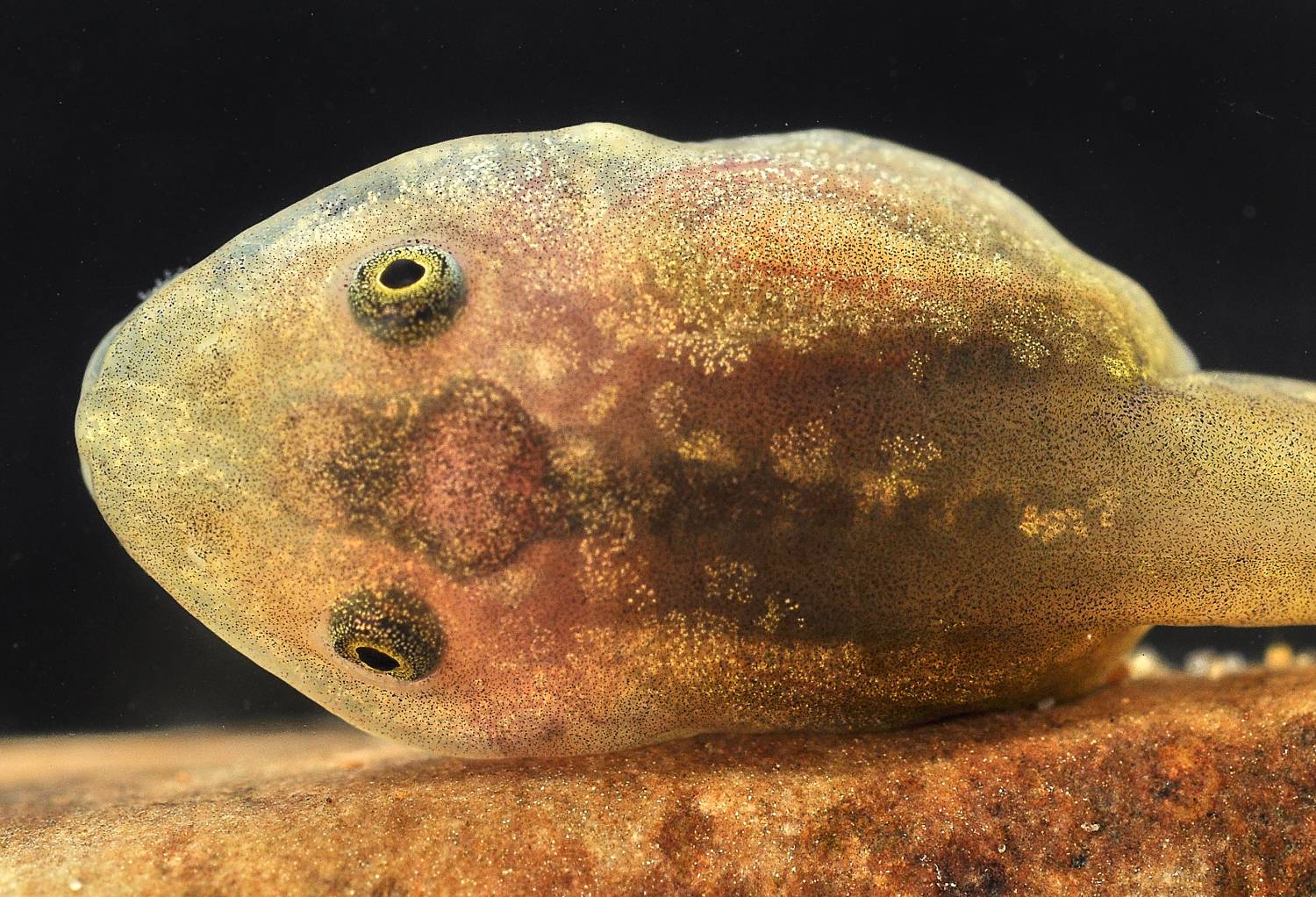
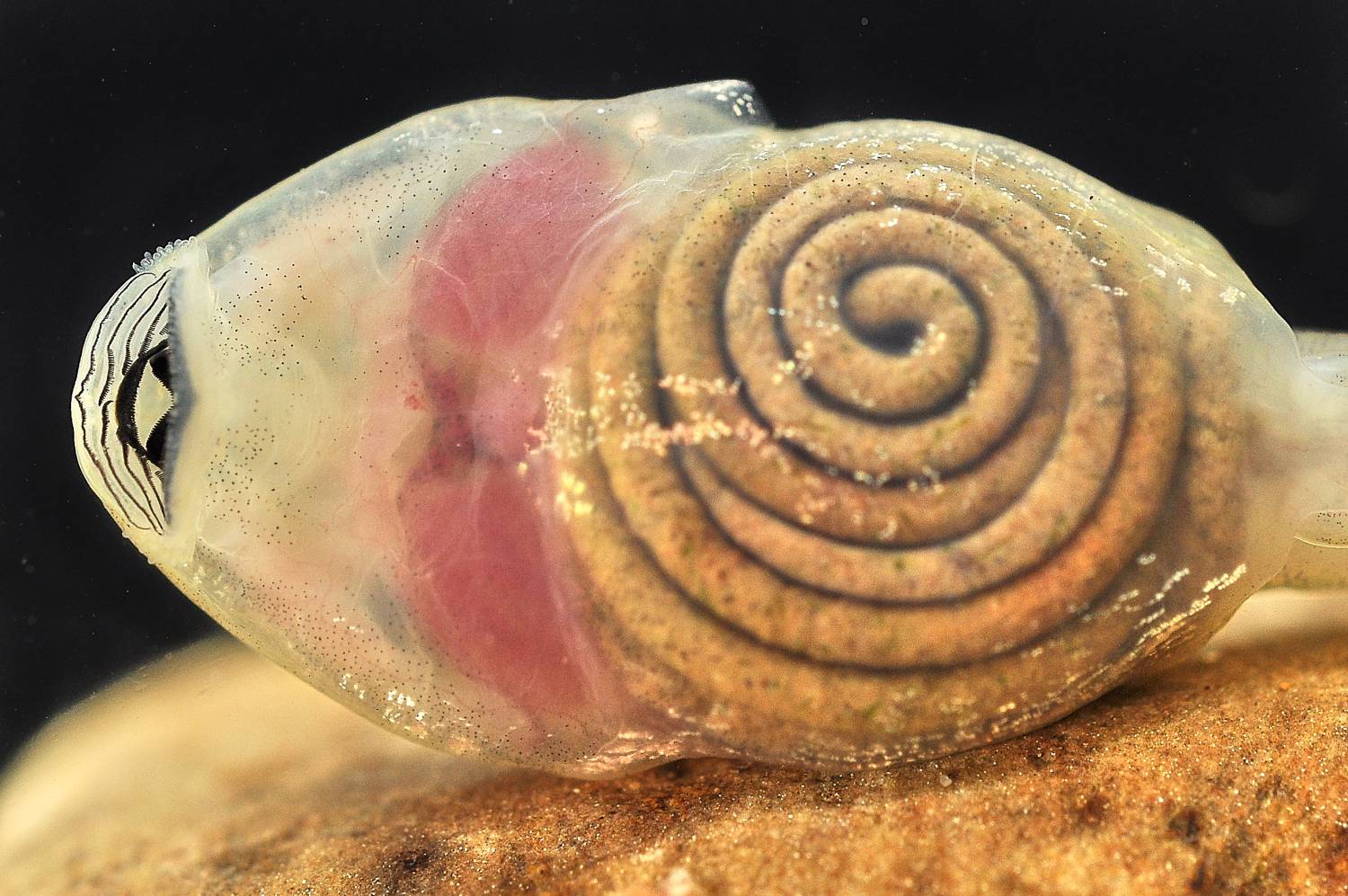
Light brown to gray dorsally. The trunk is darker than the head and tail. The braincase is darkly pigmented and visible as a dark, polygonal shape between the eyes. Flanks are stippled with iridophores superimposed on the general background color. The dorsal trunk lacks such stippling but bears iridophores arranged in golden patches above the vertebral column and at the base of the tail. Body pigmentation continues onto the tail, fading distally. Tail fins are weakly pigmented, with scattered melanocytes, and are otherwise mostly clear. The ventral side of the body is largely transparent and weakly pigmented, except for scattered melanocytes in the gular and buccal regions. Internal organs are visible through the skin. The anterior abdomen, corresponding to the gut coil, may show medial stippling of iridocytes. The oral disc is unpigmented.

Snout

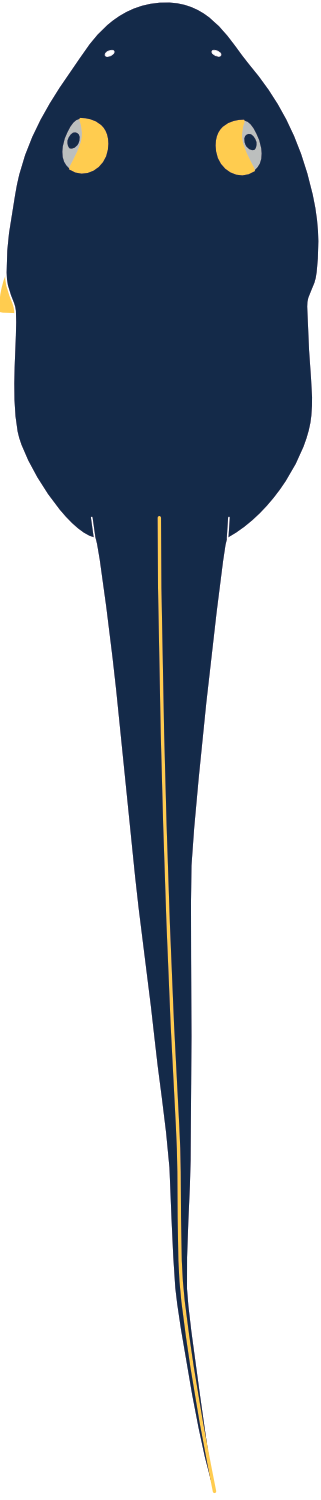
In dorsal view, the snout tapers to a narrowly rounded tip. In lateral view, the snout is relatively long, with a slightly angled profile caused by the somewhat elevated position of the nostrils.

Oral Disc

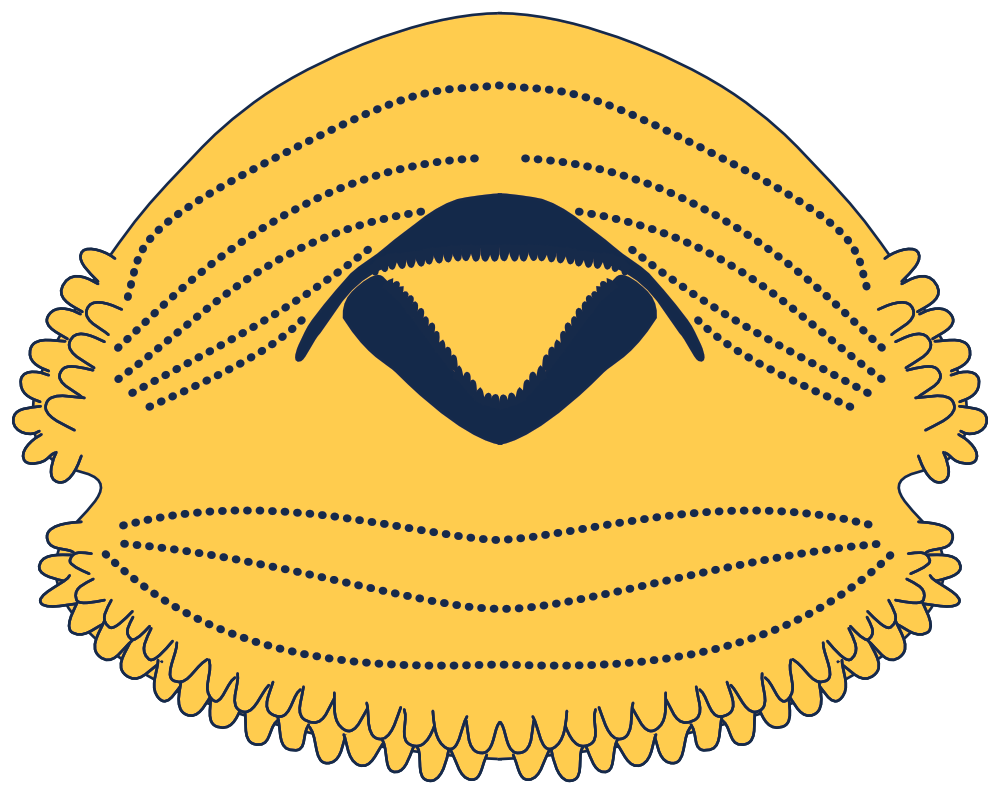
Anteroventral in position. Marginal papillae present on the lower lip and the lateral parts of the upper lip. The upper lip shows a broad medial gap in papillation, whereas the lower lip lacks such a gap. Marginal papillae on the lower lip are arranged biserially. The lateral portions of the upper lip bear one row of marginal papillae and one row of submarginal papillae. Papillae are short and blunt. Emarginations are present between upper and lower lips. Keratodont formula: LTRF 5(2–5)/3. Peripheral keratodont rows are long and span most of the upper and lower lips. Beaks are well keratinized but moderately strong; jaw edges bear sharp serrations. The upper beak is broadly and shallowly arched, whereas the lower jaw is more V-shaped, with the edge mildly convex laterally.

Body

In lateral view, the body is depressed and ovoid, with the trunk deeper than the head region. In dorsal view, the body contour is broadly oval, with a slight constriction between head and trunk. The body is widest at the gill region. Spiracle sinistral; the spiracular tube opens posterolaterally and is positioned low, below the longitudinal body axis in lateral view. The medial part of the spiracular orifice is free from the abdominal wall, forming a short free tube.

Eyes & Nostrils

Eyes dorsolateral. In dorsal view, the nostril is closer to the snout than to the eye, oriented anterolaterally, and slightly elevated. The iris is densely stippled with golden pigment cells, merging into a golden ring toward the pupil. The sclera has a black background and is stippled with silver and golden iridocytes.

Tail

Moderately strong and long, approximately 67% of total length. The upper fin rises at the trunk-tail junction. In lateral view, the upper tail fin shows little arching. The edges of the upper and lower fins converge gradually, with fairly straight contours, toward a narrowly rounded tail tip. The upper fin is slightly higher than the lower fin. Maximum tail height is reached at mid-tail. The lateral tail vein is present but indistinct. Myosepta are discernible distally but otherwise indistinct.

Similar Species

Tadpoles of Leptomantis fasciatus may be confused with those of Rhacophorus pardalis because of similar size, general body coloration, and habitat. However, L. fasciatus lacks the conspicuous cheek coloration present in most (but not all) populations of R. pardalis and has one to two fewer keratodont rows on the upper lip. Inger (1985) described “Rhacophorus sp. D”, which he suggested may represent L. fasciatus. The tadpole of the closely related L. rufipes is similar in overall body shape and LTRF. Tadpoles of L. fasciatus appear to grow larger, tend toward lighter brown rather than dark gray coloration, show conspicuous lateral iridocyte patterns (absent in L. rufipes), and have a more tapering snout in dorsal view. Further studies are needed to determine whether these differences fall outside the range of intraspecific variation.

Literature

Observations on active breeding groups have rarely been documented. We detected adult frogs, some in amplexus, in low vegetation around a breeding pond. Details on nest building have hitherto not been recorded. Calls consist of a click, followed by a raspy trill.
Inger, R.F. (1985) Tadpoles of the forested regions of Borneo. Fieldiana Zoology new series 26: 1–89; [Inger described "Rhacophorus sp. D" that, he reasoned, may represent L. fasciatus].

Inger, R.F., Stuebing, R.B., Grafe, T.U., Dehling, J.M. (2017) A field guide to the frogs of Borneo. 3rd ed. Natural History Books, Kota Kinabalu. 228 pp.