Frogs of Borneo

Frogs of Borneo

Frogs of Borneo

Frogs of Borneo

Frogs of Borneo

Frogs of Borneo

Frogs of Borneo

Frogs of Borneo

Frogs of Borneo

Frogs of Borneo

Frogs of Borneo
Filter
Leptomantis penanorum
The known exemplars were recorded from approximately 1650 m elevation at Gunung Mulu in primary forest. Another population has been encountered at Gunung Hose at approximately 1000 m. The elevation range and detailed ecological requirements are mostly unknown. Tadpoles are adapted to life in clear mountain streams. Only few individuals have been documented, limiting knowledge of the species’ variability. Tadpoles were found in small, shallow stony pools with moderate current, interconnected by steep, narrow channels on bedrock. They appeared to avoid channels with high water velocity.
-
Family:Rhacophoridae
-
Genus:Leptomantis
-
Ecomorph:adherent-suctorial, exotrophic, lotic, rheophilous
-
Waterbody Type:flowing
-
Water Column:bottom
-
Feeding Type:feeding, hard surface grazer, omnivorous, rasping
-
Size:34 mm
-
Development:larva, tadpole
-
Adult:Leptomantis
Coloration
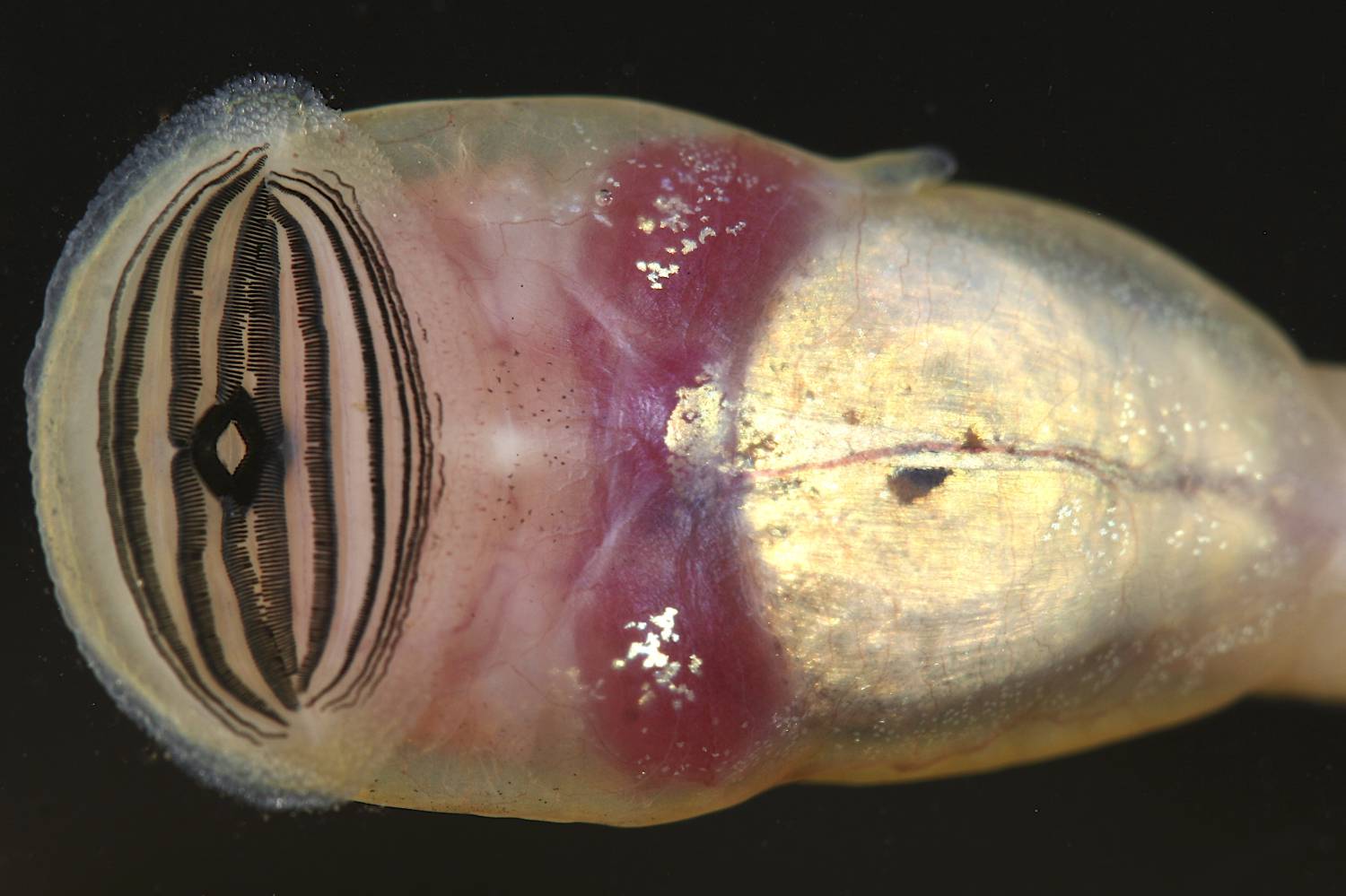
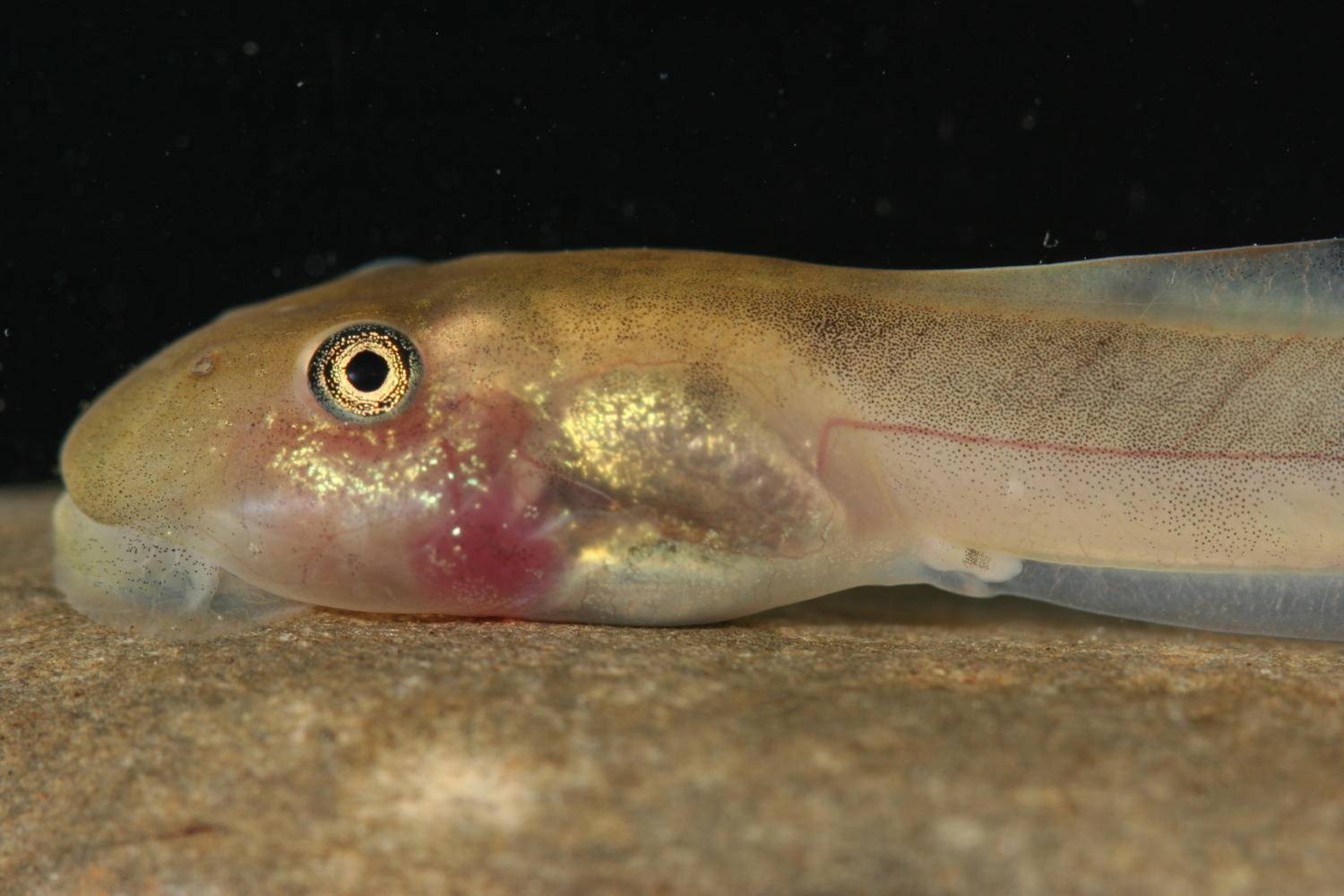
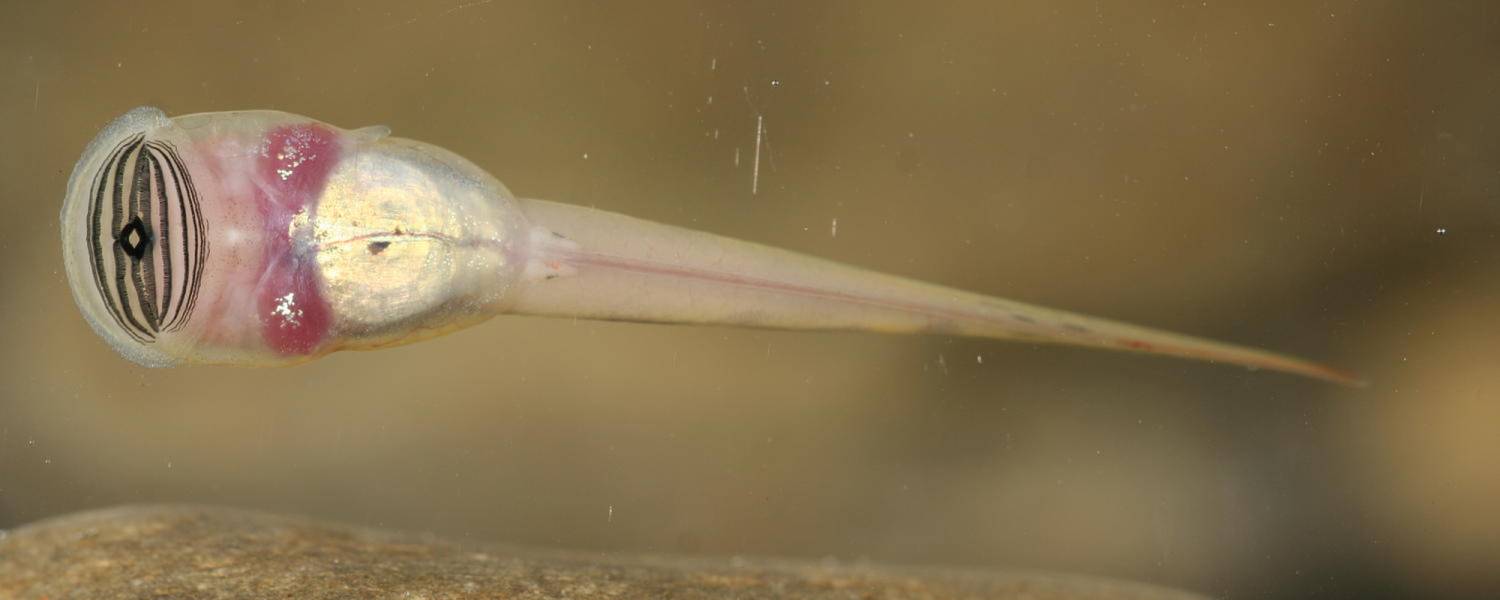
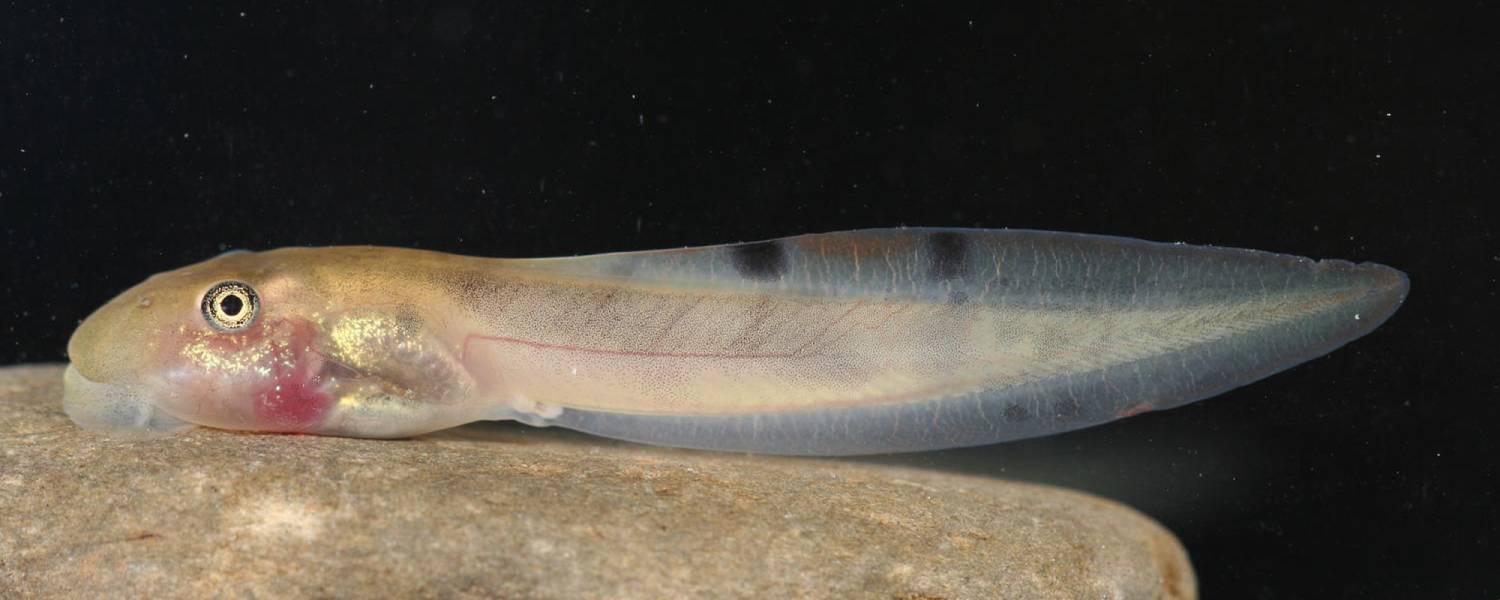
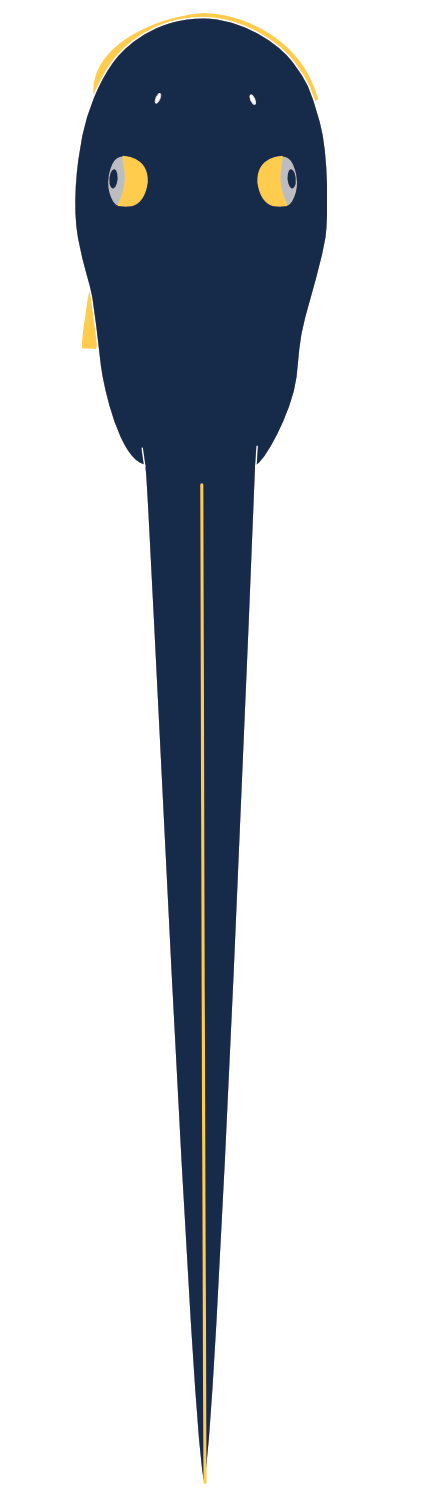
Generally pale amber dorsally, with scattered dark brown dusting on the trunk and muscular part of the tail. A patch of golden pigment cells covers the top of the head between and behind the eyes. Additional golden pigment is present below the eyes and on the flanks. Red gills are visible through the cheek skin, and both gills and heart can be seen through the translucent ventral skin. Each gill area and the heart bear a spot of silvery iridocytes. Abdomen opaque silver with a median longitudinal streak (Vena abdominis). Gut coils obscured by iridocyte layer. Few clear, round black spots present on otherwise clear tail fins. Edges of upper fin and posterior lower fin tinted orange. Major lateral tail vein and some myosepta discernible.
Snout
Expanded, broadly rounded. Profile smoothly convex and sloping in lateral view.
Oral Disc
Ventral and, in adhesion state, wider than the snout. Sucker without emargination between upper and lower lips. Lower and lateral parts of the lip bear multiple rows of marginal and submarginal papillae, reduced on the upper lip. Labial Tooth Row Formula (LTRF) ranges from 4(4)/6 to 4(4)/7, with the seventh row sometimes incomplete. Third upper row shows an indentation, but keratodonts continuous in the specimen examined. Upper and lower lip keratodont rows long, spanning most of the oral disc. Jaws small yet strongly built, black. Keratinized portion of upper jaw narrower than lower jaw. Jaw edges bear coarse, blunt serrations.
Body
Streamlined. In dorsal view, body contour inverted droplet-shaped or pear-shaped, with head wider than trunk. Body dorsoventrally depressed. Head widest posterior to eyes, followed by a slight constriction at transition to trunk. Spiracle sinistral and low, below mid-body axis in lateral view. Spiracular orifice free, not fused to body wall, directed posteriorly.
Eyes & Nostrils
Nostril approximately midway between eye and snout, slightly elevated. Eyes dorsolateral, not projecting beyond body contour. Iris and eyeball outside iris densely stippled with pale golden iridocytes on black background. Pigments merge into a solid golden ring around the pupil.
Tail
Strongly muscular, long (approx. 64% of total length). Tail base nearly as deep as trunk at their junction. Dorsal fin originates at trunk-tail junction, exceeding the lower fin in height. Maximum tail height at mid-tail. Fin contours shallowly convex. Tail fins taper gradually to a moderately narrow rounded tip.
Similar Species
Leptomantis penanorum tadpoles are distinct morphologically but may be confused with L. angulirostris. Distinguishing features are not yet established with large samples. Dorsal coloration, tail fin coloration, relatively longer and flatter snout, longer tail, reduced marginal papillae on upper lip, and one additional keratodont row on the lower lip appear to separate L. penanorum from L. angulirostris. Among Bornean Leptomantis, only these two species have conspicuous black spots on their tail fins.
Literature
Dehling (2008) reported that males call at irregular intervals between 30 secs and 1 min. The call was described as a very short trill, without a significant frequency modulation within the notes of a single call. The dominant frequency spectrum of the notes was 3900–4600 Hz. Males present themselves bright green at night.
Dehling, M. (2008) A new treefrog (Anura: Rhacophoridae: Rhacophorus) from Gunung Mulu, Borneo. Salamandra 44: 193–205.
Haas, A., Hertwig, S.T., Krings, W., Braskamp, E., Dehling, J.M., Min, P.Y., Jankowsky, A., Das, I. (2012) Description of three Rhacophorus tadpoles (Lissamphibia: Anura: Rhacophoridae) from Sarawak, Malaysia (Borneo). Zootaxa 3328: 1–19.