Zum Hauptinhalt springen

Frogs of Borneo

Frogs of Borneo

Frogs of Borneo

Frogs of Borneo

Frogs of Borneo

Frogs of Borneo

Frogs of Borneo

Frogs of Borneo

Frogs of Borneo

Frogs of Borneo

Frogs of Borneo

Limnonectes ibanorum

Quiet sections of midsized streams, especially in pools partially or fully cut off from the main water by gravel bars. Also reported from potholes on river banks. Tadpoles are benthic, staying close to the bottom of their pools, and can be observed foraging by day. Their coloration provides excellent camouflage on gravel or sand bottoms. When disturbed, they quickly swim to shelter under the nearest rock.
  • Family:
    Dicroglossidae
  • Genus:
    Limnonectes
  • Ecomorph:
    benthic, exotrophic, lentic, lotic
  • Waterbody Type:
    flowing
  • Water Column:
    bottom
  • Feeding Type:
    feeding, generalist
  • Size:
    35 mm
  • Development:
    larva, tadpole
  • Adult:
    Limnonectes

Coloration

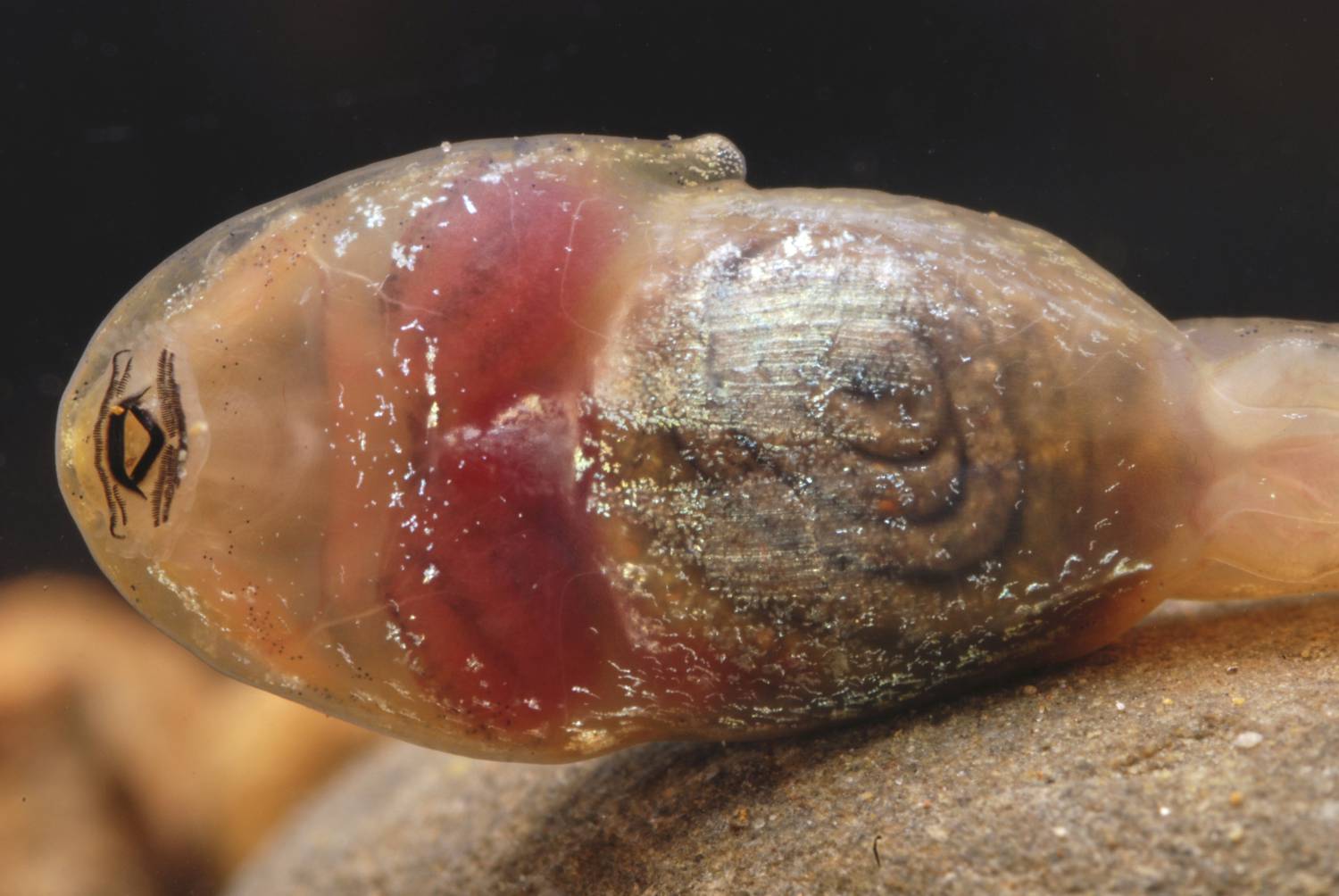
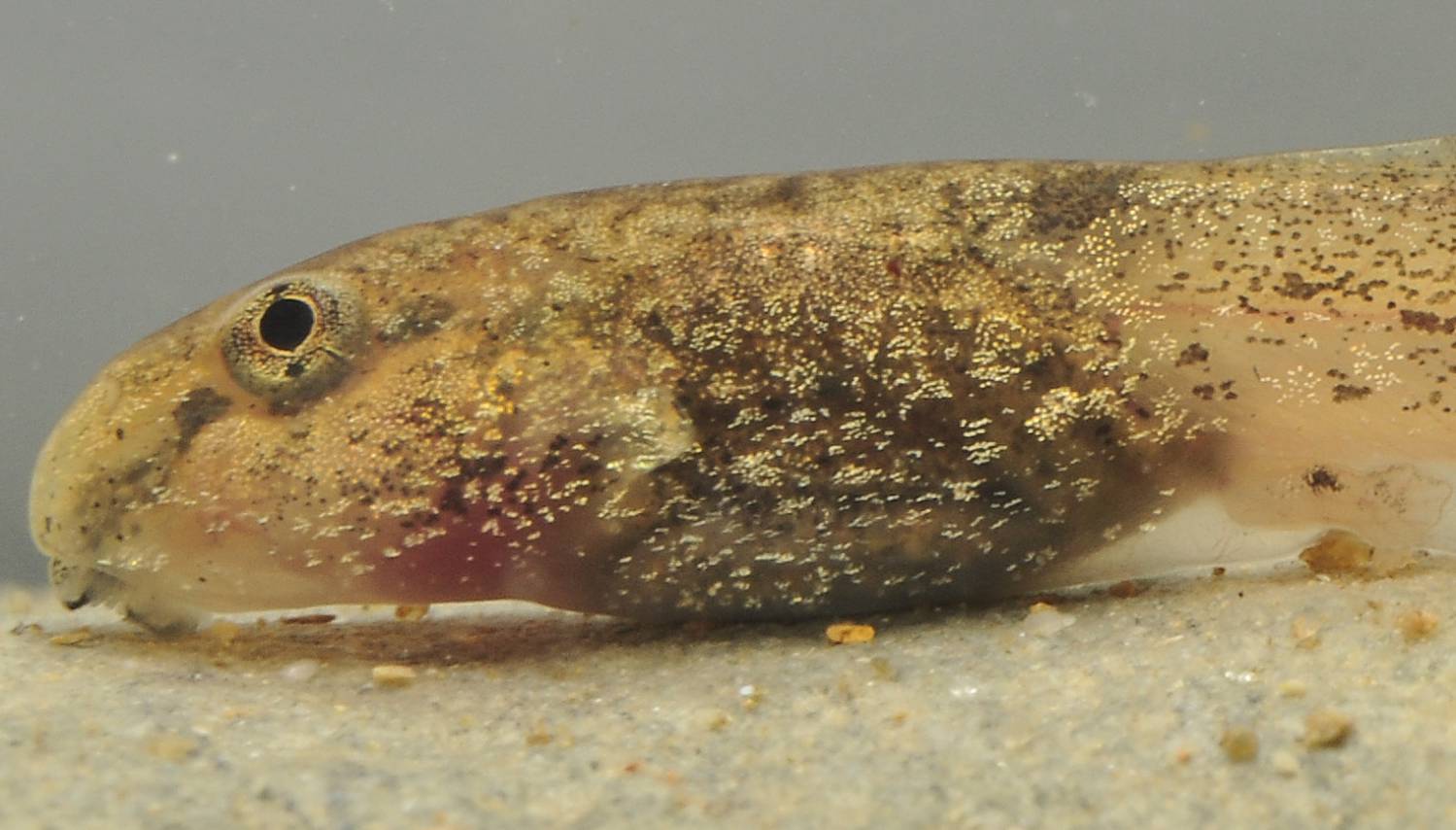
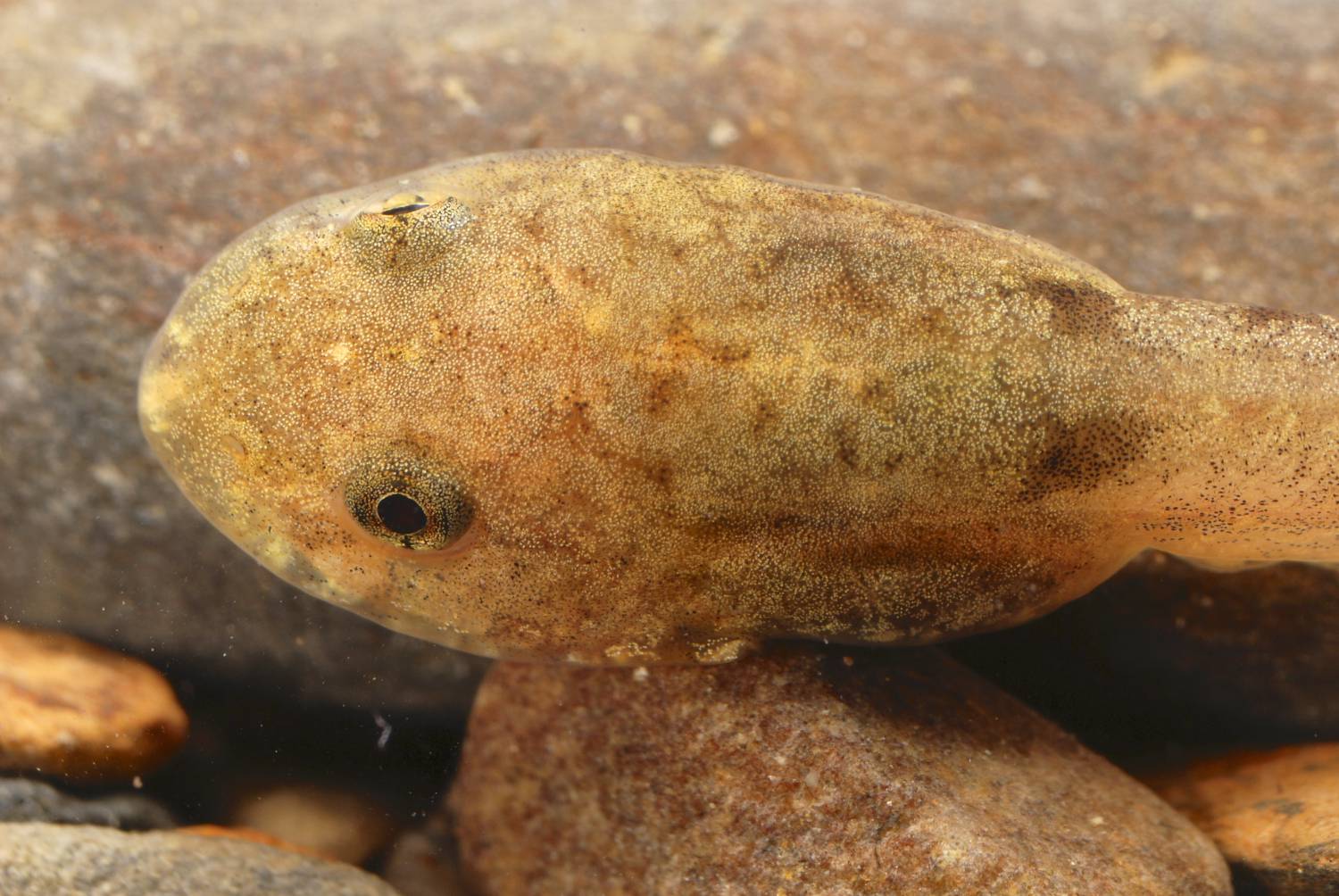
Generally sandy brown to light olive brown dorsally, with irregular blurred marbling and densely dusted with iridocytes. Vermiculate melanocytes visible at higher magnification dorsally. Two distinct blotches at the trunk-tail junction. Flanks darker than dorsum. Occasionally, a dark streak extends from eye to oral disc. Scattered horizontal dashes of silver iridocytes on lower head and lower flank; midflank bears rosette-like clusters of iridocytes. Ventral skin mostly unpigmented, anterior two-thirds of abdomen with silver iridocyte sheath; some iridocytes in gular region; gills and gut coil visible. Body color continues onto dorsal tail and fades distally. Diffuse clusters of melanocytes form blurred marbling along tail, including fins. Rosette-like clusters of iridocytes extend from trunk to tail and tail fins.

Snout

Smoothly arched in dorsal view; moderately long and bluntly rounded in lateral view, not distinctly tapering.

Oral Disc

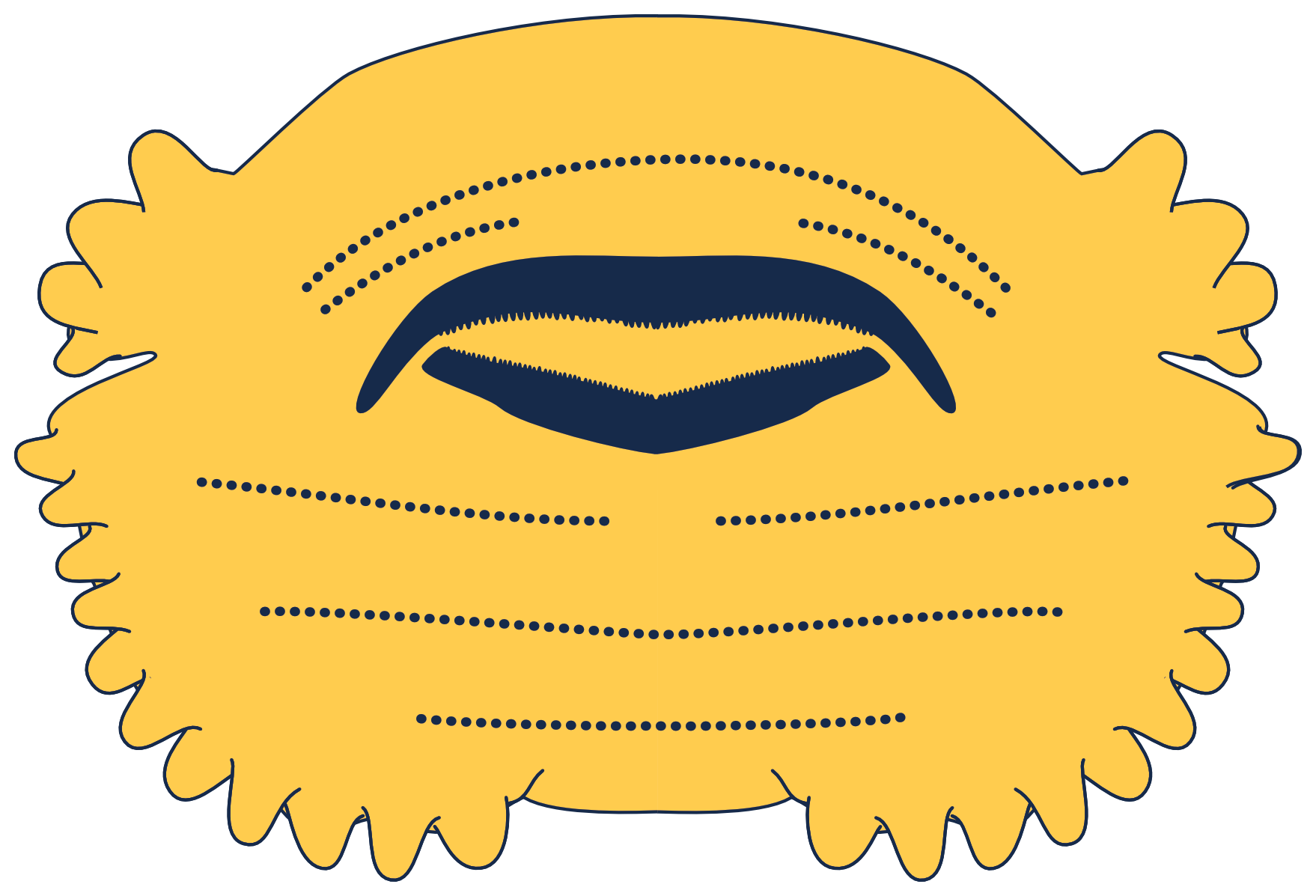
Moderately large (~40% of head width), anteroventral to ventral in position, not projecting beyond snout contour in dorsal view. An emargination separates upper and lower lips. Blunt papillae along margins, broad gap in upper lip, narrower gap in lower lip. Marginal papillae thick, low in number, arranged in staggered line on lower lip, appearing as double row. Submarginal papillae absent. LTRF 2(2)/3(1). Beaks moderately keratinized, not strong; edges bear fine serrations. Upper beak weakly convex medially, arched laterally; lower beak very flat V-shaped.

Body

Medium-sized. Dorsal view shows oval contour. Head slightly wider than trunk. Widest point at gill region. Head smoothly rounded in dorsal view. Body dorsoventrally depressed. Spiracle sinistral, opening posteriorly. Medial rim of spiracular orifice attached to body wall. Spiracle below mid-body level in lateral view. Lateral line organs indistinct.

Eyes & Nostrils

Eyes dorsolateral. Nostril anterolaterally oriented, closer to snout than eye; rim smooth. Iris dotted with gold iridocytes forming a complete ring around pupil, less dense anteriorly and posteriorly; narrow areas lacking iridocytes in upper and lower sectors form black spots or vertical streaks.

Tail

Approximately 68% of total length. Muscular part strong, slightly less high than trunk in lateral view; about half of maximum trunk width in dorsal view. Dorsal fin originates posterior to trunk-tail junction (~10% of tail length). Upper fin slightly higher than lower fin. In posterior third, fins converge into acute tip. Tail elegantly lancet-shaped. Maximum tail height at mid-tail level. Lateral tail vein visible; tail myosepta faintly visible distally.

Similar Species

There is similarity among Limnonectes tadpoles in body shape, relatively small oral disc, low count of keratodont rows, benthic habits that separates them from other genera. The habitat setting is important. Limnonectes ibanorum tadpoles are restricted to the microhabitats described above. L. leporinus can occasionally occur in the same pools with L. ibanorum. L. leporinus tadpoles show greater contrast in color pattern, commonly with a black horizontal line at the base of the tail, and a different tail shape. Creek frog tadpoles have more bluntly rounded snouts in lateral view. In L. finchi and L. palavanensis, the upper tail fin originates more posteriorly, and habitat choice is distinct.

Literature

Details of egg laying, nesting site and early development remain unknown.
Inger, R.F. (1966) The systematics and zoogeography of the Amphibia of Borneo. Fieldiana Zoology 52:1–402.

Inger, R.F. (2009) Contributions to the natural history of seven species of Bornean frogs. Fieldiana Zoology 116: 1–25.