Frogs of Borneo

Frogs of Borneo

Frogs of Borneo

Frogs of Borneo

Frogs of Borneo

Frogs of Borneo

Frogs of Borneo

Frogs of Borneo

Frogs of Borneo

Frogs of Borneo

Frogs of Borneo
Filter
Limnonectes suboliferus
Tadpoles of western Sarawak populations of Limnonectes palavanensis have been found in small, slow-moving, shallow forest streams, swampy areas, intermittent streams, as well as roadside ditches along forest roads with some water current. Tadpoles from populations in northeastern Sarawak were also observed using shallow ponds, silty puddles, muddy ephemeral flooded open areas, pig wallows, and ditches at forest edges for larval development. When disturbed, tadpoles hide within the superficial layer of the soft-bottom substrate.
-
Family:Dicroglossidae
-
Genus:Limnonectes
-
Ecomorph:benthic, exotrophic
-
Waterbody Type:flowing
-
Water Column:bottom
-
Feeding Type:feeding, generalist
-
Size:30 mm
-
Development:larva, tadpole
-
Adult:Limnonectes
Coloration
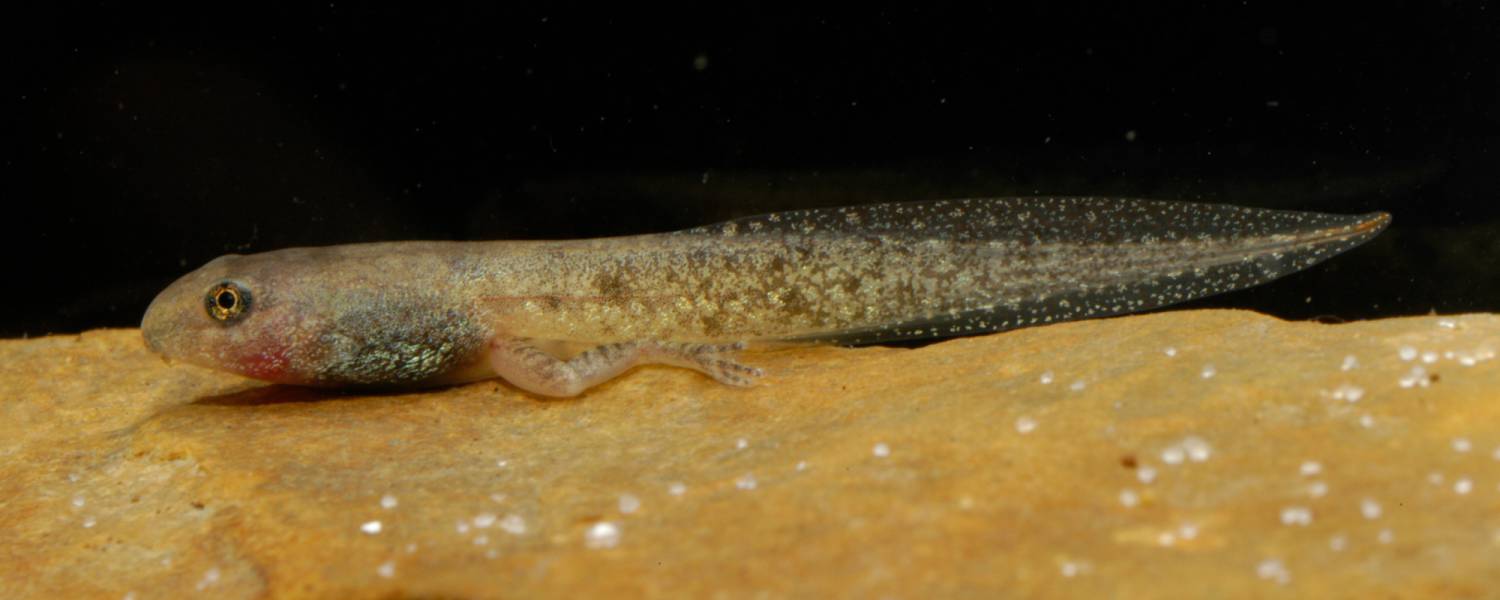
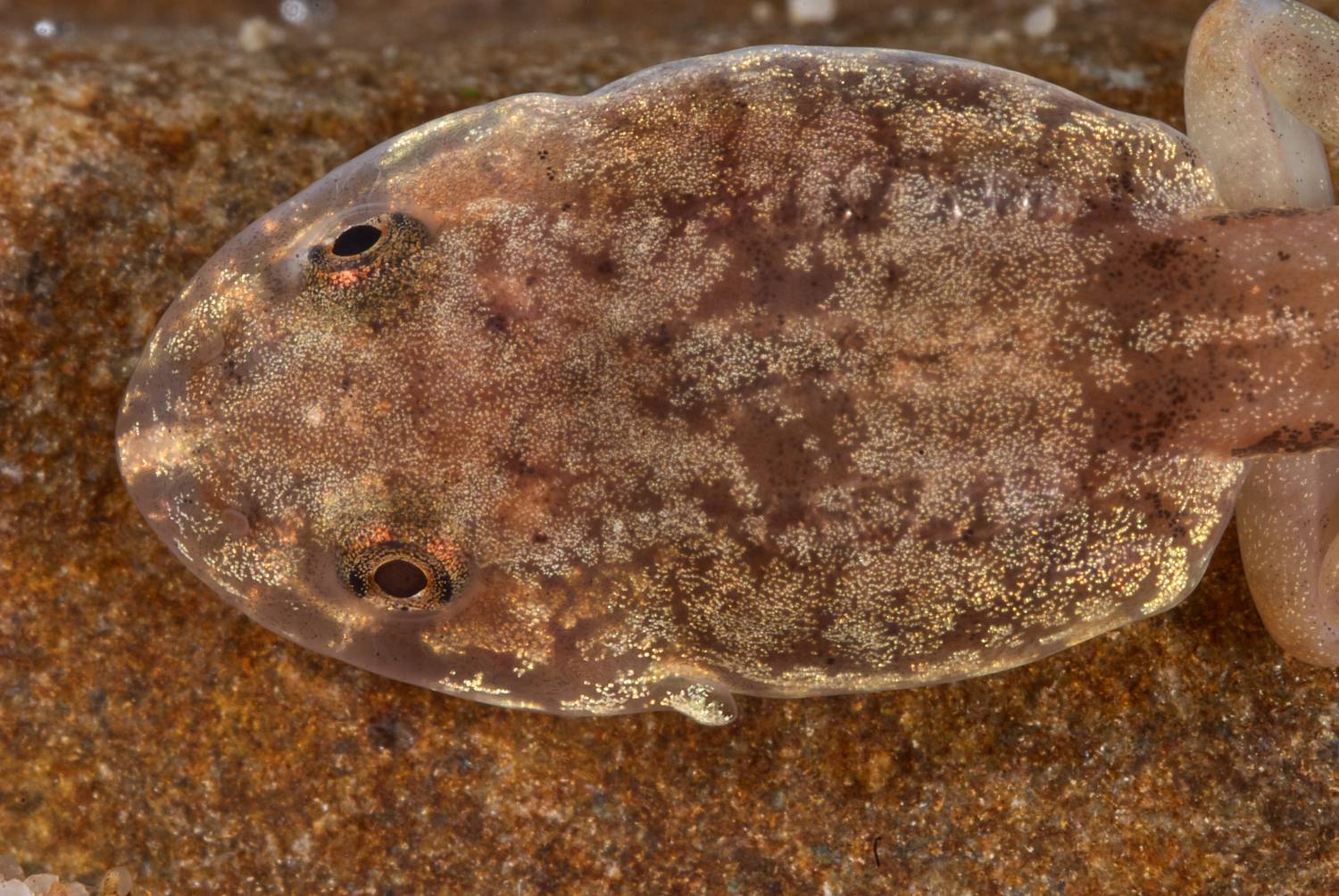
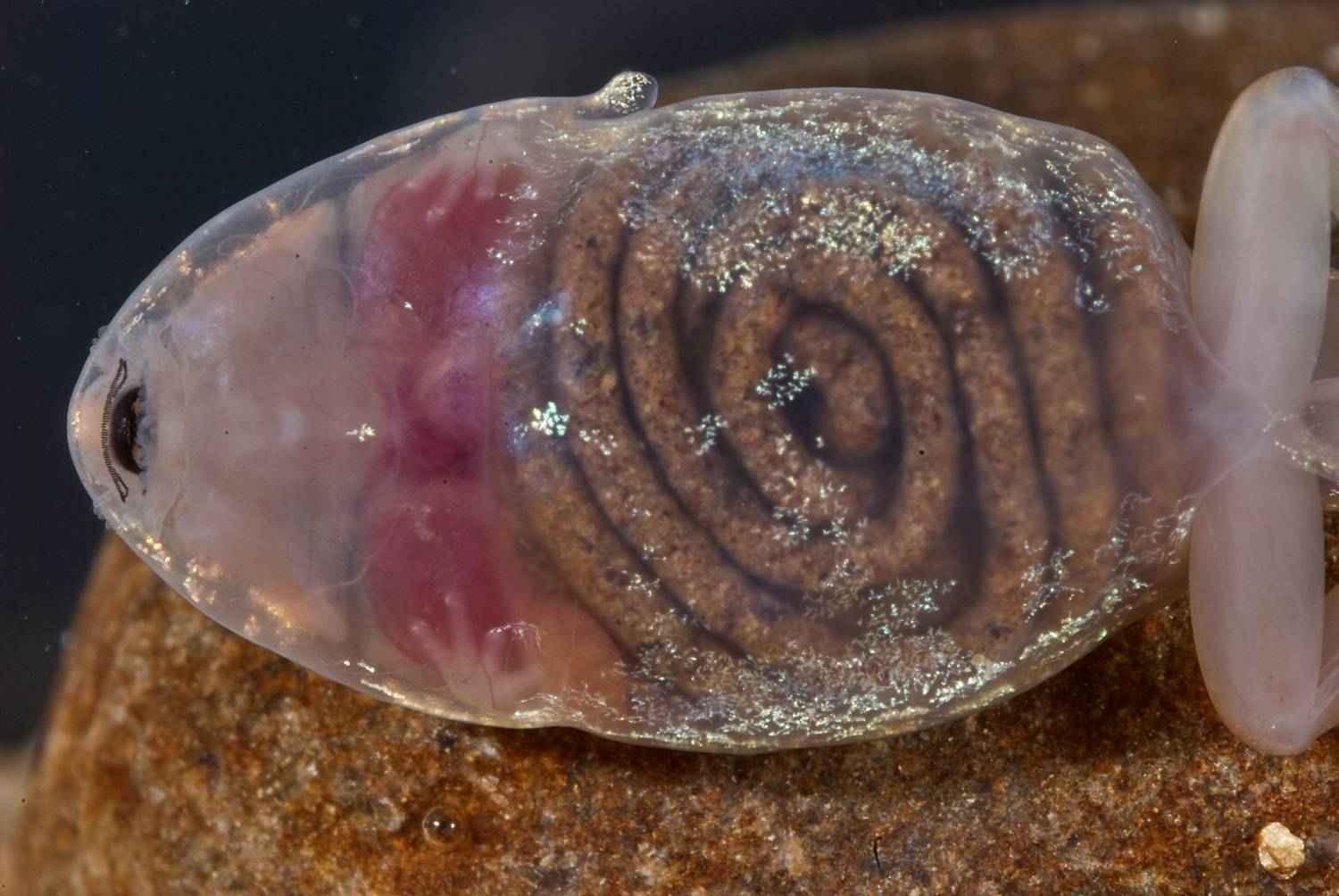
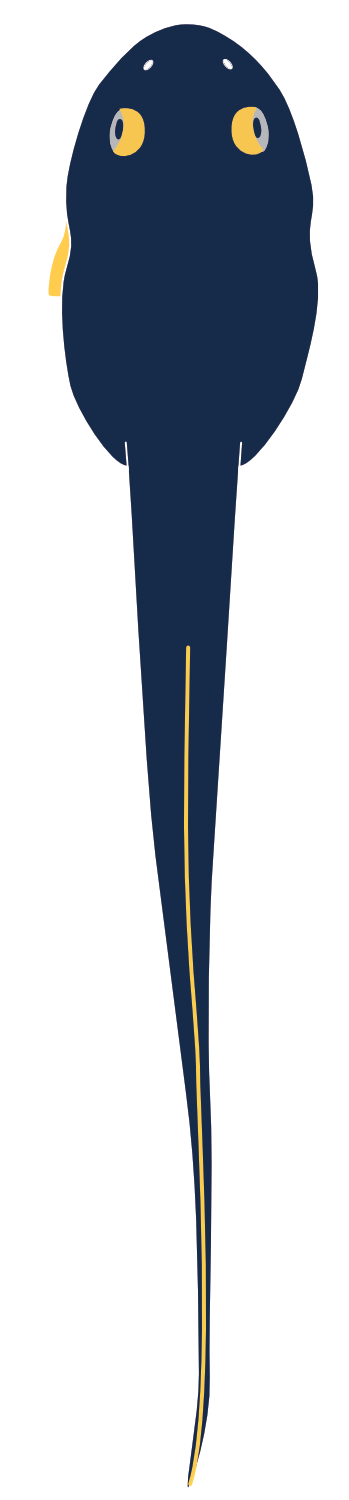
Light to mid brown dorsally. Irregular and faint dark brown mottling present above, with few scattered black dots. Dorsal surfaces densely dusted with iridocytes. A dark blotch or saddle-shaped marking present at the trunk-tail junction dorsally. Flanks darker than dorsum, marbled with light and dark areas. Dark facial patches may occur on the lateral snout, below the eye, and in the lateral gill region, but are usually indistinct. On the lower head and lower flanks, iridocytes form a cloudy pattern of clustered patches. Ventral skin mostly unpigmented and transparent. Scattered iridocytes present on the anterior and lateral abdominal regions. Tail similar in dorsal coloration to the trunk but overall lighter and with more distinct markings; tail (including fins) marbled to speckled. Numerous small clusters of cream- to silver-colored iridocytes, often forming rosette-like structures, cover the tail and tail fins.
Snout
In dorsal view, snout forms a smooth, wide arch with only subtle tapering toward the tip. In lateral view, snout moderately long, slightly tapering into a bluntly rounded tip that overhangs the oral disc.
Oral Disc
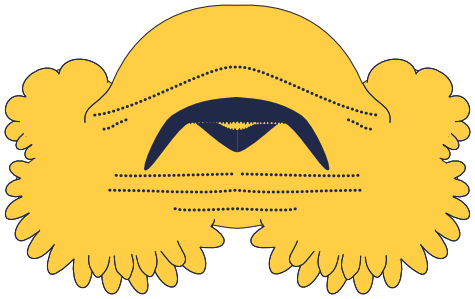
Moderately large, approximately 30–35% of maximum head width, anteroventrally oriented and not projecting anteriorly beyond the snout contour in dorsal view. Emargination between upper and lower lips present but shallow. Bluntly conical marginal papillae present, with a wide medial gap in the upper lip and a narrow medial gap in the lower lip. On the lower lip, papillae arranged in a single row; medially arranged in a staggered fashion, giving the appearance of a double row. Submarginal papillae absent. LTRF 2(2)/3(1), with the inner keratodont row of the upper lip very short. Beaks well keratinized but low; edges finely serrated. Upper beak straight medially and concavely deflected distally. Lower beak V-shaped.
Body
Medium-sized. In dorsal view, body contour generally oval, with a constriction demarcating the transition from head to trunk. Body dorsoventrally depressed. Head as wide as trunk; widest point of body at the gill region or anterior trunk. Head contour forms a broad, smooth arch in dorsal view. Spiracle sinistral, directed posteriorly, located below the mid-body line. Medial side of spiracle attached to body wall; lateral spiracular wall extends further posteriorly than the medial side. Lateral line organs indistinct.
Eyes & Nostrils
Eyes dorsolateral and relatively widely spaced. Nostrils anterolaterally oriented, closer to the snout than to the eye; nostrils relatively large, rim without distinct projection. Iris and orbit densely dotted with gold iridocytes on a black background. Iridocytes form a solid ring around the pupil. Iridocytes less dense in the anterior, posterior, dorsal, and ventral sectors; distinct radial pattern absent.
Tail
Long, comprising 69–73% of total length. Muscular part of tail moderately strong. In dorsal view, tail muscle approximately half the maximum trunk width. Tail slightly lower than trunk height in lateral view. Upper fin originates far posterior to the trunk-tail junction, at 15–20% of tail length. Both fins low, with upper fin slightly higher than lower fin; upper fin arches in a shallow convex curve. In the posterior fourth of the tail, fins converge into an acute or narrowly rounded tip. A shallow concavity in the contour of the upper fin near the tip is often present. Maximum tail height at the middle third of the tail. Lateral tail vein visible in the proximal fifth of the tail. Tail myosepta indistinct.
Similar Species
Tadpoles of Limnonectes can be distinguished from many other Bornean genera by their LTRF, characterized by a low keratodont row count ranging from 1/3(1) to 2(2)/3(1). Tadpoles of L. palavanensis are most likely to be confused with those of L. finchi, and less so with other congeners. Creek Frog tadpoles are less dorsoventrally depressed and possess a more rounded and blunter snout. Tadpoles of L. ingeri, L. leporinus, L. malesianus, and L. paramacrodon have only one keratodont row on the upper lip (two in L. palavanensis), show more distinct lateral head patterning, bear denser and more conspicuous rosette-like iridocyte clusters across the tail, and exhibit a radial iris pattern. In L. finchi and L. palavanensis, the upper fin contour rises distinctly well posterior to the trunk-tail junction, and larvae of both species are smaller than those of L. ibanorum.
Literature
The calling male attracts the female to a suitable nesting site in the forest leaf litter. Up to 3550 relatively large (2.6 mm) eggs are laid on the forest floor and guarded by the male after fertilization. As the tadpoles hatch, they climb onto the dorsum of the male, who subsequently carries them to a suitable body of water in the vicinity. Thereafter, the male leaves and the tadpoles develop independently.
Inger, R.F. (1985) Tadpoles of the forested regions of Borneo. Fieldiana Zoology new series 26: 1–89.
Malkmus, R., Manthey, U., Vogel, G., Hoffmann, P., Kosuch, J. (2002) Amphibians & Reptiles of Mount Kinabalu (North Borneo). Koeltz Scientific Books, Königstein. 424 pp.