Zum Hauptinhalt springen

Frogs of Borneo

Frogs of Borneo

Frogs of Borneo

Frogs of Borneo

Frogs of Borneo

Frogs of Borneo

Frogs of Borneo

Frogs of Borneo

Frogs of Borneo

Frogs of Borneo

Frogs of Borneo

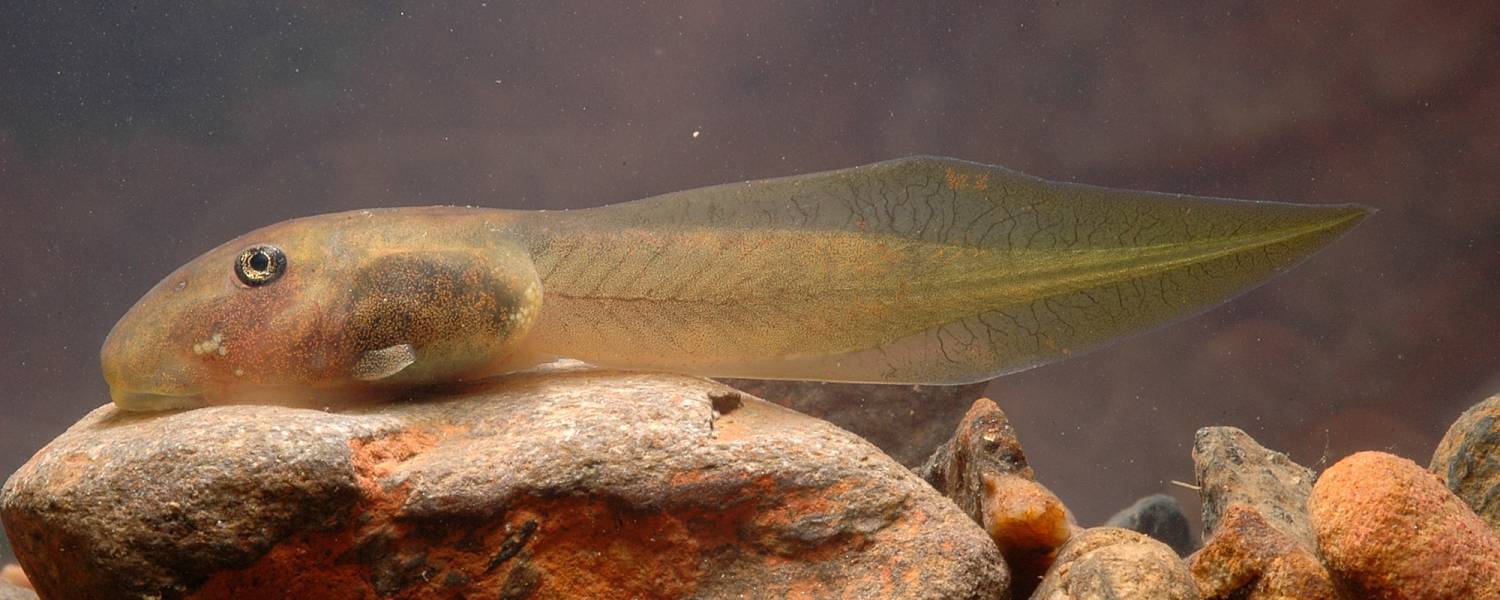
Meristogenys kinabaluensis

Tadpoles require pristine highland streams with clear, cool water. By virtue of their abdominal sucker, they are able to withstand strong currents, including those in cascades and waterfalls. Tadpoles of Meristogenys kinabaluensis are grazers feeding on organic overgrowth on rock surfaces, including algae, small animals, and bacteria. They are most frequently observed at night grazing on rock faces directly in the current. Grazing congregations of tadpoles may form. Tadpoles of Ansonia species are often encountered together with Meristogenys tadpoles.
  • Family:
    Ranidae
  • Genus:
    Meristogenys
  • Ecomorph:
    exotrophic, gastromyzophorous, lotic, rheophilous, suctorial
  • Waterbody Type:
    flowing
  • Water Column:
    rock surface
  • Feeding Type:
    feeding, hard surface grazer, omnivorous, rasping
  • Size:
    67 mm
  • Development:
    larva, tadpole
  • Adult:
    Meristogenys

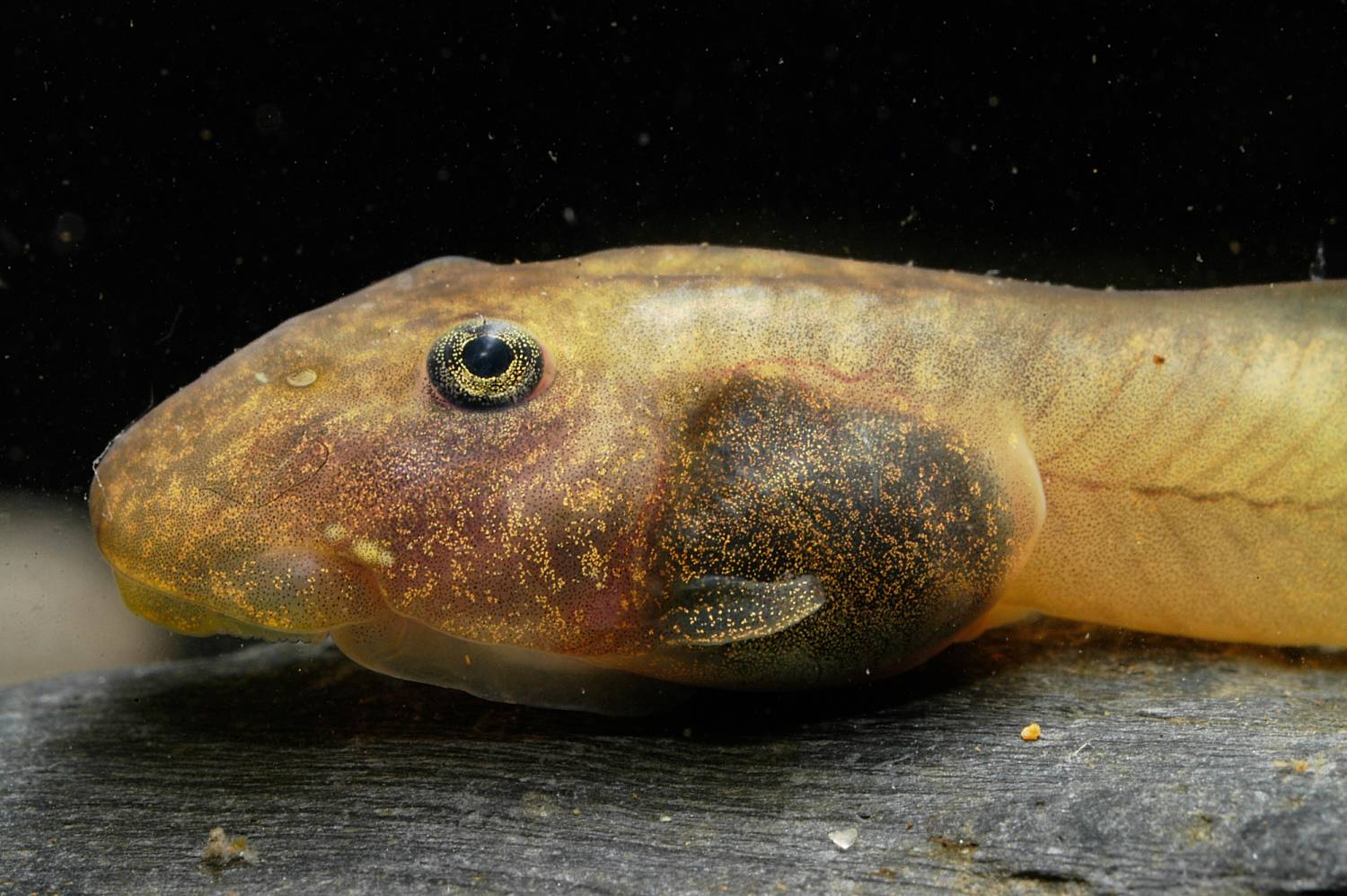
Coloration

Tadpoles require pristine highland streams with clear, cool water. By virtue of their abdominal sucker, they are able to withstand strong currents, including those in cascades and waterfalls. Tadpoles of Meristogenys kinabaluensis are grazers feeding on organic overgrowth on rock surfaces, including algae, small animals, and bacteria. They are most frequently observed at night grazing on rock faces directly in the current. Grazing congregations of tadpoles may form. Tadpoles of Ansonia species are often encountered together with Meristogenys tadpoles.

Snout

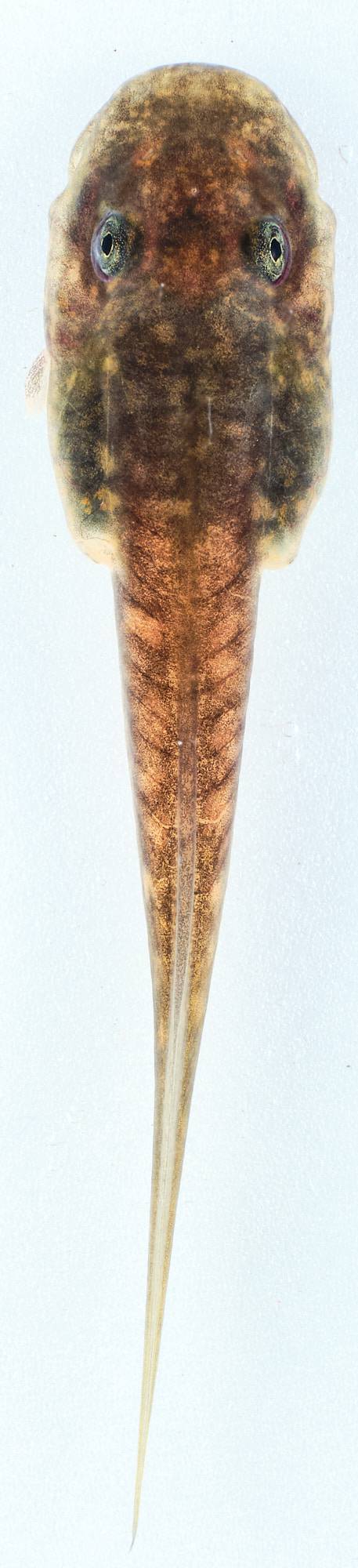
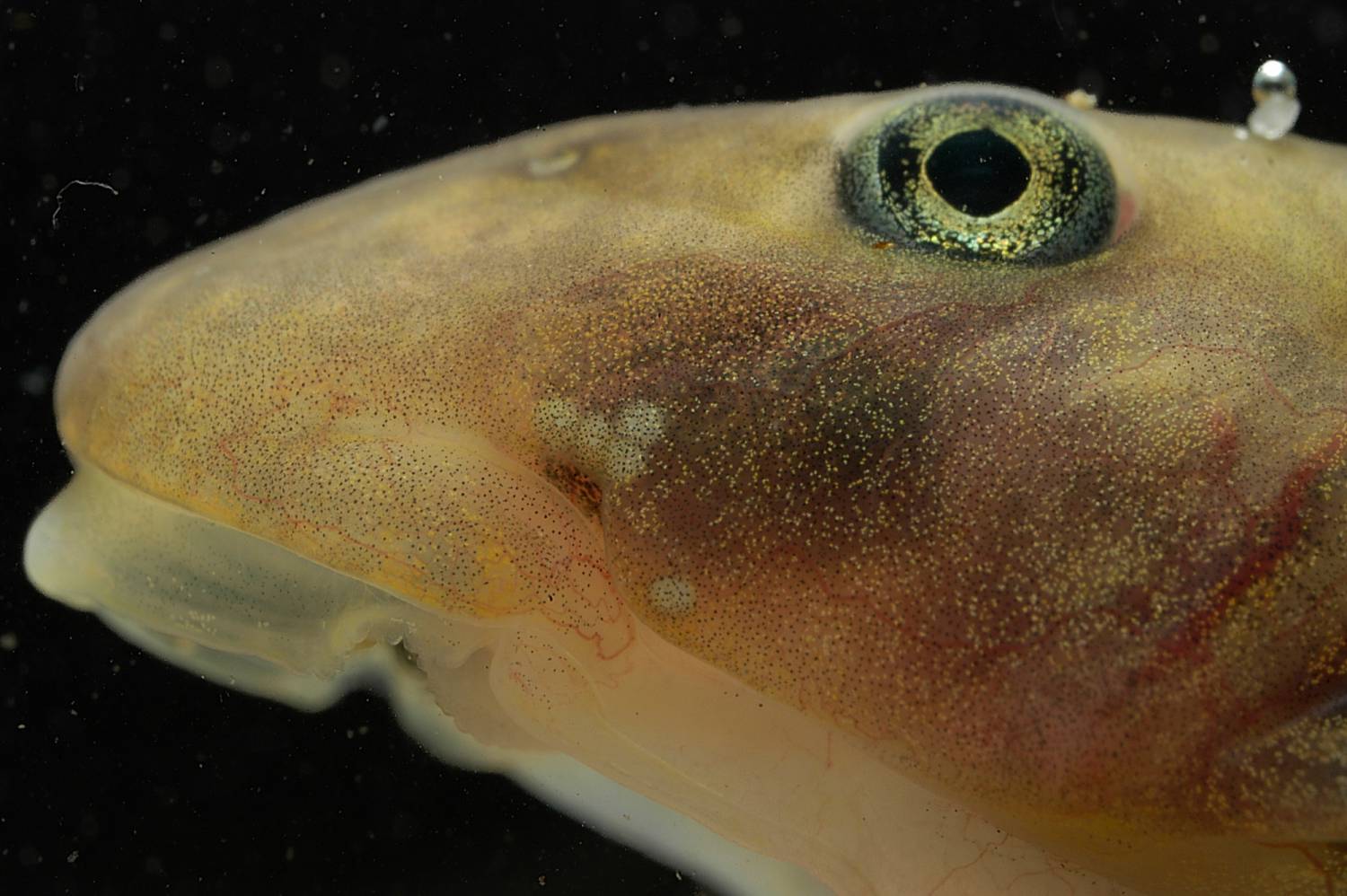
Expanded and broadly rounded in dorsal view. In lateral view, snout long and sloping downward in a smooth convex curve. Oral disc set off from the snout by a distinct groove.

Oral Disc

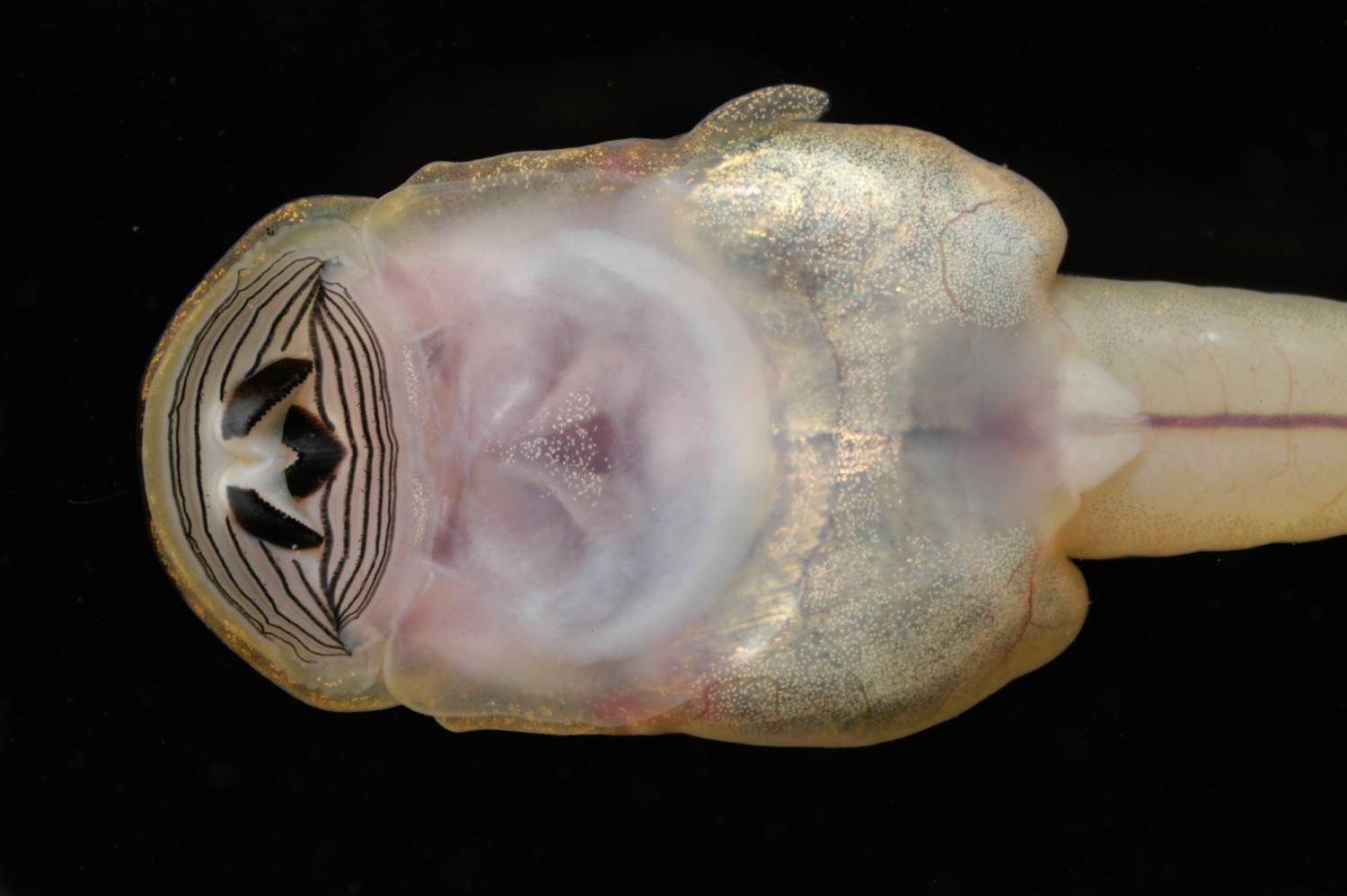
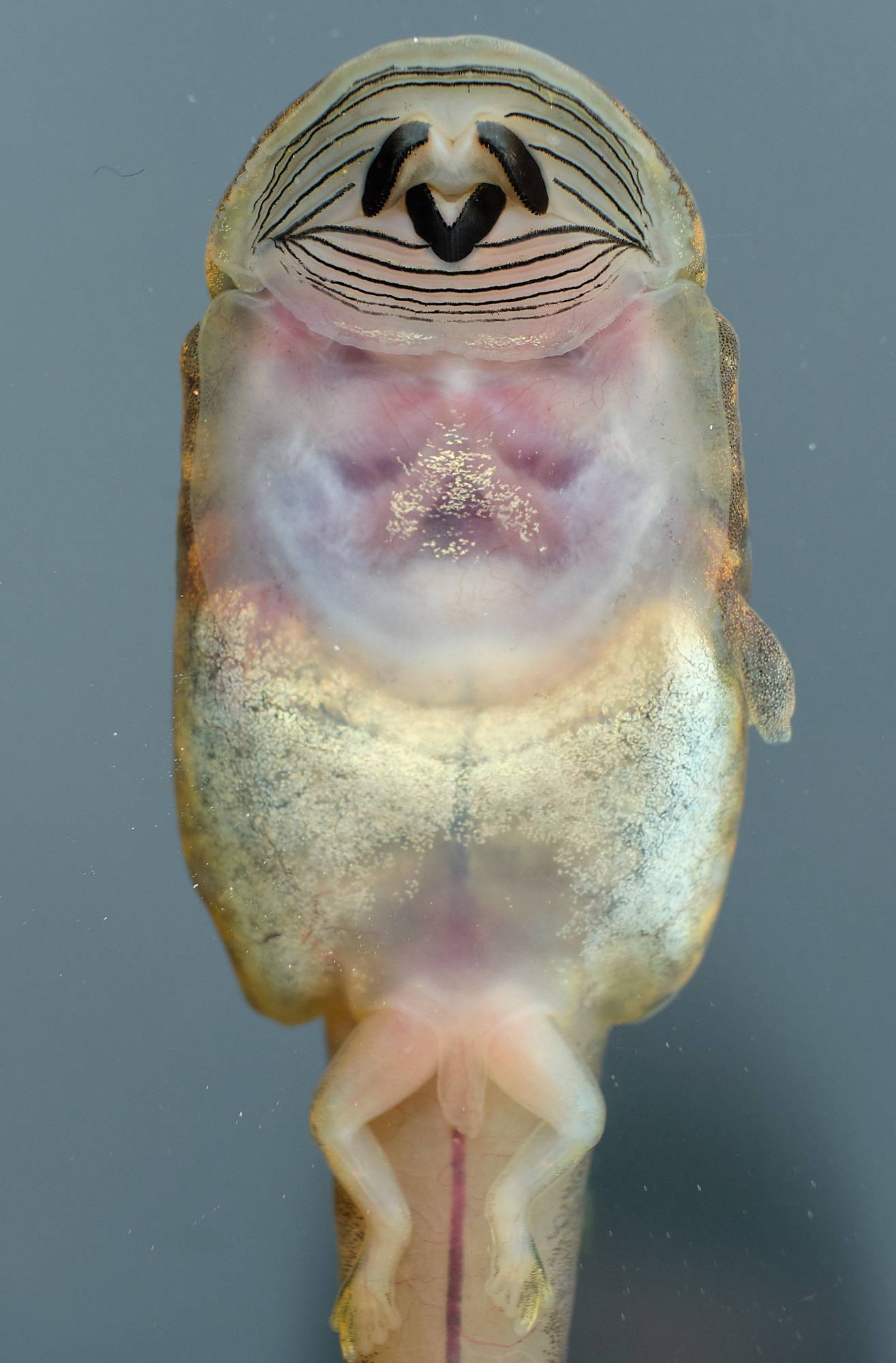
Oral disc ventral and wide; a large abdominal sucker present posterior to the oral disc. Abdominal sucker thick-rimmed, with the posterior rim located at approximately 75% of body length.

Body

Depressed and streamlined in lateral view, with a long sloping snout profile anteriorly. In dorsal view, body contour oval to rectangular, snout set off by a notch. Posterior end of the trunk extended into bulges on both sides of the tail base. Body widest at the level of the gills. Venter flat. Spiracle sinistral; spiracular tube opening posteriorly and positioned well below the longitudinal body axis in lateral view. Spiracular orifice at the end of a free, relatively long spiracular tube. Small groups of skin glands present at the cheek, anterior to the spiracle, behind the eyes, and at the posterior bulges of the trunk close to the limb buds (see also tail). Skin glands may be difficult to discern and appear variable. Lateral line organs indistinct. Head and trunk smooth; pointed skin protuberances absent.

Eyes & Nostrils

Eyes dorsolateral. Nostrils closer to the eye than to the snout and oriented anterolaterally. Iris with a black background color, bearing a thin ring of golden iridocytes around the pupil; peripheral iris dusted with golden iridocytes. Scleral region stippled with silvery iridocytes.

Tail

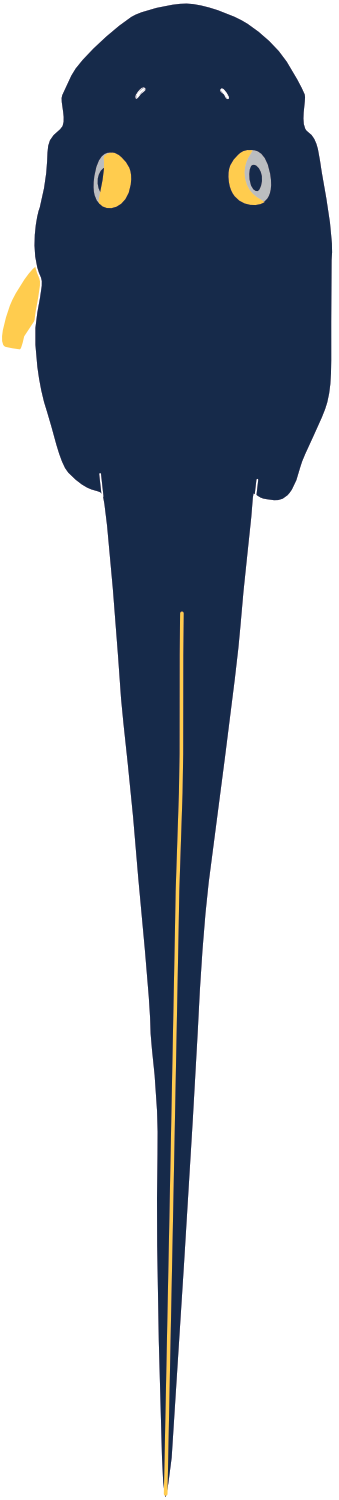
Tail long and robust, comprising approximately 65–67% of total length. Muscular part strong and high, almost as high as the body in lateral view. Dorsal fin originates slightly posterior to the trunk-tail junction, rises relatively straight to the highest point, then changes direction softly and slopes down in a straight to slightly concave line toward the pointed tip. Lower fin originates posterior to the trunk-tail junction at approximately 10–15% of tail length and remains low along the proximal third of the tail; lower fin consistently lower than the upper fin. Maximum tail height at mid-tail. Skin glands absent from both fins.

Similar Species

Meristogenys kinabaluensis is the only species of Meristogenys known to possess six upper lip keratodont rows in combination with an undivided lower beak; it is also larger than most congeners. The presence of skin glands at the posterior end of the venter has been reported as a diagnostic character, but such glands were absent in the examined samples from Gunung Kinabalu.

Literature

Adults perch on logs and boulders in streams, presumably these microhabitats are also where amplexus takes place.
Inger, R.F. (1985) Tadpoles of the forested regions of Borneo. Fieldiana Zoology new series 26: 1–89.

Shimada, T., Matsui, M. (2019) Reexamination of larval assignment of Meristogenys poecilus in Sarawak, Borneo, with a diagnostic table of Meristogenys larvae. Current Herpetology 38: 23–31.