Zum Hauptinhalt springen

Frogs of Borneo

Frogs of Borneo

Frogs of Borneo

Frogs of Borneo

Frogs of Borneo

Frogs of Borneo

Frogs of Borneo

Frogs of Borneo

Frogs of Borneo

Frogs of Borneo

Frogs of Borneo

Meristogenys maryatiae

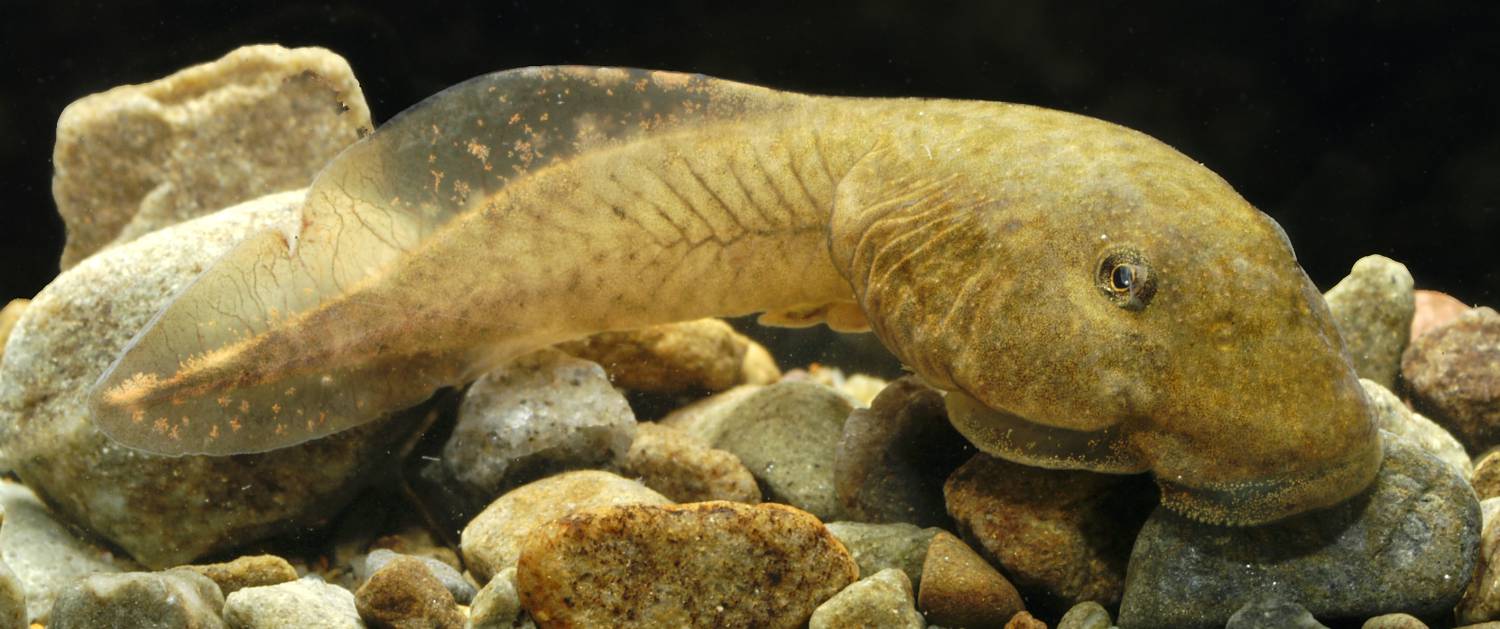
Tadpoles inhabit clear, highland streams with well-developed rock surfaces overgrown with biofilm (algae, bacteria, microinvertebrates). Grazing activity is likely nocturnal, as observed in congeners.
  • Family:
    Ranidae
  • Genus:
    Meristogenys
  • Ecomorph:
    exotrophic, gastromyzophorous, lotic, rheophilous, suctorial
  • Waterbody Type:
    flowing
  • Water Column:
    rock surface
  • Feeding Type:
    feeding, hard surface grazer, omnivorous, rasping
  • Size:
    43 mm
  • Development:
    larva, tadpole
  • Adult:
    Meristogenys

Coloration

The background color of the body and tail is yellowish to brown, combined with darker brown mottling over the body and tail muscles. Clusters of iridocytes along the dorsal line of the tail muscle and the margin of the dorsal fin add some color variation. The oral disc and abdominal sucker are mostly unpigmented, except for their dorsal faces and rims. Gills and heart are not visible. Tail fins are blotched. In advanced stages, melanocytes along the blood vessels accentuate the proximal myosepta and produce a reticulate pattern on the tail fins. The lateral part of the abdomen is covered by dense white-silvery iridocytes; the medial part of the abdomen may be devoid of iridocytes and semitranslucent.

Snout

The body is broadly rounded in dorsal view. In lateral view, the snout is long, sloping downward in a smooth convex curve. The oral disc is set off from the snout by a groove.

Oral Disc

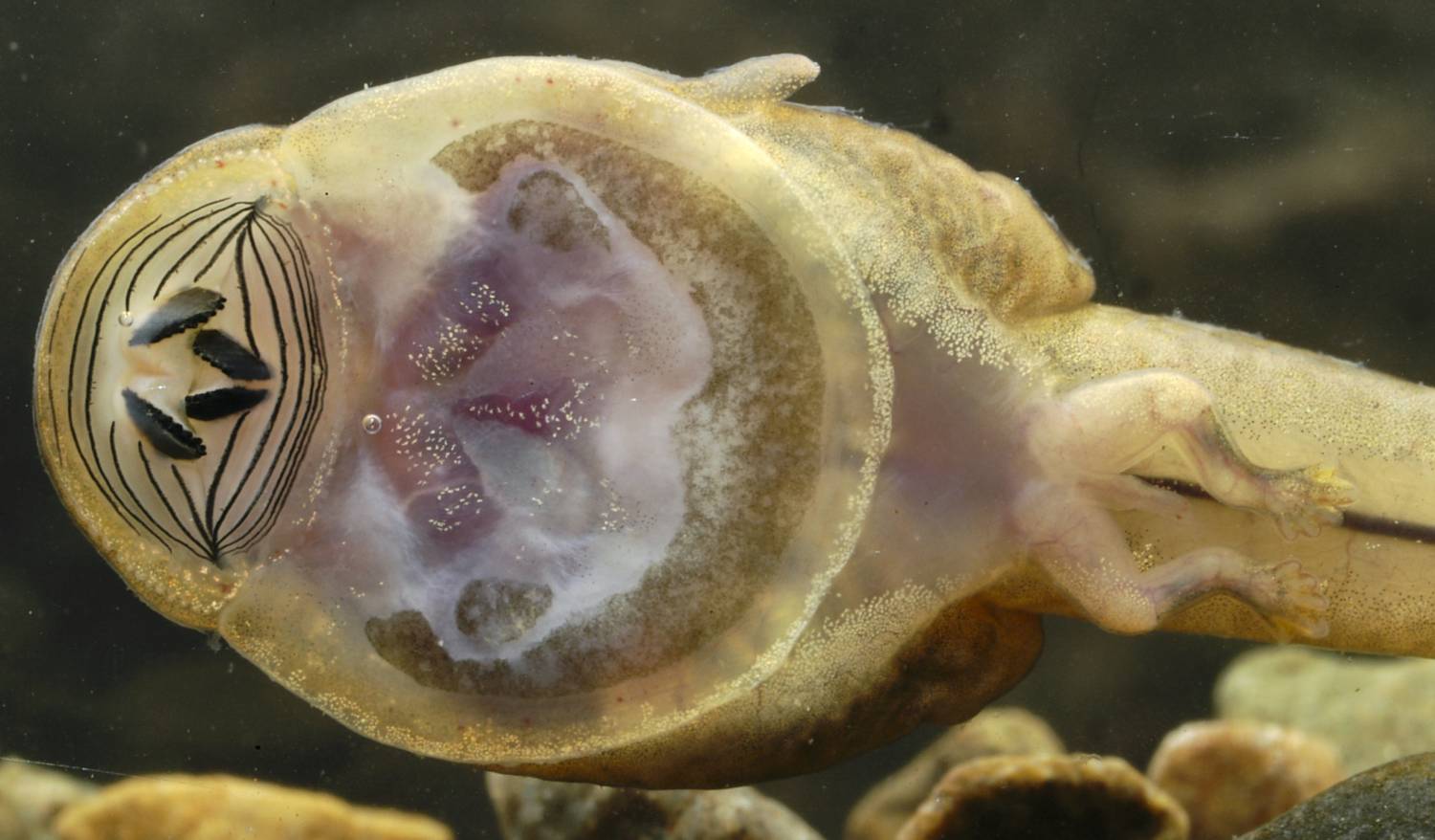
Ventral and wide, a very large abdominal sucker is present posterior to the oral disc. The abdominal sucker is wide and thick-rimmed, with its posterior rim at approximately 85–90% of body length in ventral view. A horseshoe-shaped friction area lies inside the sucker rim, with additional round friction areas laterally. Marginal papillation of the oral disc is present on the lower lip and lateral upper lip. Marginal papillae are short, rounded, and indistinct. A row of submarginal papillae is located at the lateral upper lip. LTRF 7(4–7)/6(1). Beaks are strongly keratinized and deep black. The upper beak is widely divided; the lower beak is narrowly divided, V-shaped. Both upper and lower beaks bear coarse serrae (ribs).

Body

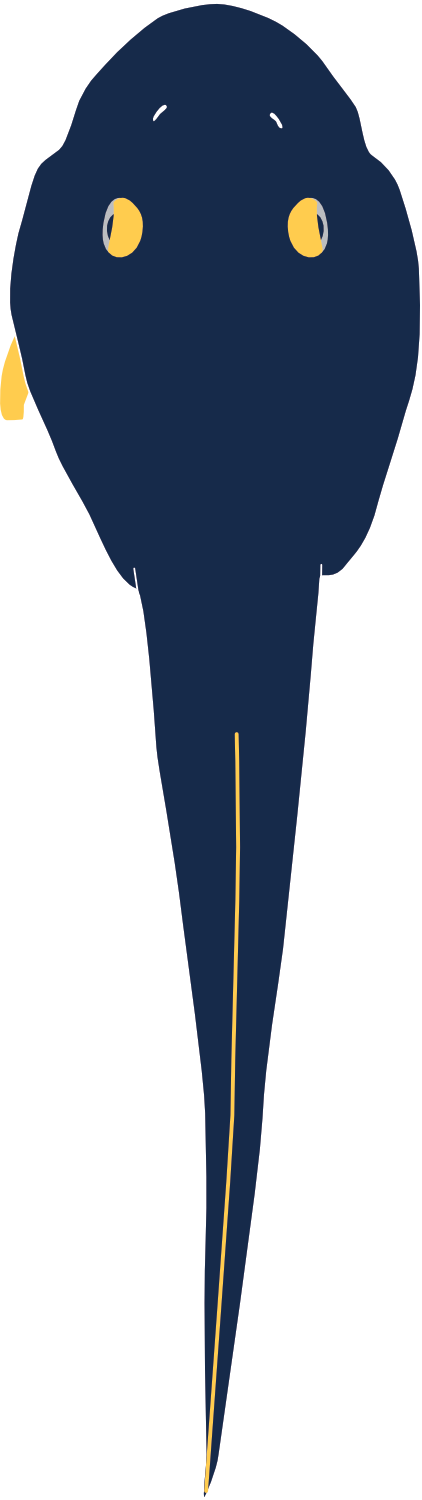
Depressed and streamlined in lateral view, the anterior profile shows a long, sloping snout. In dorsal view, the body contour is broadly oval. The snout is set off by a notch in the body contour. The posterior trunk end is extended as moderate bulges on both sides of the tail root. The body is widest at the level of the gill region. The ventral side is flat, and the belly does not bulge. The spiracle is sinistral. The spiracular tube opens posterodorsally and well below the longitudinal body axis in lateral view. The spiracular orifice is at the end of a free, relatively long spiracular tube. Small groups of skin glands are located at the cheek, anterior to the spiracle, behind the eyes, and at the posterolateral bulge of the trunk (also see description of tail); no glands are present at the posterior end of the venter. Lateral line organs are indistinct. The head, dorsum, and flanks bear small, short skin projections.

Eyes & Nostrils

Eyes are dorsolateral. The nostril is closer to the eyes than to the snout and is oriented anterolaterally. The black iris is densely stippled with golden iridocytes that fuse into a thin, solid golden ring around the pupil.

Tail

The tail is approximately 64% of total length. The muscular part is strong and high, almost as high as the body in lateral view. The dorsal fin starts posterior to the trunk-tail junction. It arches up to the highest point and gently slopes down in a straight or slightly convex line to the pointed tip. The lower fin originates at approximately half of the tail length and remains lower than the upper fin. Maximum height of the tail is at the midpoint of tail length. If present, skin glands are located in the lower fin.

Similar Species

Abdominal suckers are exclusive to Huia and Meristogenys. Tadpoles of Meristogenys differ from Huia in the divided upper beak. Within Meristogenys, close examination of all features is necessary (lower beak, skin glands, tail fins, LTRF). M. maryatiae has a narrowly divided lower beak and the most expansive abdominal sucker among Meristogenys tadpoles.

Literature

Details unknown.
Matsui, M., Shimada, T., Sudin, A. (2010) A new species of Meristogenys (Amphibia, Anura, Ranidae) from Sabah, Borneo. Zoological Science, 27: 61–66.

Shimada, T., Matsui, M. (2019) Reexamination of larval assignment of Meristogenys poecilus in Sarawak, Borneo, with a diagnostic table of Meristogenys larvae. Current Herpetology 38: 23–31.