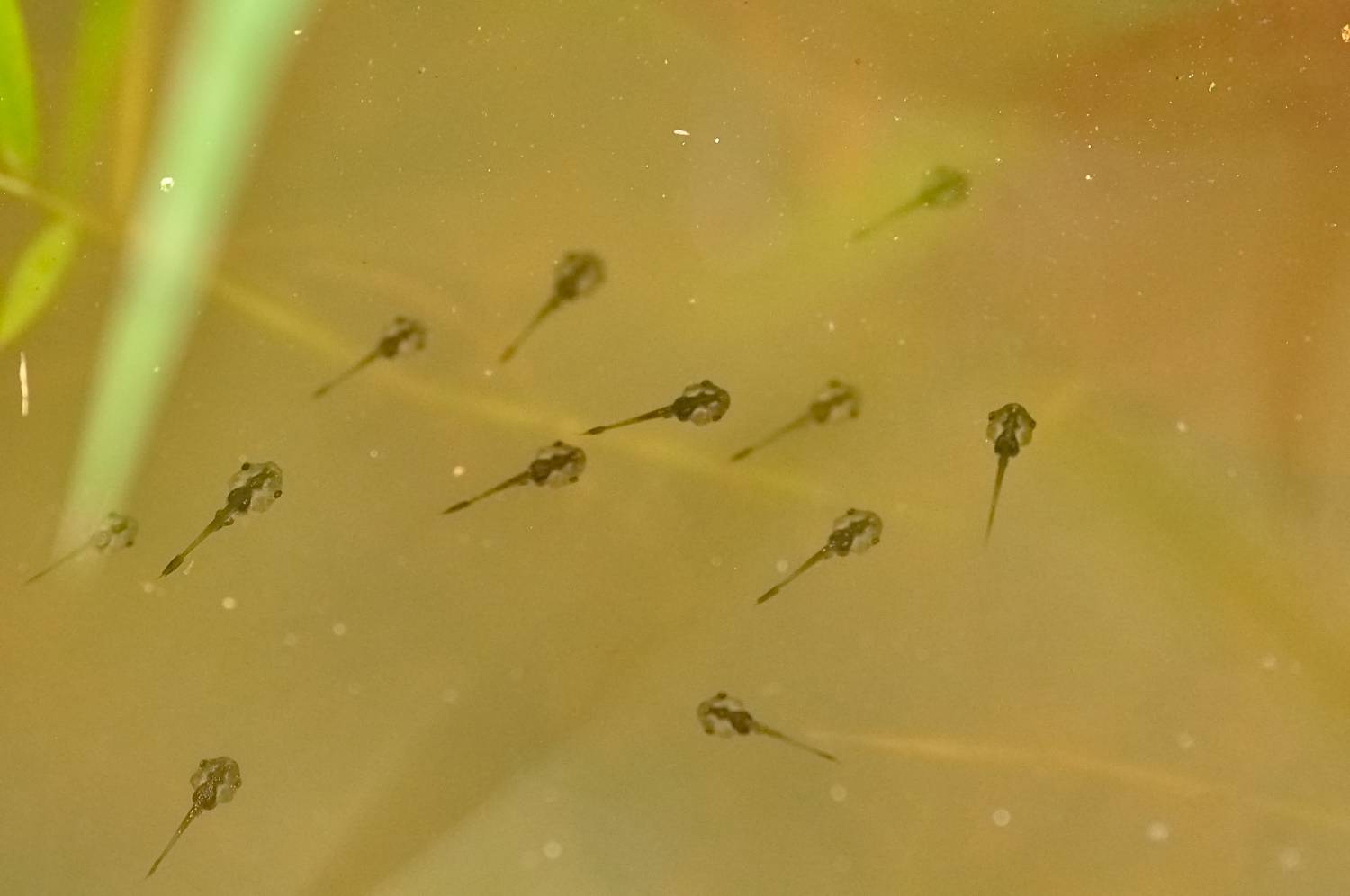
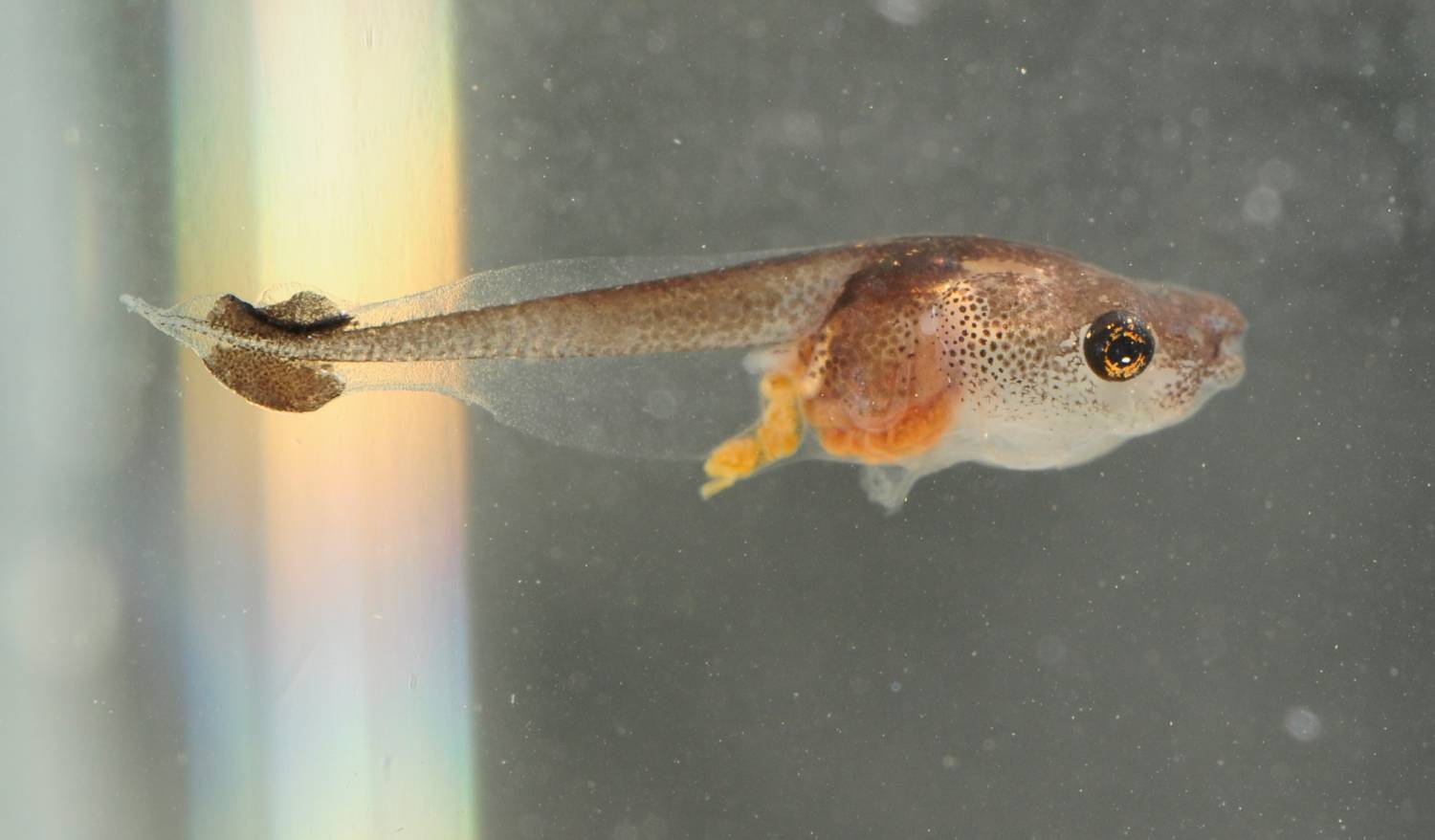
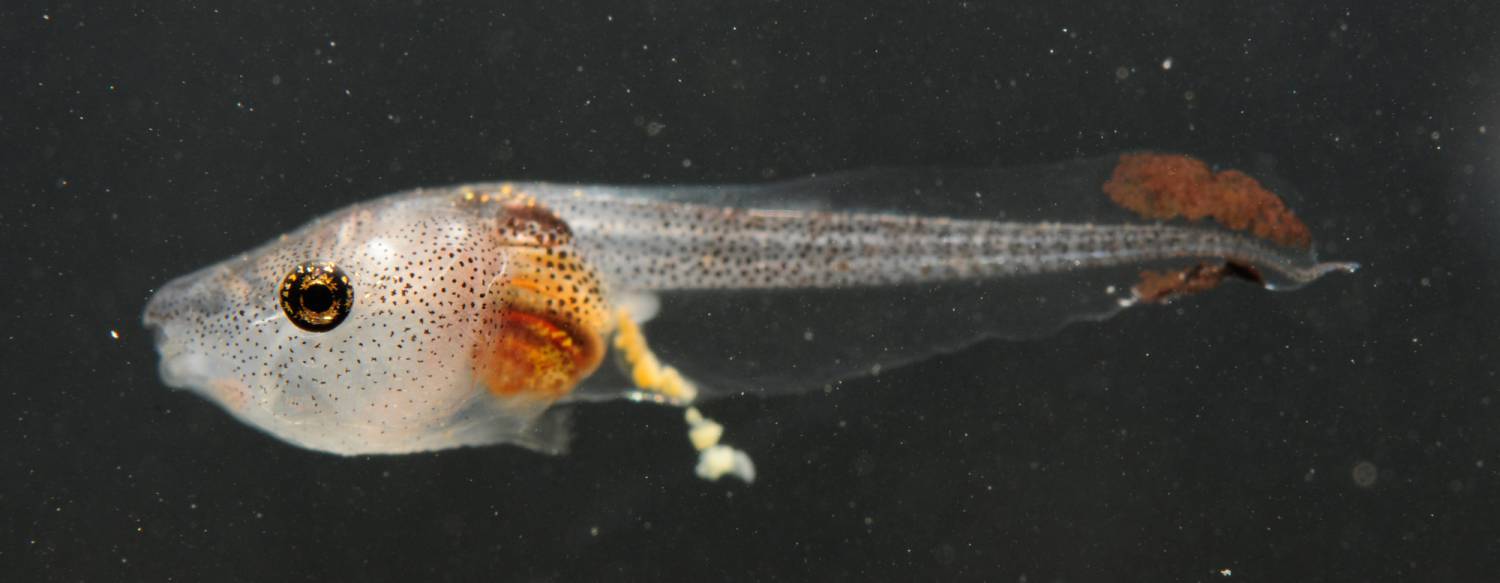
The very small tadpoles of Microhyla perparva are highly efficient, obligate suspensionfeeders. Microhyla perparva tadpoles live in temporary forest ponds and floodings, whereas M. petrigena tadpoles can be found in rock pools and rock troughs along forest streams. Tadpoles of M. perparva hover in the water column, often close to the surface, while continuously pumping water through their highly efficient branchial filters. The tadpoles of Microhyla perparva are typical suspension-feeding microhylid tadpoles.
Morphologically, the most similar tadpole is M. petrigena. The tadpoles of M. perparva and M. petrigena are similar in body shape and coloration (see description of M. petrigena). Both species are small but M. petrigena grows slightly larger. M. parva tadpoles are associated with forest ponds whereas M. petrigena tadpoles live in potholes and pools in or along rocky streams.
Reproduction
After heavy rainfall, large numbers of M. perparva males congregate at flooded forest depressions. The calling males float at the surface of the water; they defend a small area (approximately 20–50 cm diameter) against competitors.
Literature
Inger, R.F. (1985) Tadpoles of the forested regions of Borneo. Fieldiana Zoology new series 26: 1–89.
Inger, R.F., Stuebing, R.B., Grafe, T.U., Dehling, J.M. (2017) A field guide to the frogs of Borneo. 3rd ed. Natural History Books, Kota Kinabalu. 228 pp.