Frogs of Borneo

Frogs of Borneo

Frogs of Borneo

Frogs of Borneo

Frogs of Borneo

Frogs of Borneo

Frogs of Borneo

Frogs of Borneo

Frogs of Borneo

Frogs of Borneo

Frogs of Borneo
Filter
Nyctixalus pictus
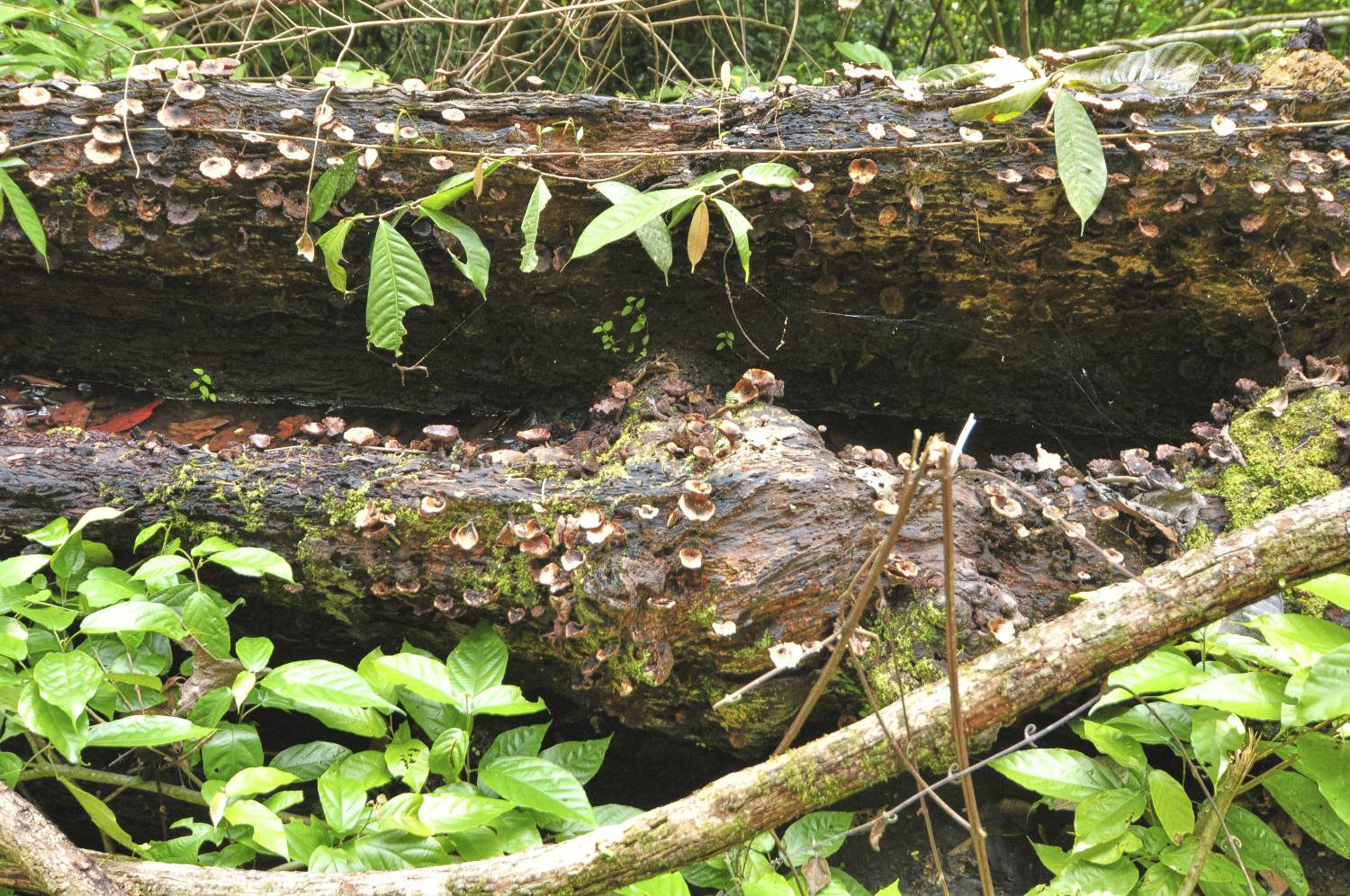
The species breeds in phytotelmata such as fallen, water-filled hollow logs, tree holes etc., or even in oil barrels or plastic containers. Phytotelmata with tadpoles commonly are well above the ground (0.7 m). Typically, they hold from 0.5 to several liters of water. Little is known about the tadpole ecology. The jaws are particularly strong, and jaw and hyoid musculature are massive, raising questions about their food items. More research is needed to elucidate whether tadpole numbers correlate with available water volume; we commonly found 120 per phytotelma.
-
Family:Rhacophoridae
-
Genus:Nyctixalus
-
Ecomorph:exotrophic, lentic, phytotelma specialist
-
Waterbody Type:phytotelma
-
Water Column:—
-
Feeding Type:feeding, generalist
-
Size:53 mm
-
Development:larva, tadpole
-
Adult:Nyctixalus
Coloration
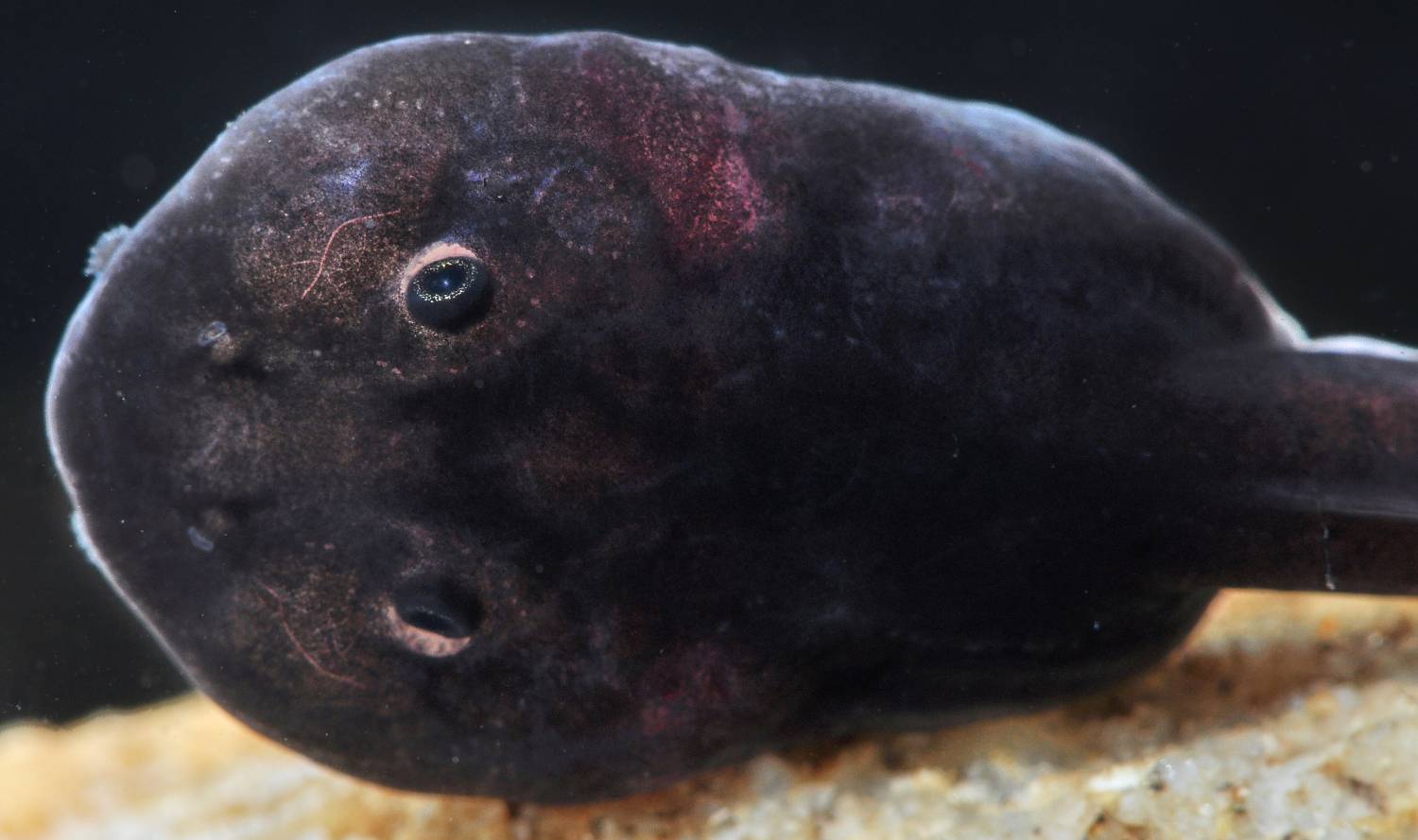
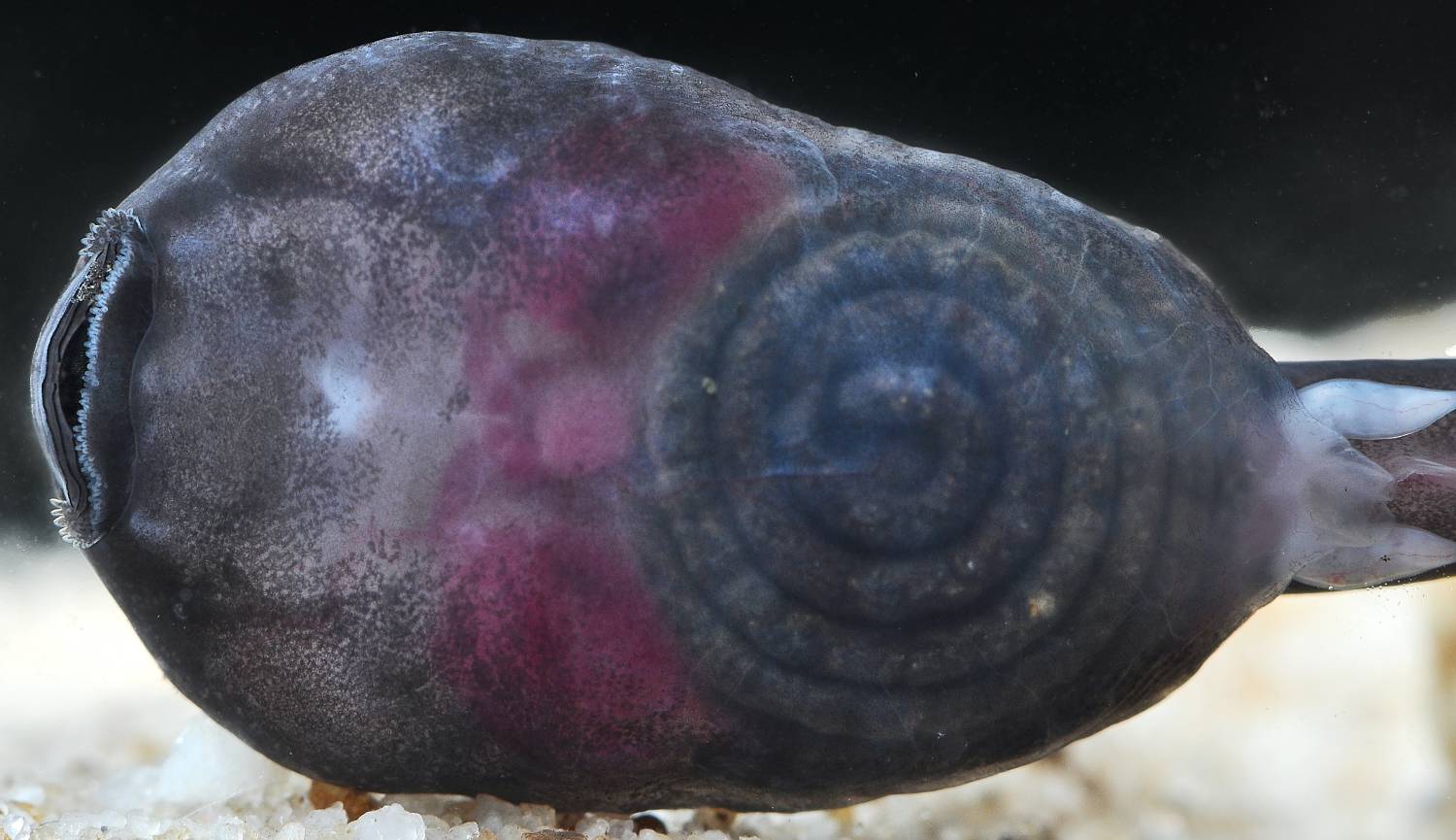
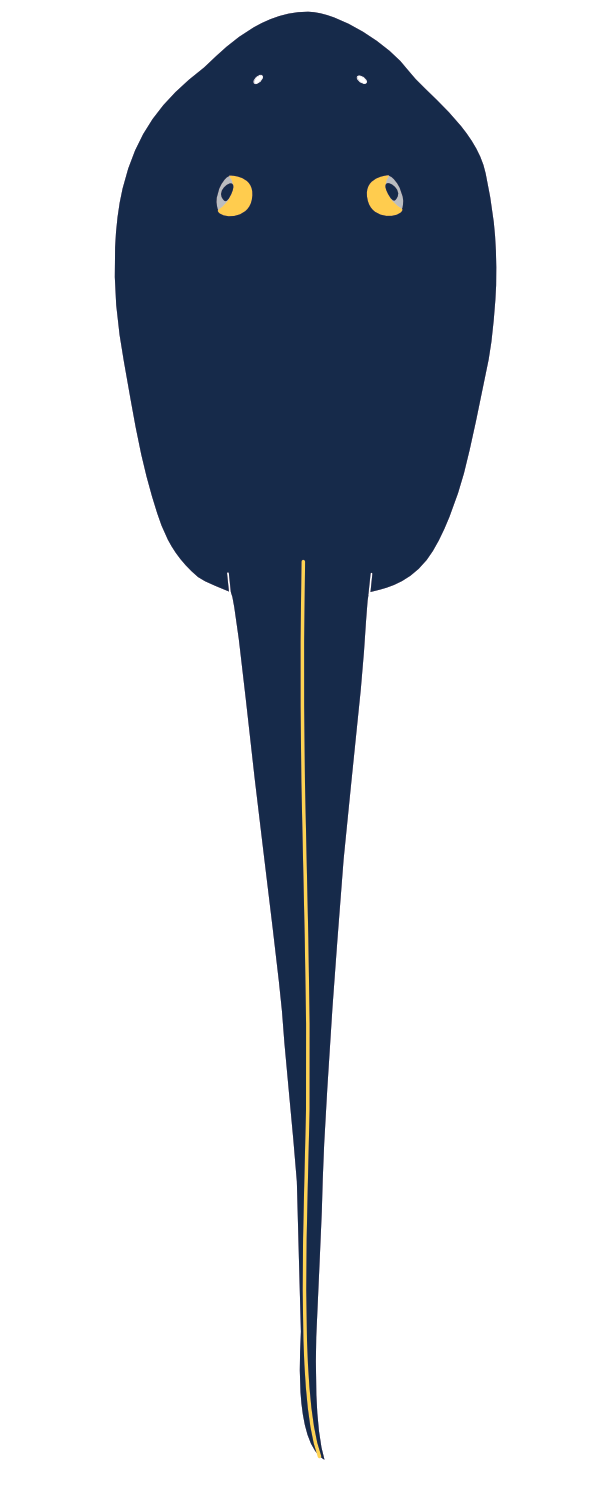
Uniformly black in color above. The deep black pigmentation of the head and trunk extends onto the tail and fades along the tail only in the distal half. Ventrally, the gular region bears dense black pigmentation, but the ventral skin at the gill and abdominal regions is less pigmented and transparent. Gills, heart, and gut coils are discernible. Tail venation indistinct.
Snout
Extended and sloping in lateral view, with lateral cheek bulges. Broadly rounded in dorsal view, weakly set off from bulging cheeks.
Oral Disc
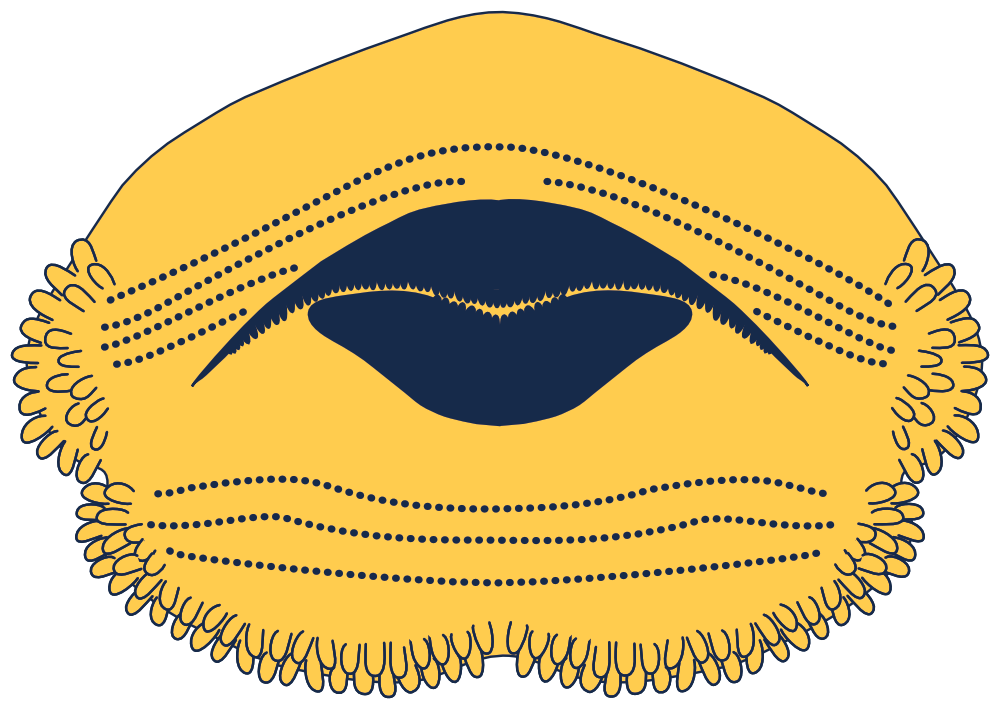
Subterminal. Marginal papillation with broad gap on upper lip; gap absent on lower lip. Marginal papillae arranged in a single row on the upper lip, but approximately one dozen submarginal papillae present at lateral upper lip. Lower lip with papillae in double or triple rows. Marginal papillae moderately long, blunt. Lateral oral disc indentations present. LTRF 4(2–4)/3. Very robust jaw sheaths. Upper beak with soft median convexity. Beaks bear fine, sharp, pointed serrations.
Body
In dorsal view, body inverse ovoid, i.e. broader end anteriorly. Cheeks bulging conspicuously. Body very wide, widest at eye level, dorsoventrally depressed. Spiracle sinistral. Spiracular tube fused to body and directed posterolaterally. Spiracular opening low, well below longitudinal body axis in lateral view.
Eyes & Nostrils
External nostrils oval and moderately large, directed anterolaterally, slightly sunken. Nostril closer to snout than to eyes. Eyes very small, positioned dorsolaterally, sunken. Distance between eyes much smaller than head width at eye level. Iris black with some iridophores scattered around the pupil. Scleral part of eye entirely black.
Tail
Approximately 62–64% of total length. Muscular part strong, more than half of body height in lateral view. Upper tail fin rises from trunk-tail junction. Tail fins hardly arched, tapering slightly toward a broadly rounded tip. Tail fin height only moderate. Upper and lower fins subequal in height. Maximum height of tail approximately at 35% of tail length.
Similar Species
Nyctixalus pictus tadpoles are unique in the combination of body shape, size, tail shape, and black color. They are easily distinguishable from tadpoles that may also live in similar phytotelmata, for example, Leptomantis harrissoni. Tadpoles of the closely related Theloderma species could potentially occur in similar phytotelmata and are most likely very similar in morphology to Nyctixalus tadpoles. However, Theloderma tadpoles have, to our knowledge, not been sampled on Borneo.
Reproduction
Males call nearby suitable phytotelmata. Although we occasionally encountered 2–4 males in proximity around a phytotelma, breeding congregations are not formed and, therefore, these frogs may be difficult to find in the field unless one is familiar with their soft, whistling, birdlike call.
Literature
Males call nearby suitable phytotelmata. Although we occasionally encountered 2–4 males in proximity around a phytotelma, breeding congregations are not formed and, therefore, these frogs may be difficult to find in the field unless one is familiar with their soft, whistling, birdlike call.