Zum Hauptinhalt springen

Frogs of Borneo

Frogs of Borneo

Frogs of Borneo

Frogs of Borneo

Frogs of Borneo

Frogs of Borneo

Frogs of Borneo

Frogs of Borneo

Frogs of Borneo

Frogs of Borneo

Frogs of Borneo

Odorrana hosii

Only few observations of the tadpoles have been available (Manthey and Grossmann 1997) and, thus, inferences on the tadpole's ecology and habitat preferences are limited. We found Odorrana hosii tadpoles in quiet sidepools or isolated troughs of rocky, midsized streams. These pools were more than 50 cm deep and partially filled with leaf litter. Tadpoles were dipnetted from the deeper portion of the pool, sometimes in association with larvae of Staurois guttatus. It is unclear, if these tadpoles normally prefer isolated rock pools (standing waters, lentic) or inhabit quiet, flowing sections in streams as well (lotic).
  • Family:
    Ranidae
  • Genus:
    Odorrana
  • Ecomorph:
    exotrophic, leaf litter specialist
  • Waterbody Type:
    flowing
  • Water Column:
    bottom|leaf litter
  • Feeding Type:
    feeding, generalist
  • Size:
    41 mm
  • Development:
    larva, tadpole
  • Adult:
    Odorrana

Coloration

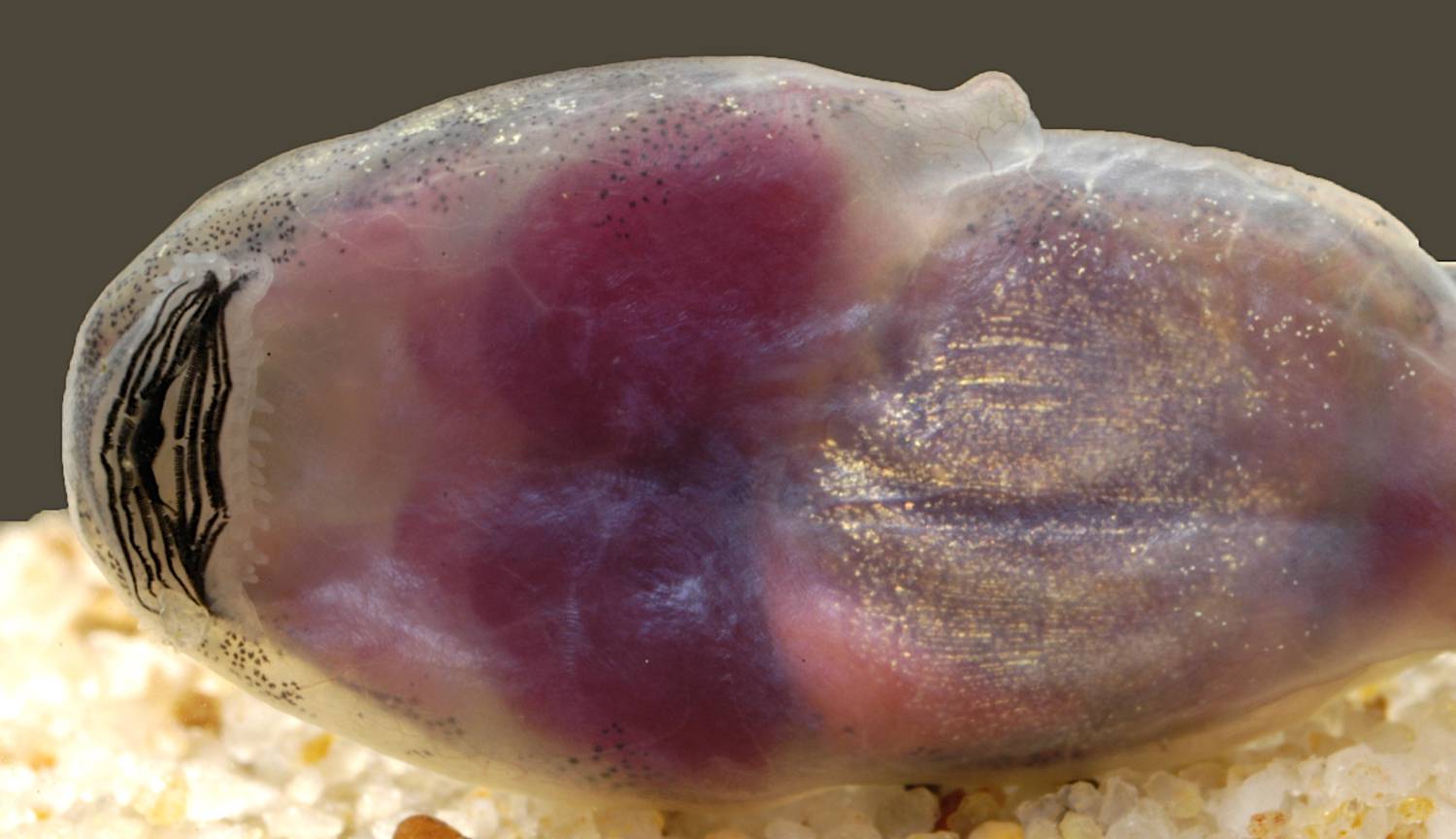
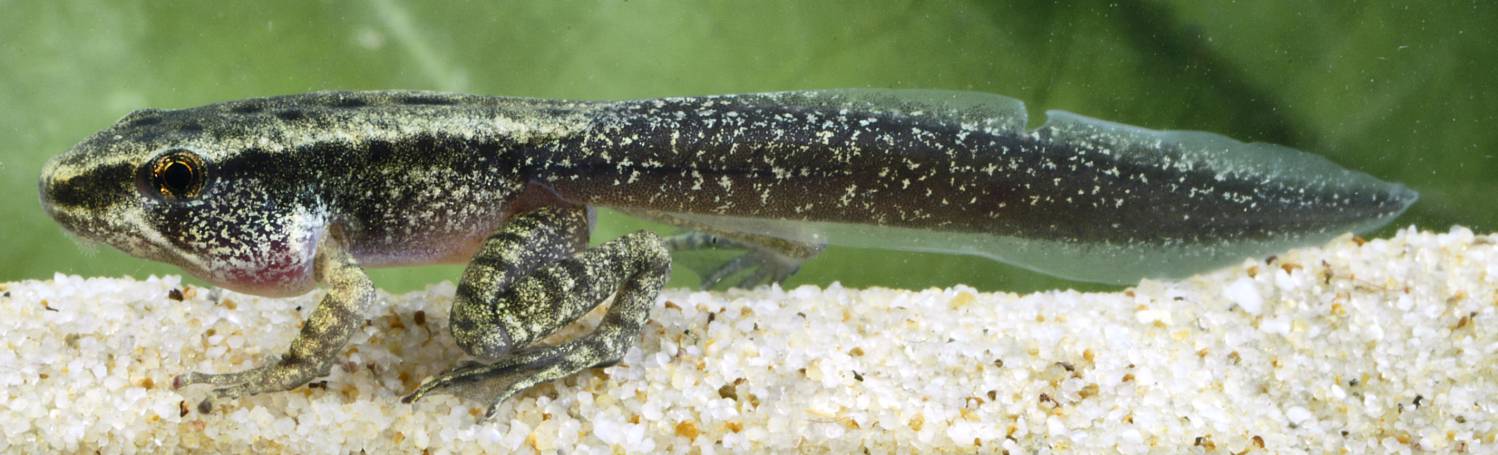
Uniformly dark brown to dark gray above on the body and the muscular part of the tail; distinct markings absent. Irregular clusters of iridocytes present at the cheek and at the tail, more pronounced towards metamorphosis. The lateral tail vein clearly visible in the first third of the tail and its side branches (lined with melanocytes) accentuate tail muscle myosepta. Fins mostly clear except for some pigmentation along their respective bases. Ventral skin of body in buccal and branchial regions transparent, mostly devoid of pigment cells; ventral skin shows slight iridescence (not in preserved specimens). Gills, heart, and some head muscles visible through the skin in red. Abdominal skin semitransparent, but dense scattering of iridocytes may prevent a clear view of the gut.

Snout

Broadly rounded, but obtuse medially, in dorsal view. In lateral view, relatively long, sloping to the tip in a moderately convex curve. Each nostril positioned on a small bulge.

Oral Disc

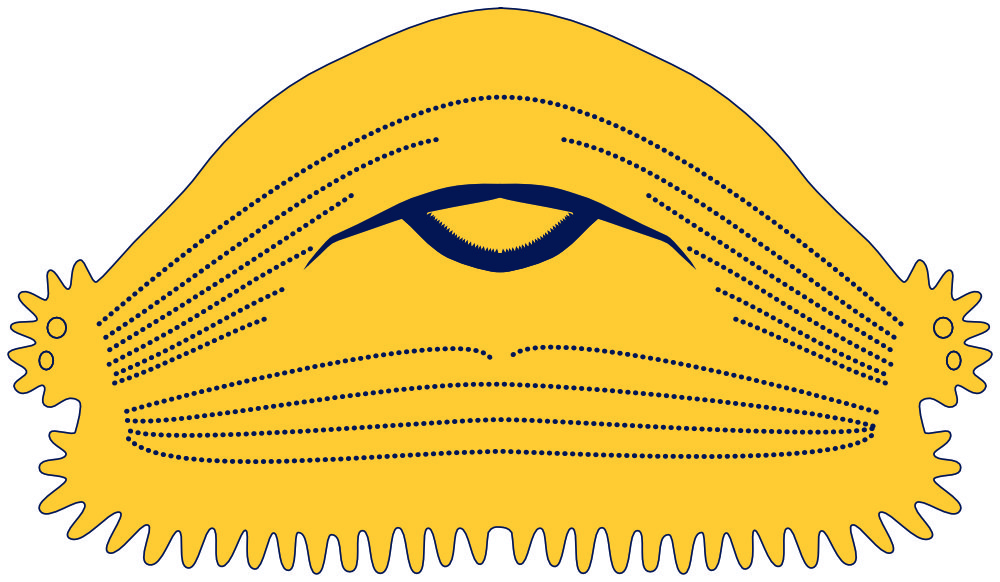
Nearly ventral. Emarginations present at lateral margin between upper and lower lips. One row of marginal papillae present along ventral lip; papillae alternate in direction so that they appear as if standing in a double row. Upper lip mostly devoid of papillae, except for far lateral part, where one row of marginal papillae and few submarginal papillae developed. Marginal papillae moderately long. LTRF 6(3–6)/4(1) or 6(2–6)/4(1); division of first keratodont row on lower lip may be indistinct (very narrow gap). Beaks well keratinized, black, but thin; edges bear fine serrations. Upper beak shallowly arched; lower beak V- to U-shaped.

Body

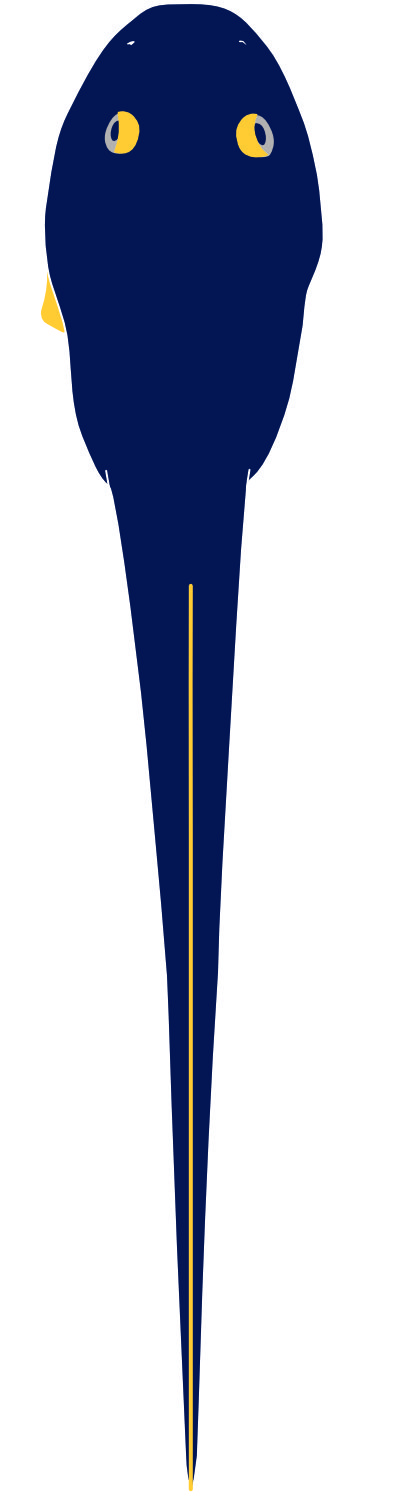
Midsized tadpole. In lateral view, body depressed; snout relatively long and gently sloping with a moderately convex curve to a rounded tip. In dorsal view, body contour generally oval, but head wider than trunk. Body widest at level of gills, posterior to eyes. Ventral side flat, belly not bulging. Spiracle sinistral. Spiracular tube opens posterodorsally, well below longitudinal body axis in lateral view. Spiracular orifice at end of a short free tube. Lateral line organs visible on snout in close-ups, but otherwise indistinct.

Eyes & Nostrils

Eyes relatively small, dorsolateral. Nostrils closer to snout than to eyes and oriented anteriorly. Each nostril situated on the anterior face of a bulge. Iris color pattern consists of a thin ring of orange iridocytes around pupil; peripheral to that ring iris densely stippled with golden iridocytes on generally black background. However, four sectors of iris remain black instead and give eye a radial appearance.

Tail

Very long, up to 70% of total length. Muscular part of tail strong and high, nearly as high as body in lateral view. Dorsal fin originates clearly posterior to trunk-tail junction. It rises and runs smoothly, and a shallow arch leads to a narrowly rounded tip. Lower fin similar to upper fin in height and contour shape; both fins relatively low. Maximum height of tail approximately at midpoint of tail. Lateral tail vein clearly visible.

Similar Species

The most likely candidates to confuse Odorrana hosii tadpoles with are larvae of Staurois and Hylarana, because of their dark color, long tails, low tail fins, and use of similar microhabitats (leaf litter). Apart from some differences in oral disc features (see descriptions of Staurois and Hylarana), O. hosii lacks skin glands in tail fins (present in Hylarana). The nasal bulges and anteriorly oriented nostrils are unique in O. hosii, but may require examination under high magnification.

Literature

No data available.
Manthey, U., Grossmann, W. (1997) Amphibien und Reptilien Südostasiens. Natur und Tier Verlag, Münster. 511 pp.