Zum Hauptinhalt springen

Frogs of Borneo

Frogs of Borneo

Frogs of Borneo

Frogs of Borneo

Frogs of Borneo

Frogs of Borneo

Frogs of Borneo

Frogs of Borneo

Frogs of Borneo

Frogs of Borneo

Frogs of Borneo

Pelobatrachus nasutus

Recorded from 200–1300 m a.s.l. The larvae are specialized filter feeders that exploit organic matter on the water surface, such as plankton, pollen, and plant debris. Their upwardly directed, large oral disc is aligned with the water surface during feeding, and its papillated structure helps channel water toward the mouth. Due to their feeding mode, the tadpoles require quiet sections of streams, areas with leaf drift, such as side channels, with little current.
  • Family:
    Megophryidae
  • Genus:
    Pelobatrachus
  • Ecomorph:
    exotrophic, lotic, surface feeder
  • Waterbody Type:
    flowing
  • Water Column:
    surface|leaf litter
  • Feeding Type:
    feeding, surface feeding
  • Size:
    42 mm
  • Development:
    larva, tadpole
  • Adult:
    Pelobatrachus

Coloration

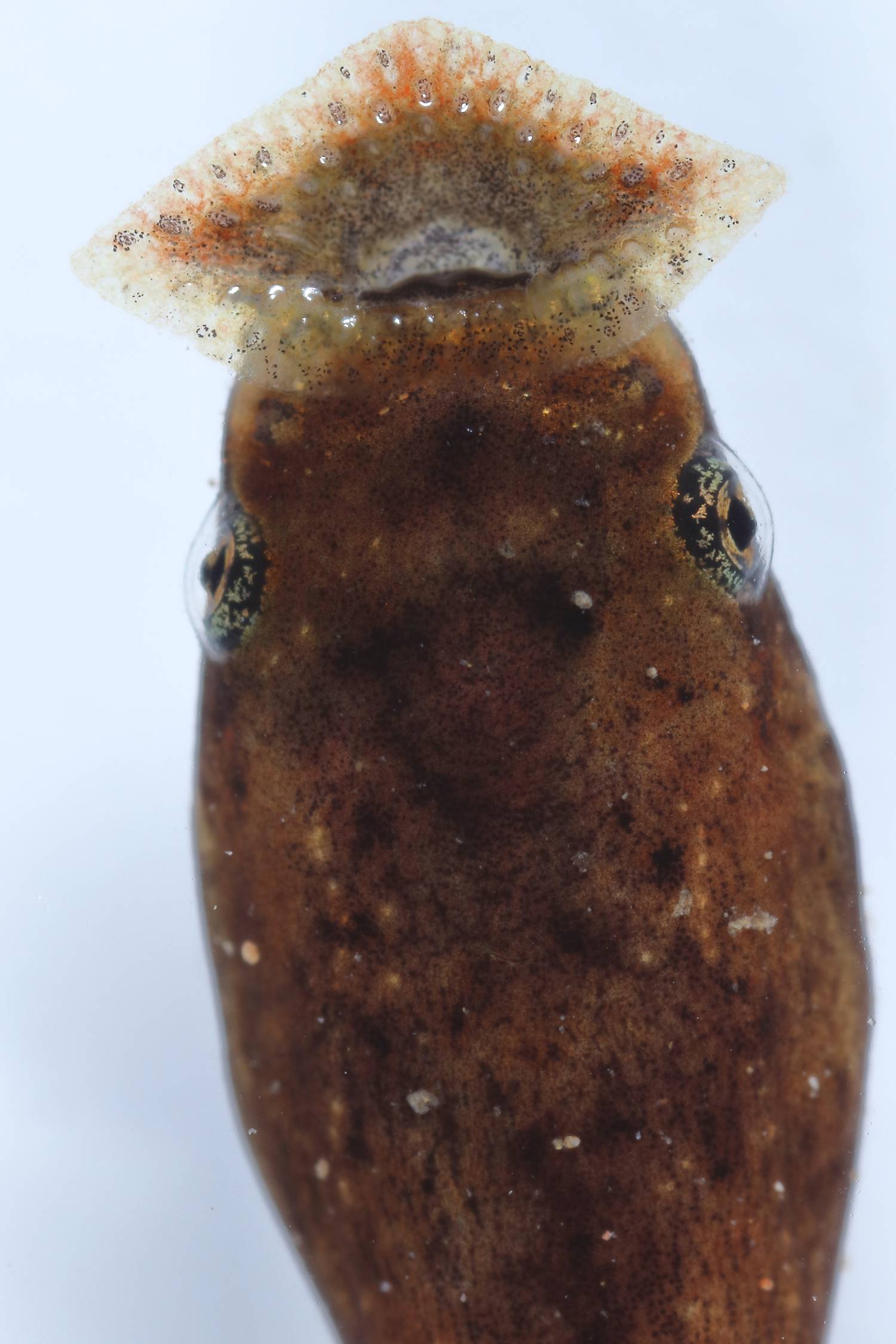
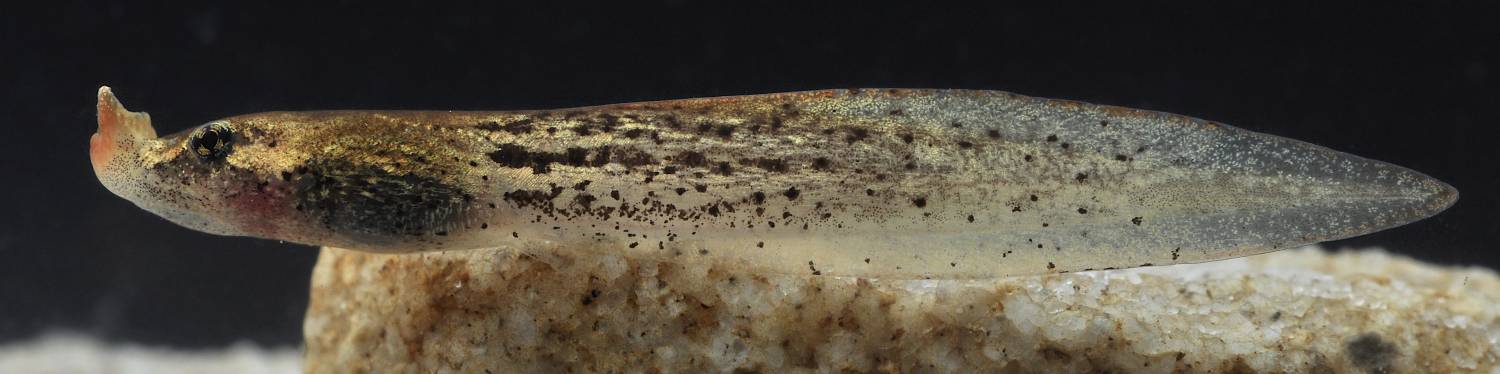
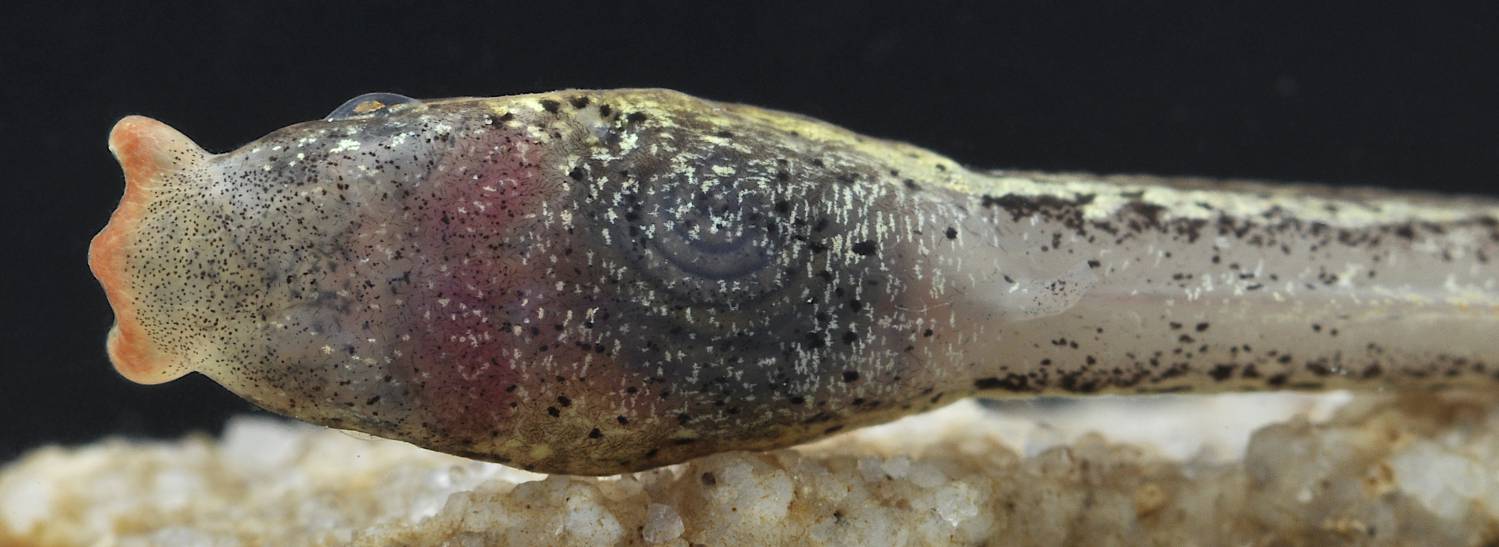
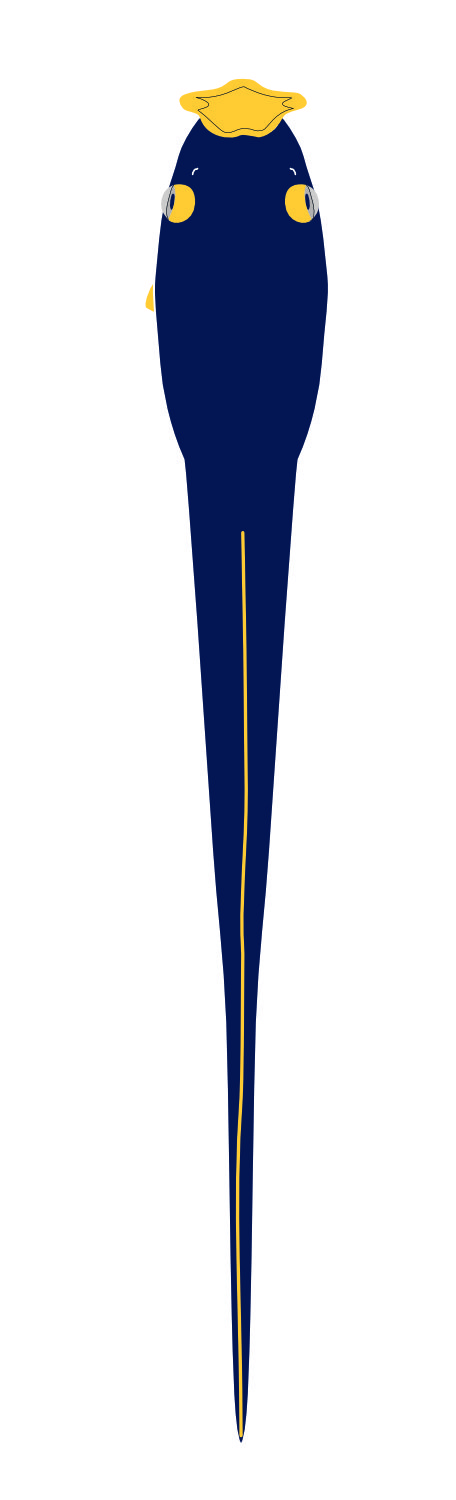
Variable. Generally dark brown to black above with diffuse dark marbling and mottling on a lighter brown background. Areas of densely congregated iridophores form white, cream, or golden flecks or stripes, particularly at the body flanks, along the edge of the anterior upper tail fin, and at the lower part of the tail base. Between these areas, longitudinal concentrations of melanocytes are present, especially at the flank and/or base of the tail. These light and dark elements give many specimens a longitudinally striped appearance. The fins are also mottled and appear overall dark. Specimens become more heavily pigmented with growth and development. The ventral side is well pigmented and mostly opaque (semitransparent in early stages), sometimes with white or cream spots and stippling in the abdominal region. The gut coil is faintly visible or invisible; heart and gills are indistinct (more distinct in early stages). The oral disc is well pigmented and ventrally without conspicuous black spots. Some individuals have an orange tinge to the oral disc. Myosepta and the lateral tail vein are invisible.

Snout

Smoothly tapering toward the base of the oral funnel, both in lateral and dorsal views.

Oral Disc

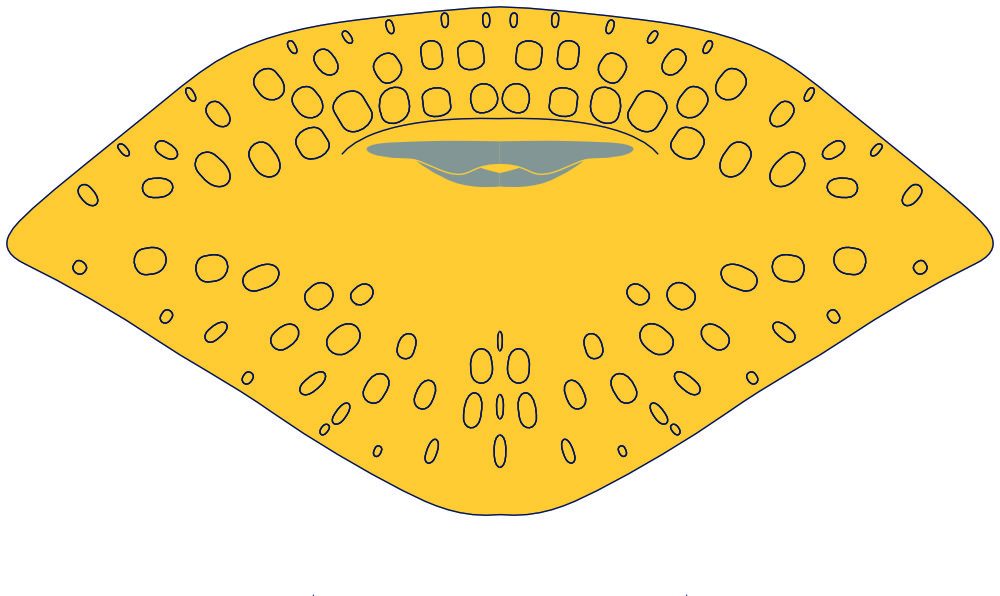
Terminal and directed upward, umbelliform. A large rhomboid structure, pointed laterally. Ventral (anterior) lip sinuate and deeper than the upper lip. In resting tadpoles, the disc edges are curled inward and the two corners stand up like horns. During feeding at the water surface, the oral disc spreads out. Marginal papillae absent. The oral disc bears numerous round and elongate submarginal papillae (ridges), arranged in irregular centripetal rows toward the mouth. Larger round submarginal papillae present in the sector dorsal to the mouth. Beaks thin, not strongly keratinized, and not black in color. Upper jaw sheath with a medial embayment; lower jaw sheath a simple U-arch.

Body

Moderately large but relatively slender tadpole. In lateral view, head and trunk moderately depressed dorsoventrally. Trunk approximately as high as wide. In dorsal view, body long, about twice as long as wide, and more parallel-sided than oval. Trunk wider than base of tail. Body widest at gill region. Spiracle sinistral. Spiracular orifice opens posteriorly to posterolaterally and is located below the mid-body axis in lateral view. Spiracular orifice attached to body wall; no free tube formed. Lateral line organs indistinct.

Eyes & Nostrils

Eyes positioned laterally, with the cornea slightly protruding beyond the body contour in dorsal view. Iris densely scattered with golden iridophores on a black background in four sectors separated by black areas, forming a distinct four-radial pattern. Peripheral scleral part of the eye bears scattered gold or silver iridophores on a black background. Nostril small, positioned in a concavity of the snout, slightly closer to the eye than to the snout, and oriented anterolaterally. Dorsal nostril rim bears a tiny triangular projection.

Tail

Long, about 70% of total length (including funnel). Muscular part of tail strong, as high as the body in lateral view. Upper fin rises behind the trunk-tail junction; it gains height only slightly in the first third of the tail and is only slightly convex in the middle part of the tail. Lower fin similar to the upper fin in shape but slightly lower. Both fins taper into a narrowly rounded tip. Skin glands absent.

Similar Species

The umbelliform oral disc is unique to Pelobatrachus and Sarawakiphrys dringi. Within the genus Pelobatrachus, reliable differential diagnoses of tadpoles have not yet been established, although preliminary differences can be noted (e.g., size and shape of the oral disc, submarginal papillae and ridges, iris pattern). Pending further corroboration, we observed in P. nasutus only: (1) the conspicuous radial pattern on the iris, (2) the strongly pigmented ventral side, and (3) white flecks and often a striped pattern, which were not observed in P. baluensis and were also not reported for P. kobayashii by Malkmus et al. (2002). P. nasutus specimens from the Malay Peninsula showed similar coloration (Wildenhues et al. 2012). Intraspecific variation appears to be high in P. nasutus, and our assessment remains preliminary. See other species accounts for additional information. A short description of P. kalimantanensis larvae was given by Munir et al.; larval characters distinguishing it from P. nasutus still need to be clarified.

Literature

The reproductive biology is mainly known from captive breeding (Wildenhues et al. 2012). Male calls are a single "honk" or series of "honks" that can be heard from afar. Males call from near streams during dawn and dusk. Rainfall further stimulates calling activities. Amplexus of the small male with the much larger female is inguinal and eggs are attached to rocks, under logs or to plants in quiet areas of forest streams (Malkmus et al. 2002; Wildenhues et al. 2012).
Malkmus, R., Manthey, U., Vogel, G., Hoffmann, P., Kosuch, J. (2002) Amphibians & Reptiles of Mount Kinabalu (North Borneo). Koeltz Scientific Books, Königstein. 424 pp.

Wildenhues, M., Rauhaus, A., Karbe, D., van der Straeten, K., Hertwig, S.T., Ziegler, T. (2012) Husbandry, captive breeding, larval development and stages of the Malayan horned frog Megophrys nasuta (Schlegel, 1858) (Amphibia: Anura: Megophryidae). Amphibian and Reptile Conservation 5: 15–28.

Munir, M., Hamidy, A., Matsui, masafumi, Iskandar, D.T., Sidik, I. Shimada, T. (2019) A new species of Megophrys Kuhl & Van Hasselt (Amphibia: Megophryidae) from Borneo allied to M. nasuta (Schlegel, 1858). Zootaxa 4679: 1–24.