Zum Hauptinhalt springen

Frogs of Borneo

Frogs of Borneo

Frogs of Borneo

Frogs of Borneo

Frogs of Borneo

Frogs of Borneo

Frogs of Borneo

Frogs of Borneo

Frogs of Borneo

Frogs of Borneo

Frogs of Borneo

Pelophryne signata

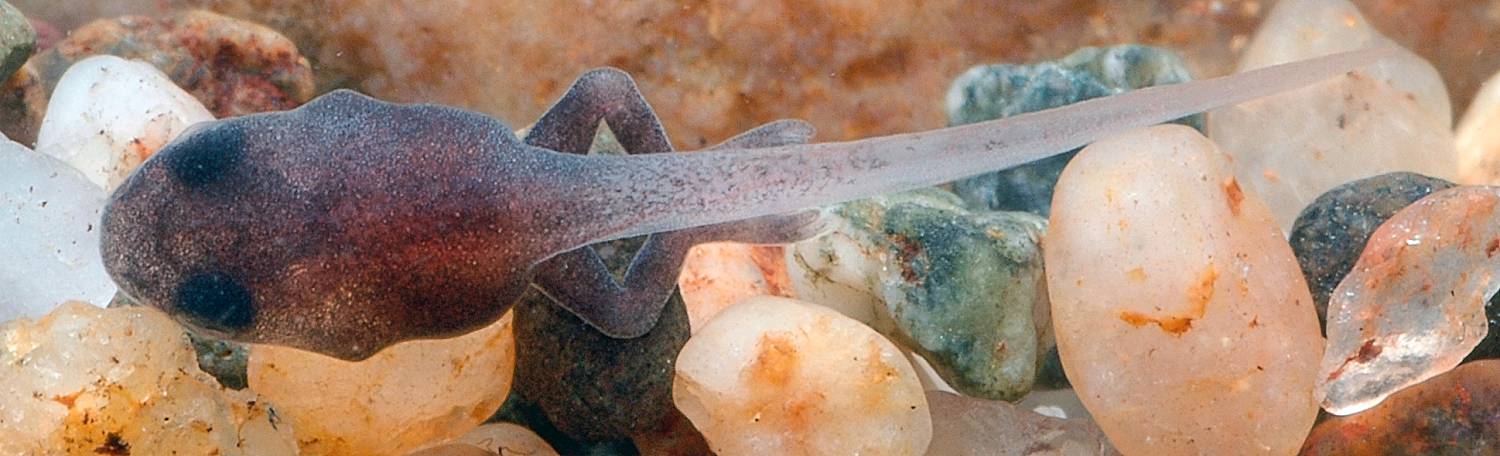
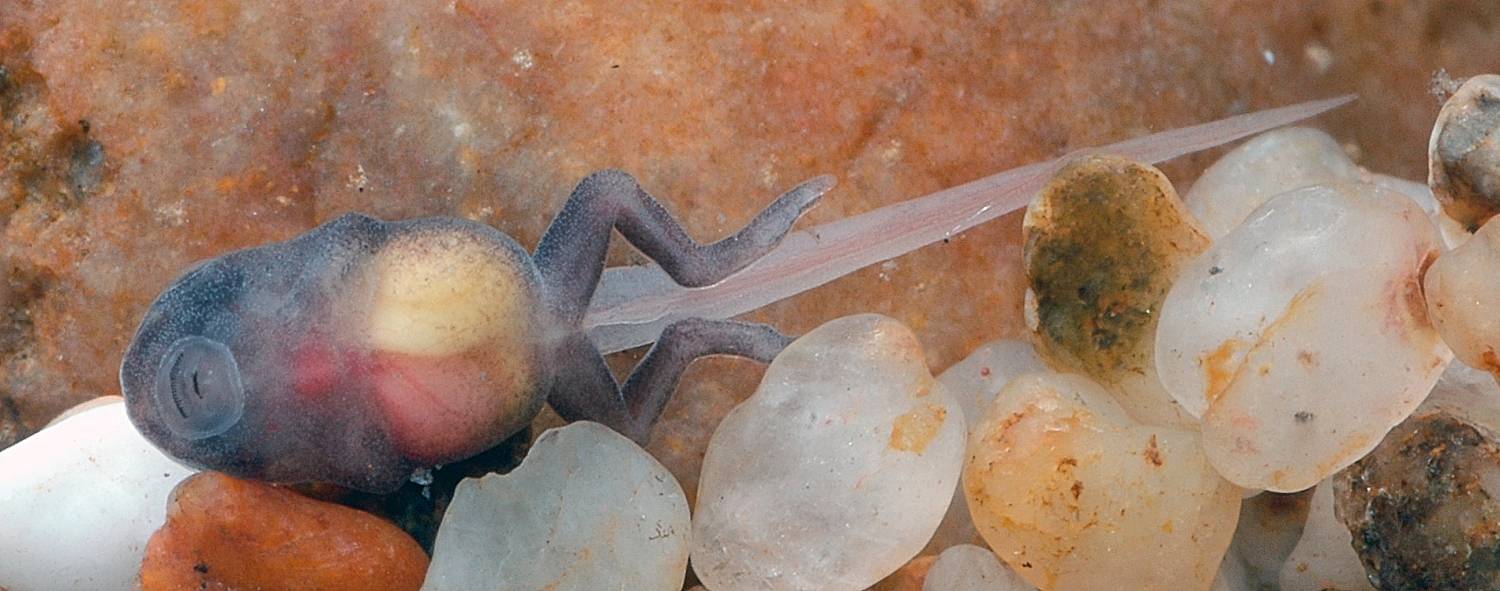
The tadpoles develop in small phytotelmata. Their mouthparts are somewhat reduced and the belly is filled with yolk; both suggest an endotrophic mode of development. Usually, development in endotrophic tadpoles is rapid; however, data are not available for this species.
  • Family:
    Bufonidae
  • Genus:
    Pelophryne
  • Ecomorph:
    endotrophic, phytotelma specialist
  • Waterbody Type:
    phytotelma
  • Water Column:
  • Feeding Type:
    non-feeding
  • Size:
    12 mm
  • Development:
    larva, tadpole
  • Adult:
    Pelophryne

Coloration

Dark grayish dorsally. Ventrally with much less pigmentation; inner organs visible through translucent skin, especially the yolk-rich, cream-colored gut. Body and tail dusted with iridocytes. Some melanocytes present along the base of the tail. Muscular part of tail pale whitish; tail fins relatively clear.

Snout

Short, bluntly rounded to truncated in dorsal view; rounded in lateral view.

Oral Disc

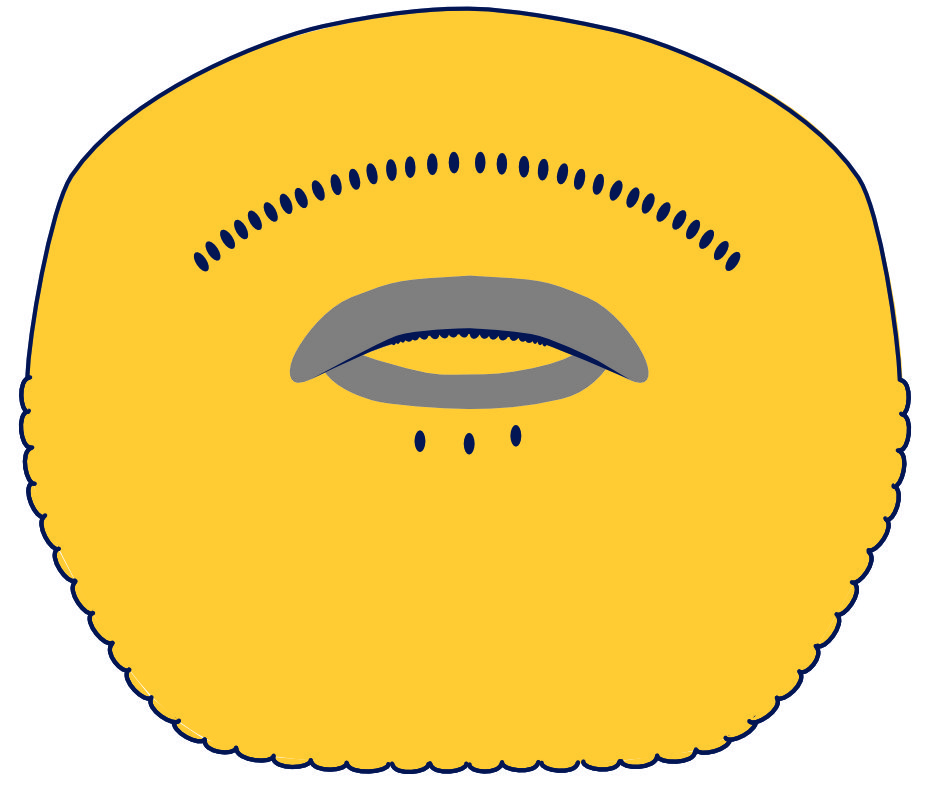
Ventral, small (about 50% of head-trunk width). Shape nearly circular. No marginal papillae on upper lip. Papillae on lower lip very reduced, giving the lip a wavy contour. A single labial keratodont row present on both upper and lower lips (LTRF 1/1). Keratodonts widely spaced, especially on the lower lip row. Jaw sheaths distinct but unkeratinized or only thinly keratinized along their margins.

Body

Slightly depressed dorsoventrally. Oval in dorsal view (with bulging elbows in advanced stages). Spiracle sinistral, well below the head-trunk mid-axis.

Eyes & Nostrils

Nostrils closer to snout than to eye and oriented laterally. Eyes lateral, with the cornea protruding beyond the body contour. Eyes relatively large. Iris black.

Tail

Long, approximately 67% of total length. Muscular part moderately strong. Dorsal tail fin begins slightly anterior to the trunk-tail junction. It mostly lacks convexity and has a relatively flat contour, approximately parallel to the ventral tail fin. Both fins moderately high. Tail tip broadly rounded.

Similar Species

Other tadpoles that live in small phytotelmata, such as tree holes or Nepenthes pitchers, include larvae of Kalophrynus, Metaphrynella sundana, and tadpoles of at least two species of Microhyla and one Philautus. Philautus nepenthophiluslacks mouthparts. The microhylids have median spiracles, terminal mouth openings, lack oral discs and keratinized mouth structures, and, in M. nepenthicola, possess tail shapes clearly different from Pelophryne tadpoles. The spiracular opening is difficult to see in these very small phytotelma-inhabiting tadpoles and usually requires magnification. However, the oral disc in P. signata is a distinguishing feature that may be useful in the field.
The published larval description of P. misera (see there) is similar to that of P. signata. These shared features may also occur in other Pelophryne species. Due to this similarity and the lack of data, Pelophryne tadpoles may currently be morphologically indistinguishable. The presence of adults in the habitat, ecological information, and DNA matching should therefore be considered when identifying tadpoles within the genus.

Literature

Males call from vegetation near a suitable phytotelma. Current evidence suggests that the species utilizes very small phytotelmata for larval development. Thirteen tadpoles of the closely related P. ingeri were found in a small tree hole (3 cm diameter, 2 cm deep). The specimen presented here was discovered inside waterfilled PVC pipes at the base of Gunung Santubong.
Denzer, W. (1994) Tree hole breeding in the toad Pelophryne brevipes (Peters, 1867). AmphibiaReptilia 15: 224–226.

Leong, T.M., Teo, S.C. (2009) Endotrophic tadpoles of the Saint Andrew's Cross Toadlet, Pelophryne signata (Amphibia: Anura: Bufonidae) in Singapore. Nature in Singapore 2: 21–25. [now recognized as P. ingeri]

Malkmus, R., Dehling, J.M. (2008) Anuran amphibians of Borneo as phytotelmbreeders—a synopsis. Herpetozoa 20: 165–172.