Frogs of Borneo

Frogs of Borneo

Frogs of Borneo

Frogs of Borneo

Frogs of Borneo

Frogs of Borneo

Frogs of Borneo

Frogs of Borneo

Frogs of Borneo

Frogs of Borneo

Frogs of Borneo
Filter
Philautus macroscelis
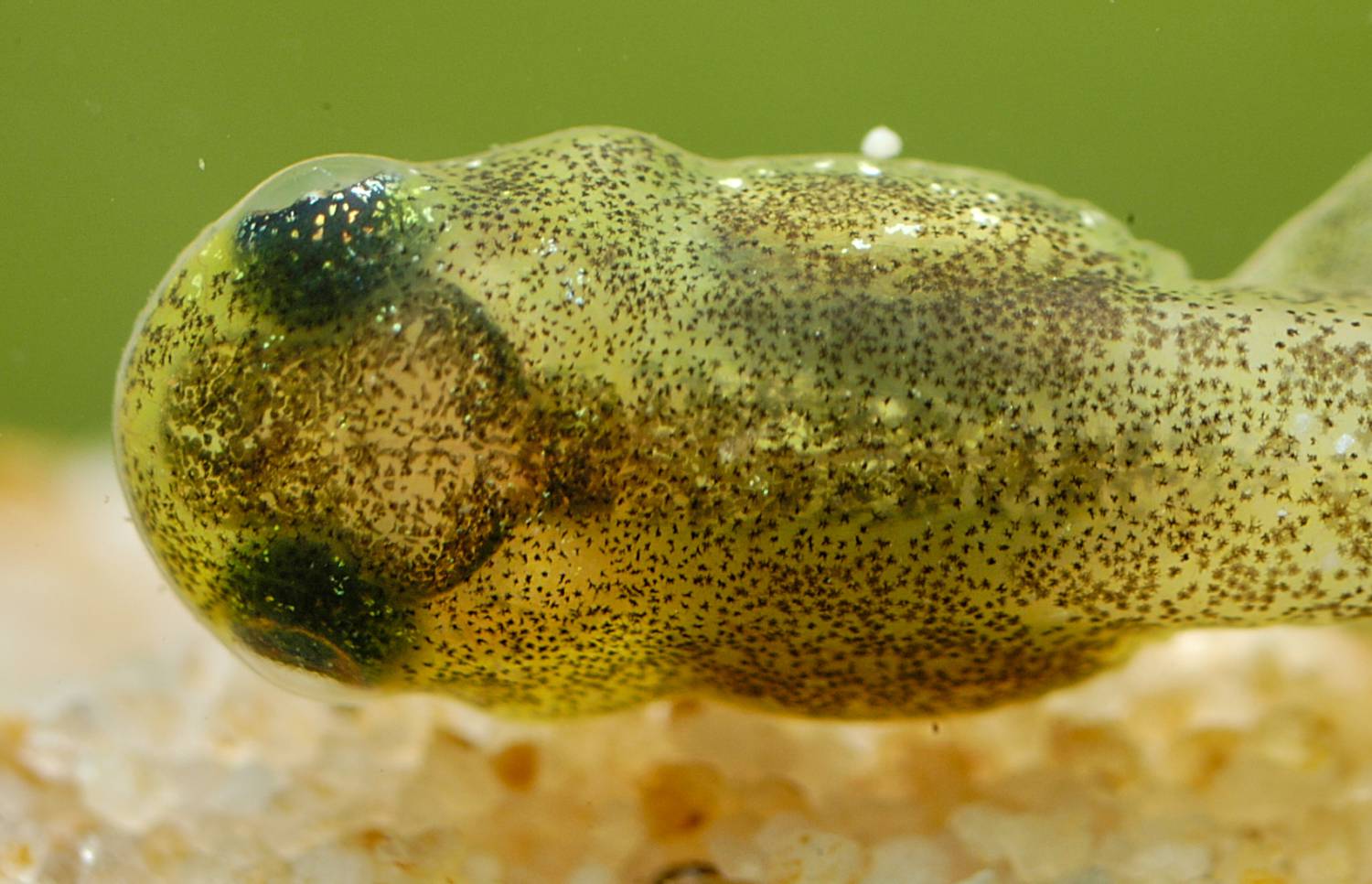
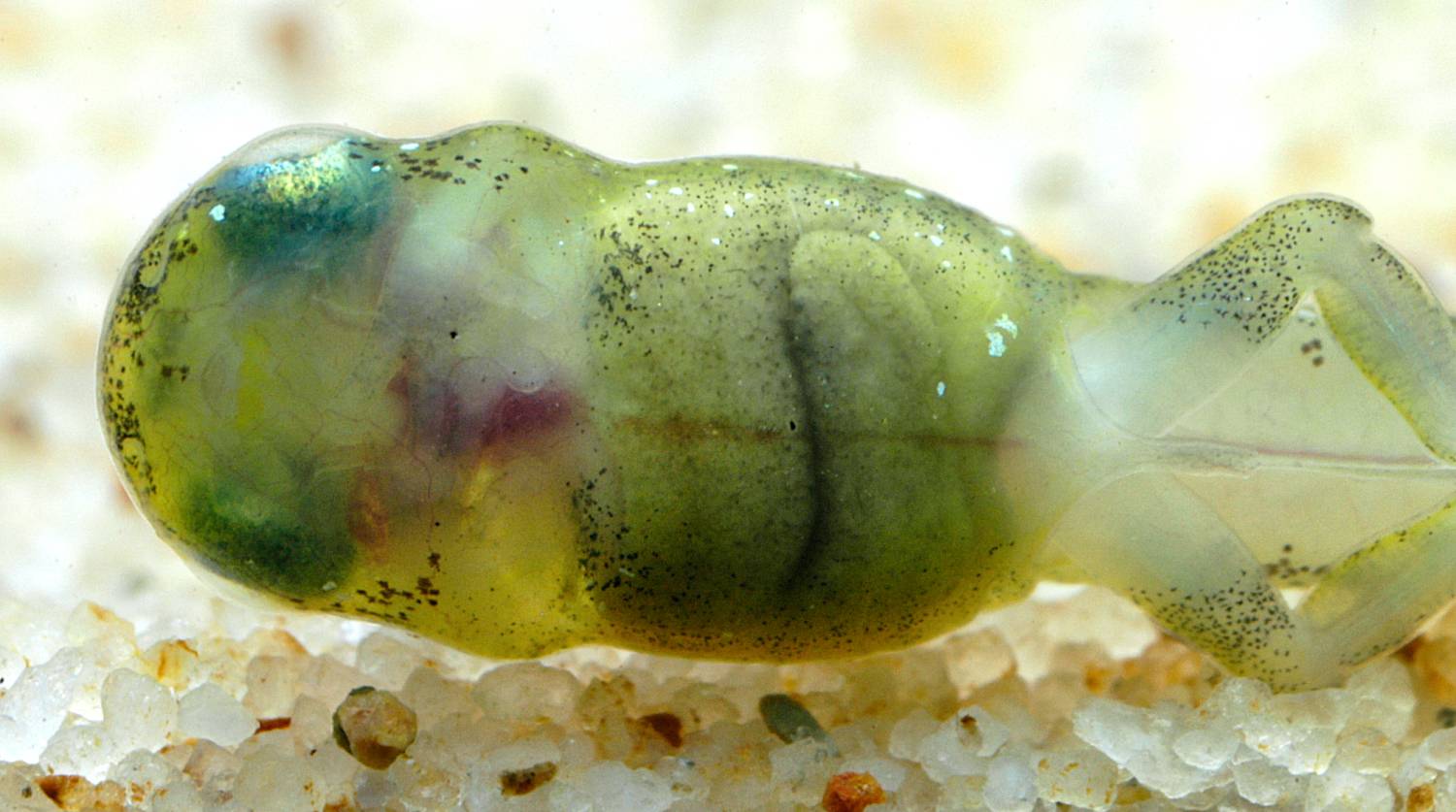
The ecology of this tadpole is unknown; however, there are other tadpoles in the world with similar body features. These convergent cases suggest that the tadpole of P. macroscelis might develop in a nidicolous mode, in which the tadpole remains at the site of egg deposition for some time to complete development without feeding (endotrophic). If so, the nest is probably terrestrial but located close to a small stream. We collected our specimen at the edge of a very small stream; it may have been washed into the stream from a nearby location. The intestine is thick and yellowish, indicating a rich yolk content. This, together with the very small mouth and the absence of jaw sheaths and keratodonts, suggests a non-feeding larval mode.
-
Family:Rhacophoridae
-
Genus:Philautus
-
Ecomorph:nidicolous
-
Waterbody Type:flowing
-
Water Column:—
-
Feeding Type:non-feeding
-
Size:19 mm
-
Development:larva, tadpole
-
Adult:Philautus
Coloration
Olive above, with moderate pigmentation. Melanocytes are mainly present on the dorsal and lateral body surfaces. The ventral side is mostly unpigmented and translucent, except for some scattered melanocyte clusters in the anterior abdominal region and at the gill region. The heart, forelimbs (if present), and intestine are discernible in ventral view. The braincase and vertebral column are darkly pigmented. Body pigmentation continues onto the muscular part of the tail and the upper tail fin, fading toward the fin margins. Conspicuous silver-blue iridophores are scattered along the body and tail; they begin behind the eye and extend along the flanks and the muscular part of the tail, with a few reaching the upper fin.
Snout
Very short, bluntly rounded in dorsal and ventral views.
Oral Disc
Mouth present as a tiny, barely visible ventral opening; oral orifice crescent-shaped. Oral disc highly reduced, except for one lateral papilla on each side of the mouth. Keratinized structures absent.
Body
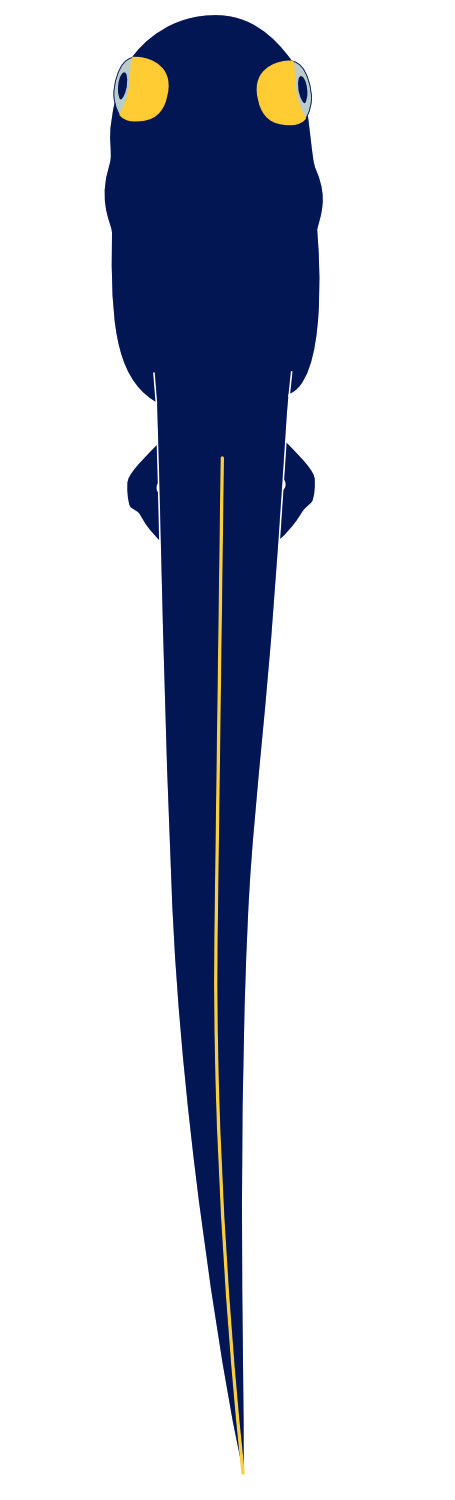
A small tadpole. Body rounded-rectangular in dorsal view. Body moderately depressed, longer than wide, and only slightly wider than high; approximately cylindrical.
Eyes & Nostrils
Eyes positioned laterally and very large relative to the head. Sclera black in background color with silver-blue iridocytes; iridocytes dense ventrally and scattered dorsally on the eyeball. Iris black with dense coppery spots, partially fusing around the pupil. Nostrils in a unique ventral (!) position.
Tail
Relatively strong and very long (about 75% of total length). Tail dominated by its muscular part; upper and lower fins low. Upper tail fin originates slightly posterior to the trunk-tail junction. Fin contours nearly parallel in the proximal half of the tail and do not differ markedly in height along its length. Maximum tail height at about 60% of tail length. Fins weakly converge in the posterior quarter of the tail. Tail tip broadly rounded.
Similar Species
Large eyes, short snout, silver-blue iridophores, very long tail, and a highly reduced mouth and mouthparts are unique among Bornean tadpoles. A very similar specimen was described by Leong (2004, fig. 3) and assigned to Limnonectes laticeps, however without DNA barcoding; we doubt that identification. Some features are shared with Philautus nepenthophilus, which, however, possesses a unique posteroventral skin flap.
Literature
Males call with a long rattling note along small streams in cool highland primary forest (1100–1800 a.s.l.). This is where reproduction takes place. No further details have been reported.
Leong, T.M. (2004) Larval descriptions of some poorly known tadpoles from Peninsular Malaysia (Amphibia: Anura). The Raffles Bulletin of Zoology 52: 609–620.
Hertwig, S.T., Das, I., Schweizer, M., Brown, R., Haas, A. (2011) Phylogenetic relationships of the Rhacophorus everetti-group and implications for the evolution of reproductive modes in Philautus (Amphibia: Anura: Rhacophoridae). Zoologica Scripta 41: 29–46.