Frogs of Borneo

Frogs of Borneo

Frogs of Borneo

Frogs of Borneo

Frogs of Borneo

Frogs of Borneo

Frogs of Borneo

Frogs of Borneo

Frogs of Borneo

Frogs of Borneo

Frogs of Borneo
Filter
Polypedates colletti
The species occurs in lowland forests up to 650 m a.s.l. in scattered populations. Tadpoles have not been reported frequently. We observed them hovering quietly in blackwater pools, maintaining position by constantly beating their flagellate tail. Their hovering behavior suggests that they rely on filtering small food particles from the water. During the day, tadpoles hide in or near dense leaf litter and are mostly active at night. The species appears to prefer humic-acid-rich waters for larval development, such as pools in peat swamp and kerangas forests.
-
Family:Rhacophoridae
-
Genus:Polypedates
-
Ecomorph:benthic-nektonic, exotrophic, lentic
-
Waterbody Type:stagnant
-
Water Column:bottom to surface
-
Feeding Type:feeding, generalist, rasping, suspension feeder
-
Size:37 mm
-
Development:larva, tadpole
-
Adult:Polypedates
Coloration
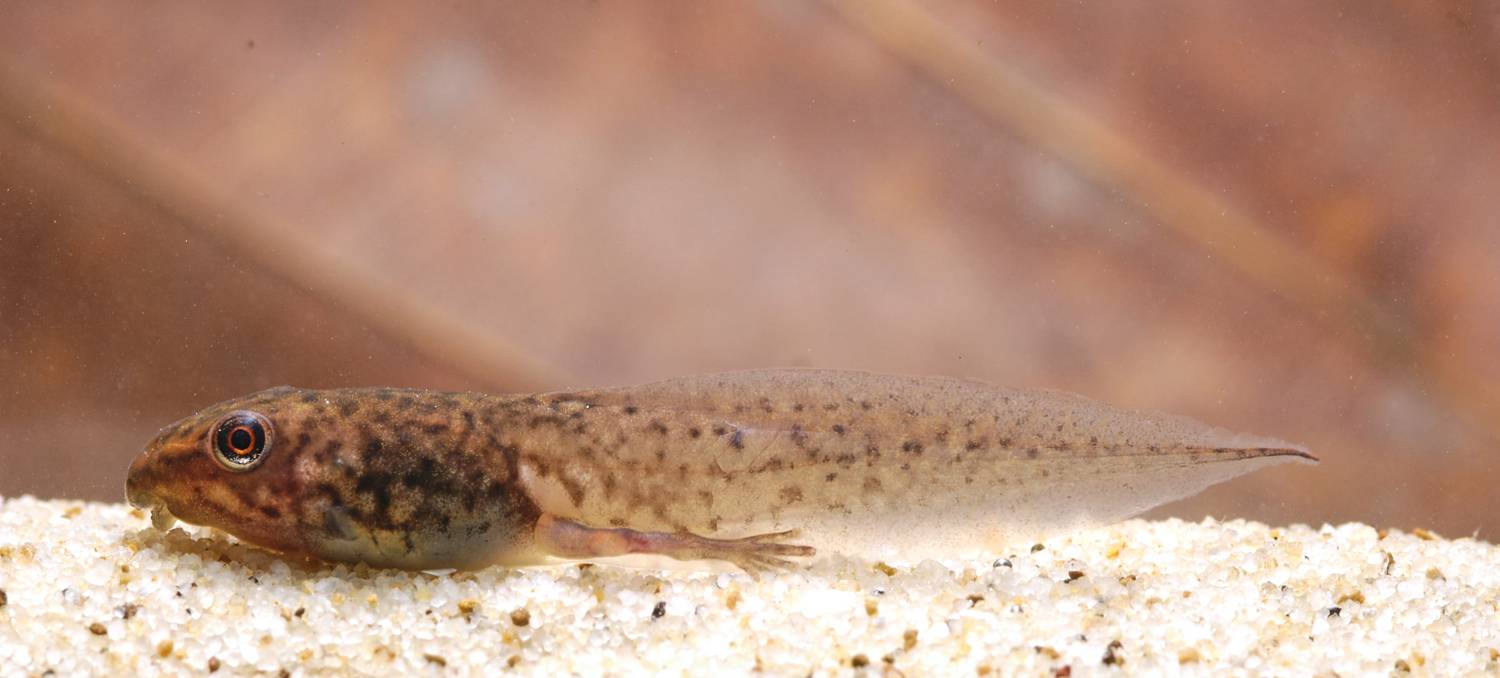
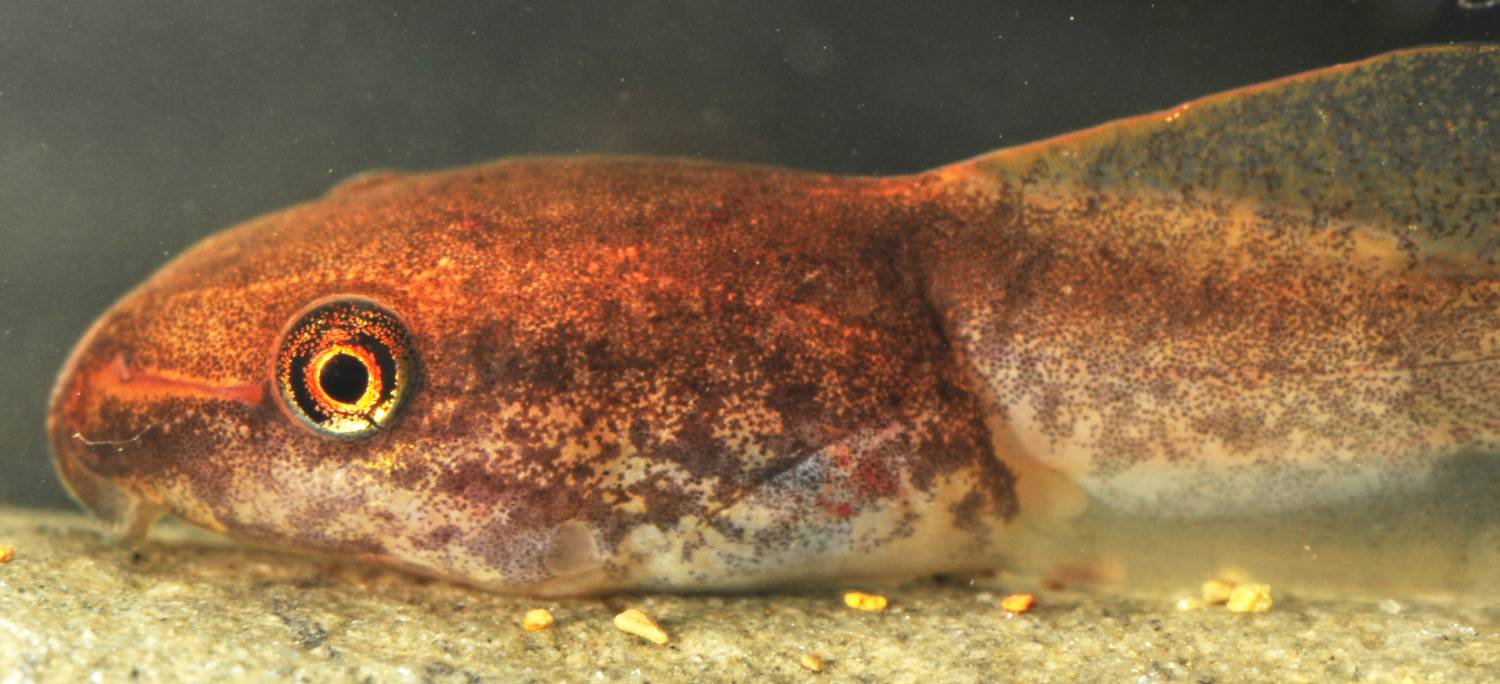
Generally dark brown dorsally. At closer inspection, the body shows dark brown mottling and indistinct spots on a lighter brown background. On the flanks, the pattern may partially reverse into light spots on a dark background, forming a distinct high-contrast pattern; this varies among populations. Ventrally, the coloration transitions through a narrow gradient into a whitish venter. The ventral side is white to silvery in the abdominal region but finely pigmented in the gular and branchial areas. The dotted flank pattern may extend ventrally onto the anterior abdomen. Oral disc mostly unpigmented. Viscera are covered; neither gut coils nor gills are clearly visible through the skin. The marbling of the trunk continues onto the tail with decreasing contrast and intensity. Spots are mainly on the muscular part of the tail but extend proximally onto the fins. Lower fin clearer than upper fin. Caudal blood vessels inconspicuous.
Snout
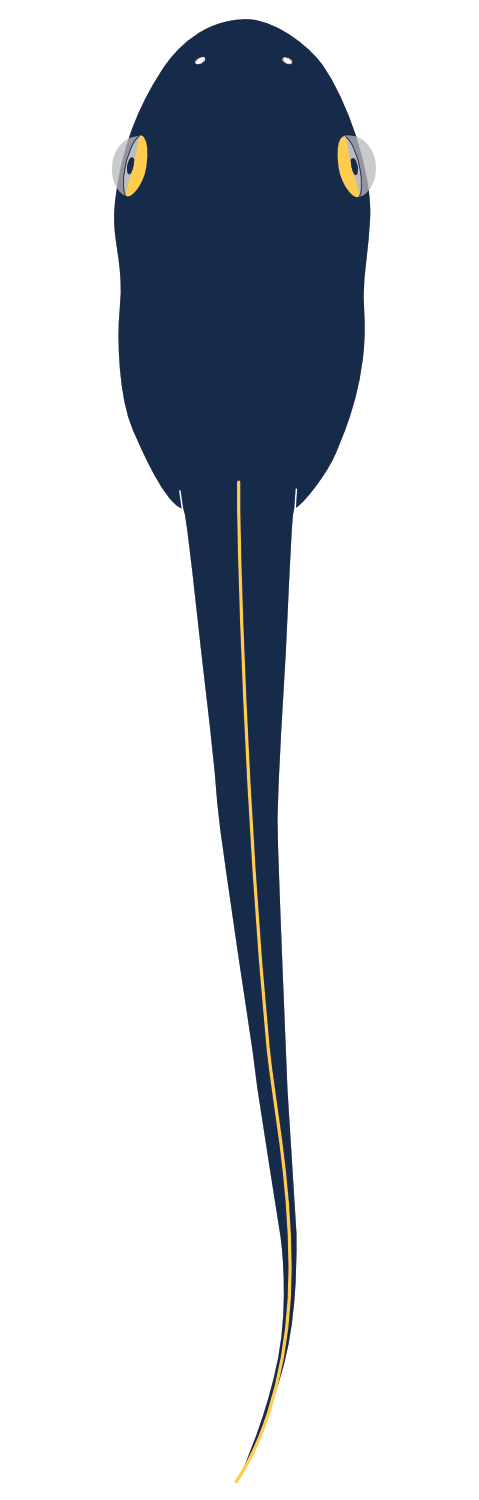
Tapering and rounded in dorsal view; sloping and rounded in lateral view, not angular.
Oral Disc
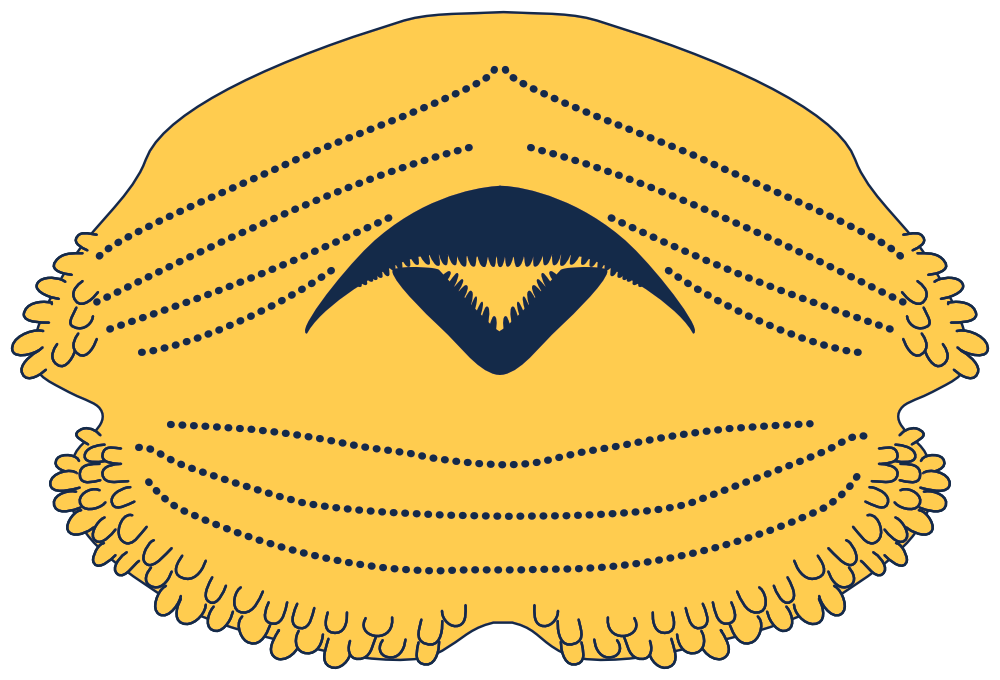
Anteroventral. Marginal papillation with a broad gap on the upper lip and a narrow gap on the lower lip. Lateral indentations present. Upper lip with a medial notch through which the first keratodont row passes. Marginal papillae arranged in double to triple rows; some submarginal papillae present laterally. Marginal papillae short and blunt. LTRF 4(2–4)/3. Upper and lower beaks undivided, well developed, black, and serrated. Lower beak V-shaped; upper beak broadly arched.
Body
Oblong, parallel-sided to weakly rhomboid in dorsal view. In lateral view, body depth increases from head to trunk. Body only slightly dorsoventrally depressed or as wide as deep, i.e., cylindrical. Gular region slightly concave in lateral view. Spiracle sinistral. Posterior spiracular orifice fused to body wall; spiracle directed posteriorly and positioned well below the mid-body axis. Lateral line organs indistinct.
Eyes & Nostrils
Eyes lateral; cornea protrudes beyond body contour. Nostril closer to snout than to eye. Orbitonasal streak present. Iris distinctive: black background with brown dusting dorsally, silvery-white pigmentation ventrally, and a narrow copper-red ring around the pupil. Iridocyte pattern extends onto the sclera, which is brown dorsally and silvery-white ventrally.
Tail
Long, approximately 65–69% of total length. Muscular part moderately strong, more than half of body height in lateral view. Dorsal tail fin begins at the trunk-tail junction. A patch of semi-opaque tissue (sometimes indistinct) covers the anterior third of the tail and extends into both fins. Dorsal fin moderately arched. Fins taper posteriorly with slightly concave margins into an acuminate tip forming a flagellum. Upper and lower fins approximately equal in height. Maximum tail height in the anterior half of the tail.
Similar Species
The combination of coloration features—especially the flank spotting pattern and iris coloration—together with body and tail-fin shape, allows reliable identification of this tadpole. Early larval stages of other Polypedates species may show similar morphology but exhibit considerable variation in coloration. P. colletti tadpoles are smaller and have a less deep trunk than other Polypedates species in Sarawak and Sabah.
Literature
Breeding groups gather around forest pools and swampy areas. Males often perch and call in horizontal position on vertical branches or trunks 1–4 m above the ground. The call consists of a series of crackling notes, often preceded by numerous lowpitched, broadband notes. Eggs are laid into a foam nest above the water, which male and female build during mating amplexus.
Haas, A., Das, I. (2008) Larval identities of Ansonia hanitschi Inger, 1960 (Amphibia: Bufonidae) and Polypedates colletti (Boulenger, 1890) (Amphibia: Rhacophoridae) from East Malaysia (Borneo). Salamandra 44: 85–100.
Inger, R.F. (1985) Tadpoles of the forested regions of Borneo. Fieldiana Zoology new series 26: 1–89.
Inger, R.F., Stuebing, R.B., Grafe, T.U., Dehling, J.M. (2017) A field guide to the frogs of Borneo. 3rd ed. Natural History Books, Kota Kinabalu. 228 pp.
Inger, R.F. (1985) Tadpoles of the forested regions of Borneo. Fieldiana Zoology new series 26: 1–89.
Inger, R.F., Stuebing, R.B., Grafe, T.U., Dehling, J.M. (2017) A field guide to the frogs of Borneo. 3rd ed. Natural History Books, Kota Kinabalu. 228 pp.