Zum Hauptinhalt springen

Frogs of Borneo

Frogs of Borneo

Frogs of Borneo

Frogs of Borneo

Frogs of Borneo

Frogs of Borneo

Frogs of Borneo

Frogs of Borneo

Frogs of Borneo

Frogs of Borneo

Frogs of Borneo

Polypedates leucomystax

Polypedates leucomystax tadpoles inhabit puddles and ponds in open or semi-open habitats, often in rural areas or even urban parks. They feed on organic matter at the bottom but may also enter the water column to filter-feed on small particles.
  • Family:
    Rhacophoridae
  • Genus:
    Polypedates
  • Ecomorph:
    benthic-nektonic, exotrophic, lentic, suspension-rasper
  • Waterbody Type:
    stagnant
  • Water Column:
    bottom
  • Feeding Type:
    feeding, generalist, rasping, suspension feeder
  • Size:
    50 mm
  • Development:
    larva, tadpole
  • Adult:
    Polypedates

Coloration

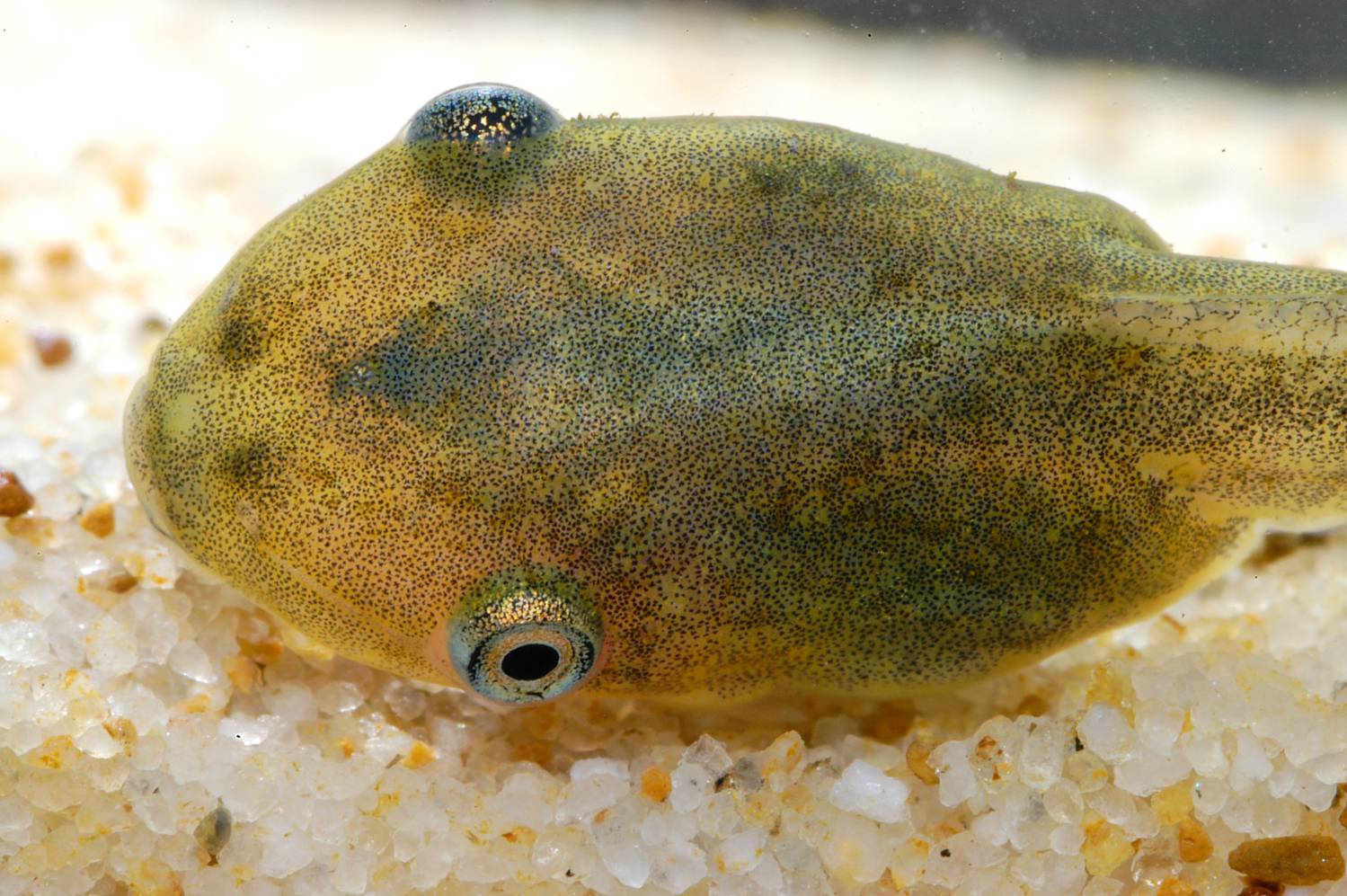
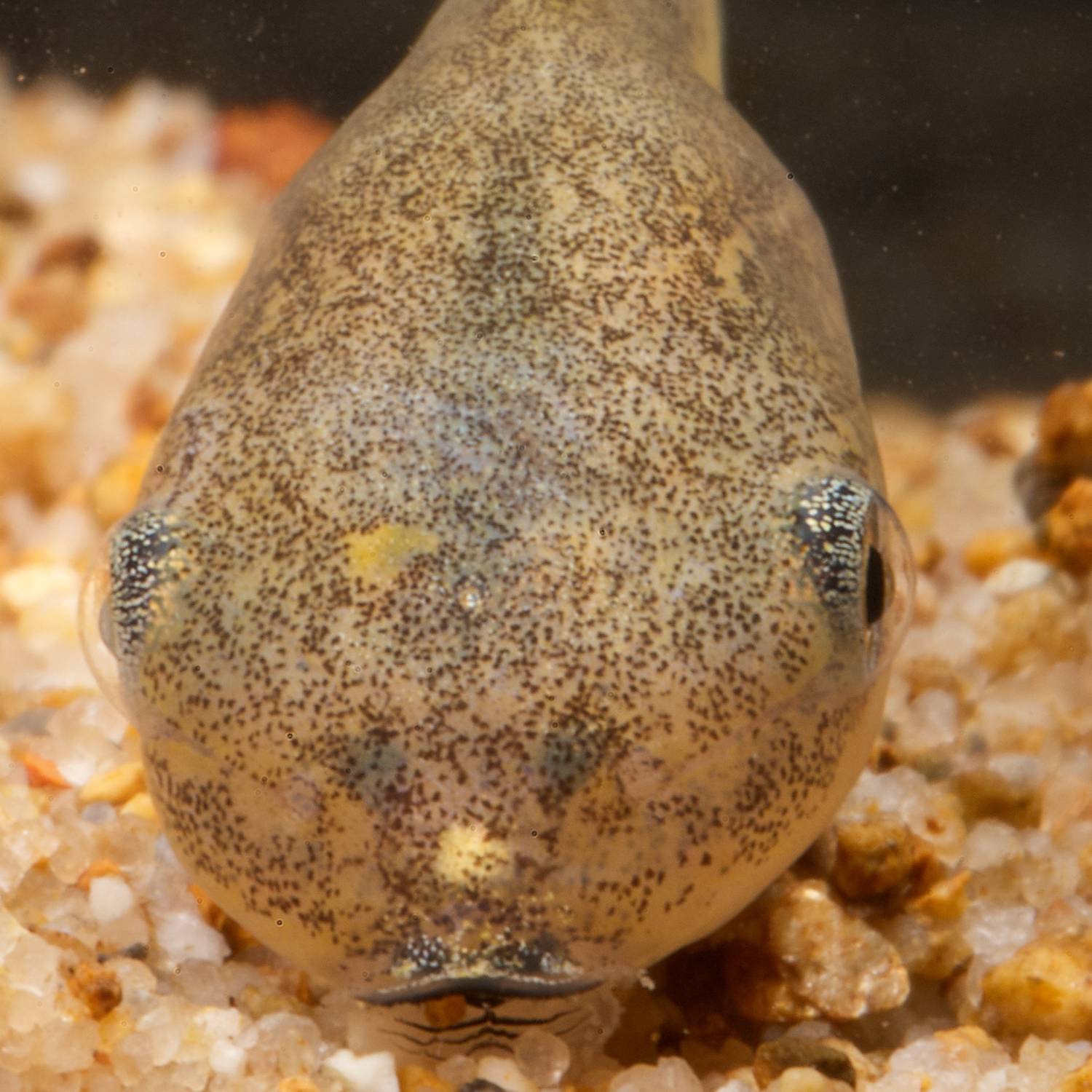
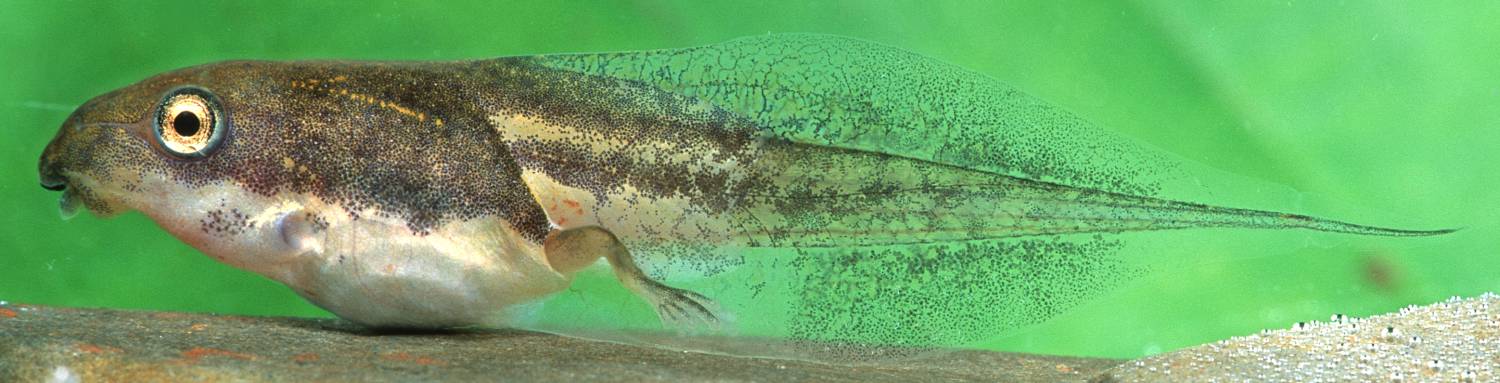
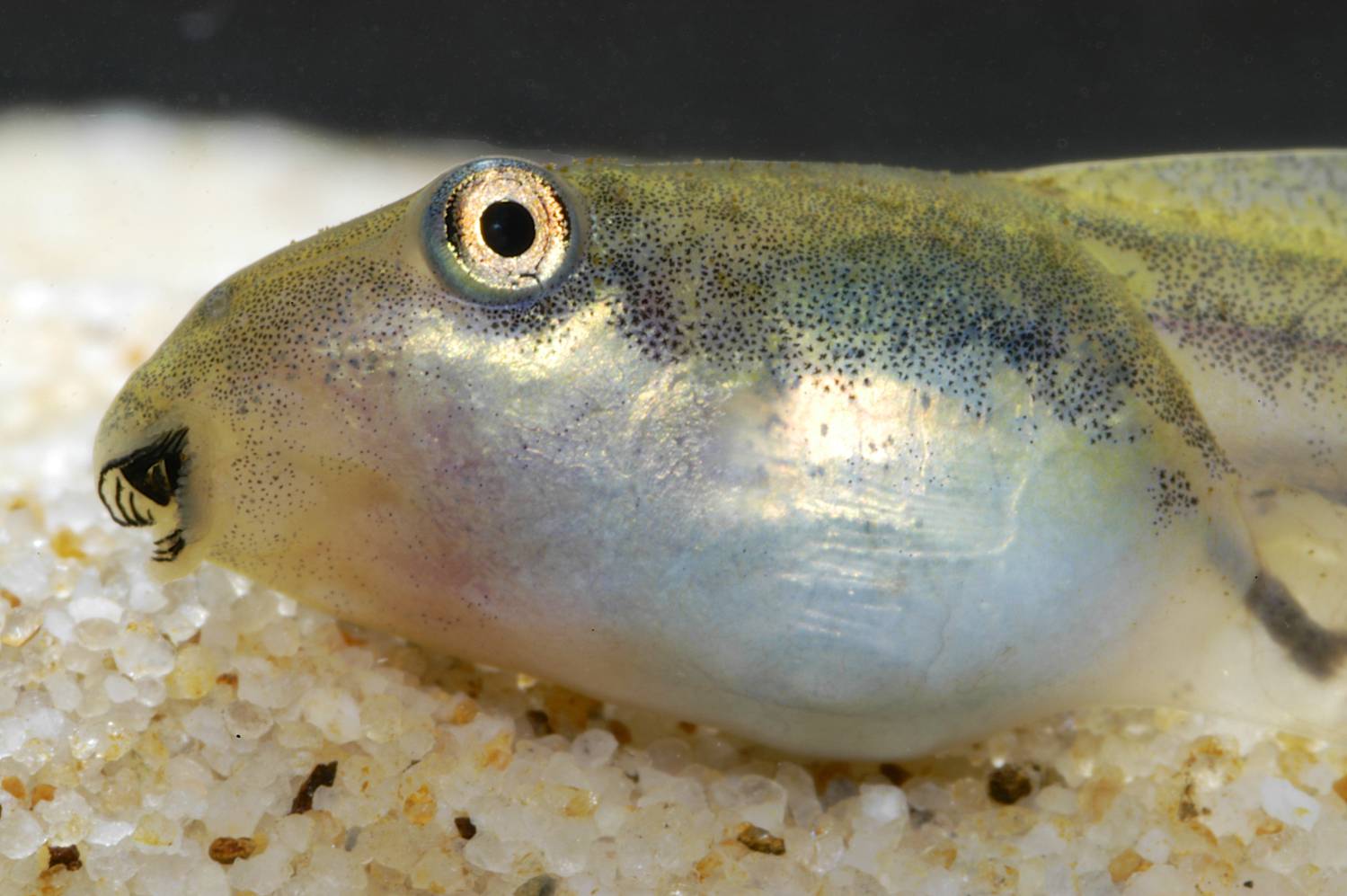
General appearance brown, gray, or olive dorsally, sometimes with diffuse scattered spots. A light spot is present medially on the snout, and two dark spots occur between the nostrils. The flanks show an abrupt transition from dark dorsal pigmentation to a white-silvery ventral coloration; the boundary runs horizontally below the eye but above the spiracle. Ventral side white to silvery; gills, heart, and gut coils not visible. Dark pigmentation of the trunk continues caudally onto the tail. Frequently, streaks are formed in the proximal half of the tail: darker dorsally and along the midline, with a lighter streak between and below these areas. Fin pigmentation variable; diffuse pigmentation especially in the proximal upper fin, with melanocyte dusting or reticulation and groups of iridophores in the mid-tail region. Lateral tail vein visible in the anterior third of the tail. Oral disc and papillae unpigmented.

Snout

Rounded and slightly tapering in dorsal view, angled in lateral view.

Oral Disc

Subterminal. Marginal papillation with a broad gap on the upper lip and a narrow gap on the lower lip. Lateral indentations present. Marginal papillae arranged in a single row; few submarginal papillae present laterally on the upper lip. Marginal Papillae short and blunt laterally, but elongate and pointed along most of the lower lip margin. LTRF 4(3–4)/3. Upper and lower beaks undivided, robust, black, and serrated.

Body

Rhomboid in dorsal view; widest at eye level. In lateral view, body depth increases from head to trunk. Trunk approximately as wide as deep, not dorsoventrally depressed. Gular-buccal region moderately concave in lateral view. Spiracle sinistral; posterior spiracular orifice fused to body wall. Spiracle directed posteriorly and positioned well below the mid-body axis.

Eyes & Nostrils

Eyes lateral, protruding beyond head contour. Nostril closer to snout than to eye. Well-developed orbitonasal streak present. Iris golden with darker anterior and posterior sectors. Sclera dusted with silvery or golden pigment dorsally and fully silvery in anterior, ventral, and posterior sectors.

Tail

Moderately strong, long, approximately 67% of total length. Dorsal tail fin begins at the trunk-tail junction. A patch of semi-opaque tissue (sometimes indistinct) covers the anterior third of the tail and extends into both fins. Dorsal fin arched. Fins taper posteriorly with slightly concave margins into a narrow tip. Lower fin slightly higher than upper fin. Maximum tail height at approximately one third of tail length.

Similar Species

Polypedates leucomystax resembles P. otilophus and P. macrotis, but can be distinguished by pigmentation details (streaking pattern, abrupt lateral color transition), smaller size, generally lower tail fins, and a less distinct opaque tissue patch at the base of the tail. Identification of early developmental stages is more difficult. The species also differs from the others in LTRF, although this character can be difficult to assess in the field.

Literature

Males scatter around the breeding pond and call from the ground. The call is a lowpitched loud quack. During mating, a foam nest is produced by the amplecting pair at the edge of the pond, floating on the surface of the water and attached to vegetation. Tadpoles hatch from the foam and develop quickly.
Inger, R.F. (1985) Tadpoles of the forested regions of Borneo. Fieldiana Zoology new series 26: 1–89.

Leong TM, Chou L. (1999) Larval diversity and development in the Singapore Anura (Amphibia). The Raffles Bulletin of Zoology 47: 81–137.