Frogs of Borneo

Frogs of Borneo

Frogs of Borneo

Frogs of Borneo

Frogs of Borneo

Frogs of Borneo

Frogs of Borneo

Frogs of Borneo

Frogs of Borneo

Frogs of Borneo

Frogs of Borneo
Filter
Rentapia hosii
According to Inger and Stuebing (2017), the tadpoles inhabit the bottom of quiet side pools of medium-sized lowland streams, where they occur among plant debris. Bufonid tadpoles do not develop lungs until metamorphosis and therefore do not surface for aerial respiration, in contrast to many other taxa. This, together with their small body size, may render them difficult to detect in the field.
-
Family:Bufonidae
-
Genus:Rentapia
-
Ecomorph:benthic, exotrophic, lentic
-
Waterbody Type:stagnant
-
Water Column:bottom
-
Feeding Type:feeding, generalist
-
Size:20 mm
-
Development:larva, tadpole
-
Adult:Rentapia
Coloration
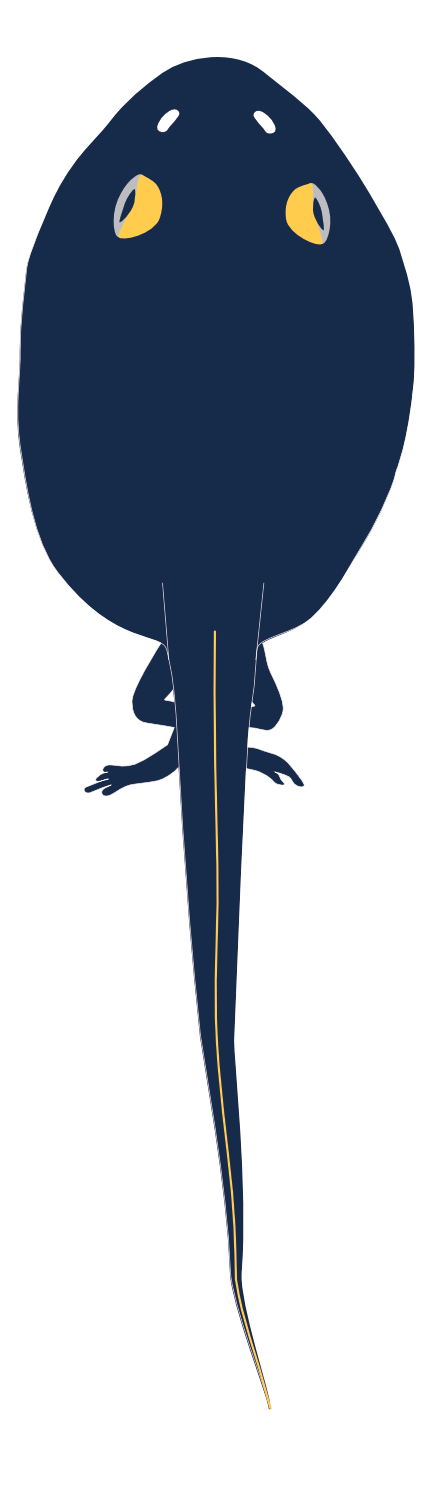
Dorsum of head and body dark brown to black. Ventrally, pigmentation is sparse and the skin appears largely translucent. Dorsal pigmentation extends onto the muscular portion of the tail and the base of the upper fin, fading distally towards the distal third of the tail and fin. Remaining portions of the fins, particularly the lower fin, are largely transparent.
Snout
Short and obtuse in lateral view, with a slight bulge between the nostrils. In dorsal view, moderately tapering, terminating in a smoothly rounded tip.
Oral Disc
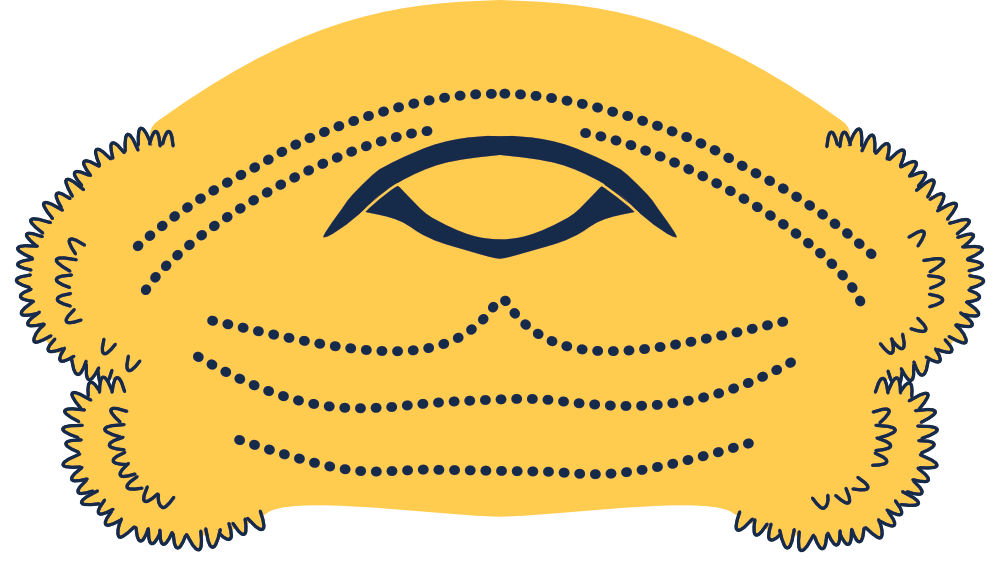
Oral disc ventral, considerably narrower than maximum body width. Papillae on both upper and lower lips restricted to the lateral fourth of the lips. Submarginal papillae often arranged in rows. Lateral emargination between upper and lower lips pronounced. Two keratodont rows on the upper lip and three on the lower lip second upper row divided (LTRF 2(2)/3); first lower row angled but undivided. Beaks undivided. Jaw sheaths weak and narrow, very finely serrated.
Body
Body oval to ovoid in dorsal view, appearing as a flattened oval in lateral view. Body wider than high, i.e., slightly dorsoventrally depressed. Maximum body width located posterior to the eyes. Spiracle sinistral, attached to the body wall, with the orifice directed laterally; positioned below the mid-body axis in lateral view and not visible in dorsal view.
Eyes & Nostrils
Nostril relatively large, positioned between the eye and the tip of the snout, with a slightly elevated rim. Eyes dorsolateral. Iris black.
Tail
Tail moderately long, less than two thirds of total length. Muscular portion relatively weak, distinctly narrower than body width in dorsal view, and moderately high in lateral view. Fins originate at the trunk-tail junction. Fin height moderate. Upper and lower fin margins largely parallel, tapering posteriorly to a broadly rounded tip. Myosepta faintly visible in the distal portion of the tail.
Similar Species
Body size as well as body and tail proportions correspond to typical bufonid tadpole morphology and are shared with Ingerophrynus and Duttaphrynus. On Borneo, likely sources of confusion include the tadpoles of Duttaphrynus melanostictus (uniformly black, including ventrally, with fine pale speckling; pond-breeding), Ingerophrynus divergens (diffuse dark patterning on trunk; inhabiting small and intermittent streams), and I. quadriporcatus (lighter coloration, more elongate snout, more strongly arched fins; associated with peat swamp pools). These bufonid species and R. hosii share a distinctive oral disc morphology, characterized by broad medial areas on both upper and lower lips that lack papillae.
Literature
Male calling is synchronized to unknown cues that make males gather along stream banks for one or two nights in sometimes large numbers. Just as unexpected as the choruses form, the calling activity may cease. Most males call from bushes and trees but also from branches and logs near the bank. Females are much larger than males and strikingly different in color pattern.
Inger, R.F. (1966) The systematics and zoogeography of the Amphibia of Borneo. Fieldiana Zoology 52: 1–402.
Inger, R.F. (1985) Tadpoles of the forested regions of Borneo. Fieldiana Zoology new series 26: 1–89.
Inger, R.F., Stuebing, R.B., Grafe, T.U., Dehling, J.M. (2017) A field guide to the frogs of Borneo. 3rd ed. Natural History Books, Kota Kinabalu. 228 pp.
Inger, R.F. (1985) Tadpoles of the forested regions of Borneo. Fieldiana Zoology new series 26: 1–89.
Inger, R.F., Stuebing, R.B., Grafe, T.U., Dehling, J.M. (2017) A field guide to the frogs of Borneo. 3rd ed. Natural History Books, Kota Kinabalu. 228 pp.