Zum Hauptinhalt springen

Frogs of Borneo

Frogs of Borneo

Frogs of Borneo

Frogs of Borneo

Frogs of Borneo

Frogs of Borneo

Frogs of Borneo

Frogs of Borneo

Frogs of Borneo

Frogs of Borneo

Frogs of Borneo

Rhacophorus baluensis

Due to the restricted distribution of this species to higher elevations in western Sabah and northeastern Sarawak, and the limited number of observations, data on larval ecology remain scarce. Tadpoles inhabit temporary or permanent forest pools, including those in clearings, and may also occur in very slow-flowing sections of streams. They are bottom dwellers. Specimens were encountered in blackwater habitats rich in humic acids at depths of approximately 30 cm.
  • Family:
    Rhacophoridae
  • Genus:
    Rhacophorus
  • Ecomorph:
    benthic, exotrophic, lentic
  • Waterbody Type:
    stagnant
  • Water Column:
    bottom
  • Feeding Type:
    feeding, generalist
  • Size:
    60 mm
  • Development:
    larva, tadpole
  • Adult:
    Rhacophorus

Coloration

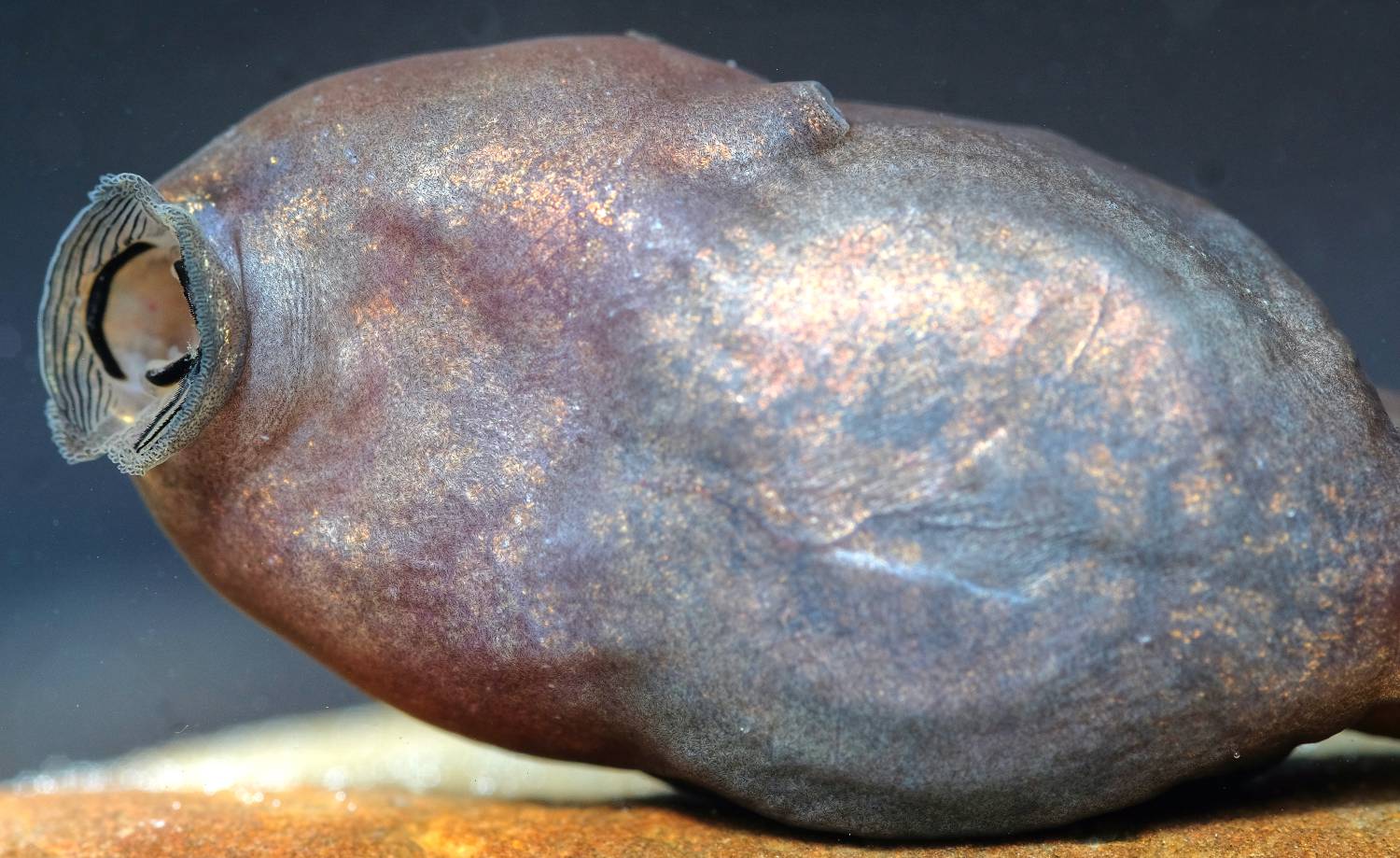
Body and tail generally mid- to dark brown, lacking distinct markings. Flanks bear inconspicuous, irregular spots of bronze iridocytes. Skin opaque; lungs and gut coils not visible in lateral view. Brown pigmentation extends across most of the tail, fading only towards the distal 20% and along the fin margins. Clusters of iridocytes scattered along the tail and fins. Ventral surface brown in the gular and buccal regions, transitioning to grayish in the abdominal region. Bronze or coppery iridophores present ventrally but often indistinct. Ventral skin opaque (at least in larger specimens), obscuring internal organs. Oral disc and papillae pigmented with melanocytes. Dense pigmentation obscures myosepta and tail veins.

Snout

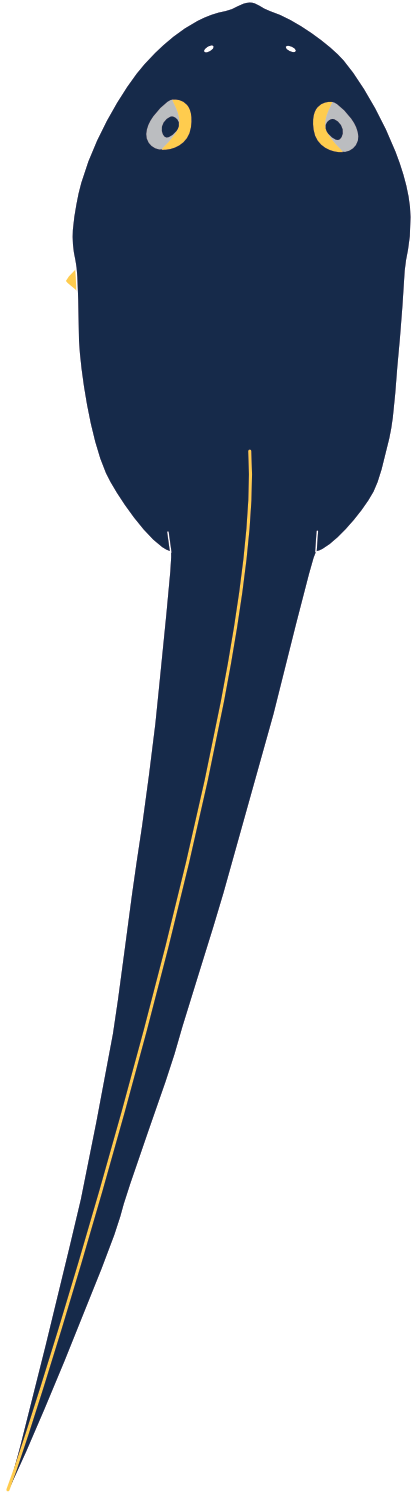
In dorsal view, snout rounded and slightly tapering, terminating in a small medial bulge. In lateral view, snout relatively long, with profile slightly angled at the level of the nostrils.

Oral Disc

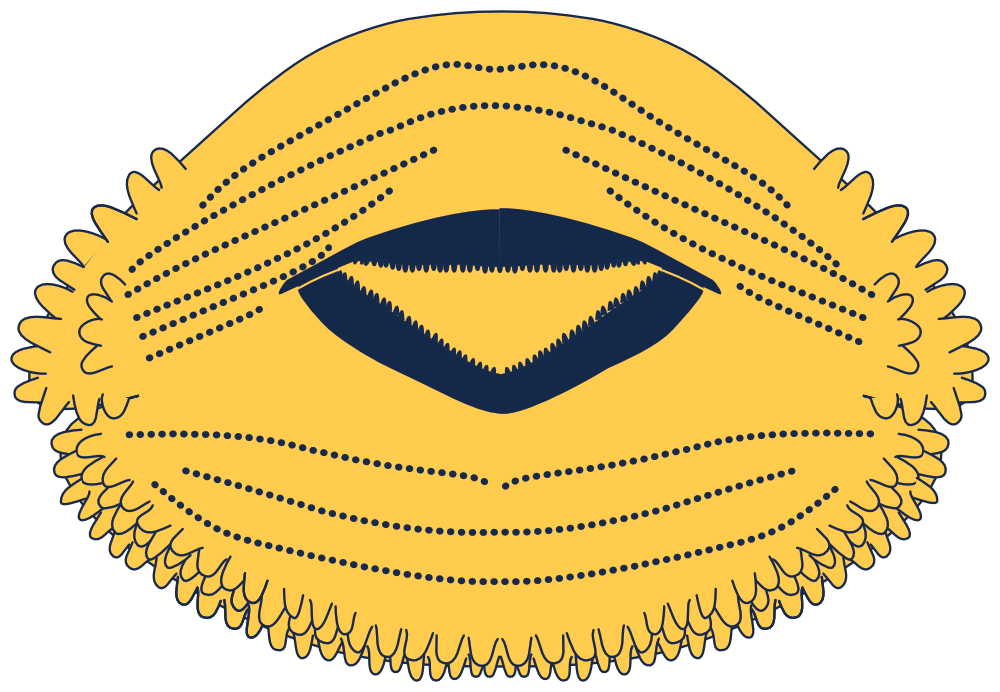
Oral disc anteroventral. Marginal papillae present on the lower lip and lateral portions of the upper lip. Upper lip with a broad medial gap in papillation; no medial gap on the lower lip. Marginal papillae arranged in 2–3 rows on the lower lip and a single row on the upper lip; additional short rows of submarginal papillae present laterally on the upper lip. Papillae moderately long and blunt. Emarginations present between upper and lower lips. LTRF 7(3–7)/3(1), 6(2–6)/3(1), or 6(2–6)/3; division of the first lower row, when present, may be indistinct. Peripheral keratodont rows extend across most of both lips. Beaks well keratinized but narrow; jaw edges serrated. Upper beak relatively flat, only shallowly arched, lacking pronounced medial convexity. Lower jaw forming a broad, flattened V-shape.

Body

Body depressed, dorsally flat. In dorsal view, body outline broadly oval to smoothly rectangular, with maximum width at the gill region. Spiracle sinistral. Spiracular tube opening posterolaterally. Spiracular orifice relatively large, rounded, and positioned very low, well below the longitudinal body axis in lateral view. Medial margin of the spiracular orifice rimmed but attached to the abdominal wall. Orbitonasal streak indistinct. Lateral line pores visible against the dark body.

Eyes & Nostrils

Eyes dorsolateral. Iris black, densely stippled with golden iridocytes; stippling coalesces near the pupil to form a bronze or coppery ring. Sclera similarly stippled with iridocytes on a dark background. In dorsal view, nostrils closer to the snout than to the eyes, opening anterolaterally.

Tail

Tail long, approximately 68–69% of total length. Muscular portion strong and high (approximately 50% of body height). Upper fin originates anterior to the trunk-tail junction. In lateral view, upper fin only slightly arched, largely straight. In the posterior third of the tail, margins of both fins converge in straight lines towards a narrowly rounded tip (often more broadly rounded in regenerated tails). Upper and lower fins subequal in height and moderately developed. Maximum tail height reached beyond mid-tail. Lateral tail vein not visible. Myosepta indistinct.

Similar Species

Due to their large size, robust body, and uniform brown to dark brown coloration, tadpoles of Rhacophorus baluensis are unlikely to be confused with other species. They may resemble tadpoles of Hylarana luctuosa, which differ in coloration pattern, oral disc morphology, and tail shape. Tadpoles of R. nigropalmatus and R. borneensis are lighter in coloration and exhibit posteriorly black tails (night coloration).

Literature

Similar to other rhacophorid tree frogs, R. baluensis is most likely seen in the vicinity of a suitable breeding pond. The species breeding ecology needs further investigation.
Inger, R.F. (1985) Tadpoles of the forested regions of Borneo. Fieldiana Zoology New Series, 26: 1–89.

Inger, R.F., Tan, F.L. (1990) Recently discovered and newly assigned frog larvae (Ranidae and Rhacophoridae) from Borneo. The Raffles Bulletin of Zoology 38:3–9.