Zum Hauptinhalt springen

Frogs of Borneo

Frogs of Borneo

Frogs of Borneo

Frogs of Borneo

Frogs of Borneo

Frogs of Borneo

Frogs of Borneo

Frogs of Borneo

Frogs of Borneo

Frogs of Borneo

Frogs of Borneo

Rhacophorus borneensis

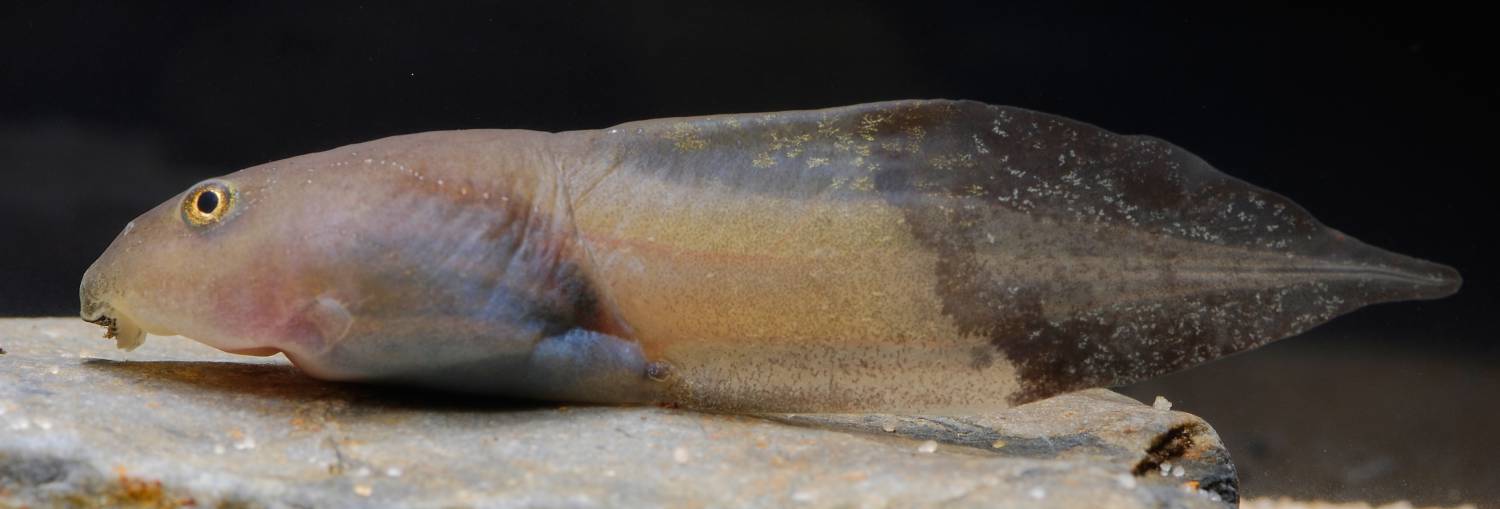
Rhacophorus borneensis is among the most striking frog species of Borneo; however, its larval ecology remains poorly documented. Adults are arboreal and typically occur high in the canopy; calling males may be heard up to 10 m above ground. Encounters are therefore largely restricted to breeding sites. Tadpoles inhabit forest ponds of varying depth and may also occur in stagnant pools within intermittent streams. Observations include forest ponds of approximately 60 cm depth. Tadpoles are benthic and remain close to the substrate.
  • Family:
    Rhacophoridae
  • Genus:
    Rhacophorus
  • Ecomorph:
    benthic, exotrophic, lentic
  • Waterbody Type:
    stagnant
  • Water Column:
    bottom
  • Feeding Type:
    feeding, generalist
  • Size:
    50 mm
  • Development:
    larva, tadpole
  • Adult:
    Rhacophorus

Coloration

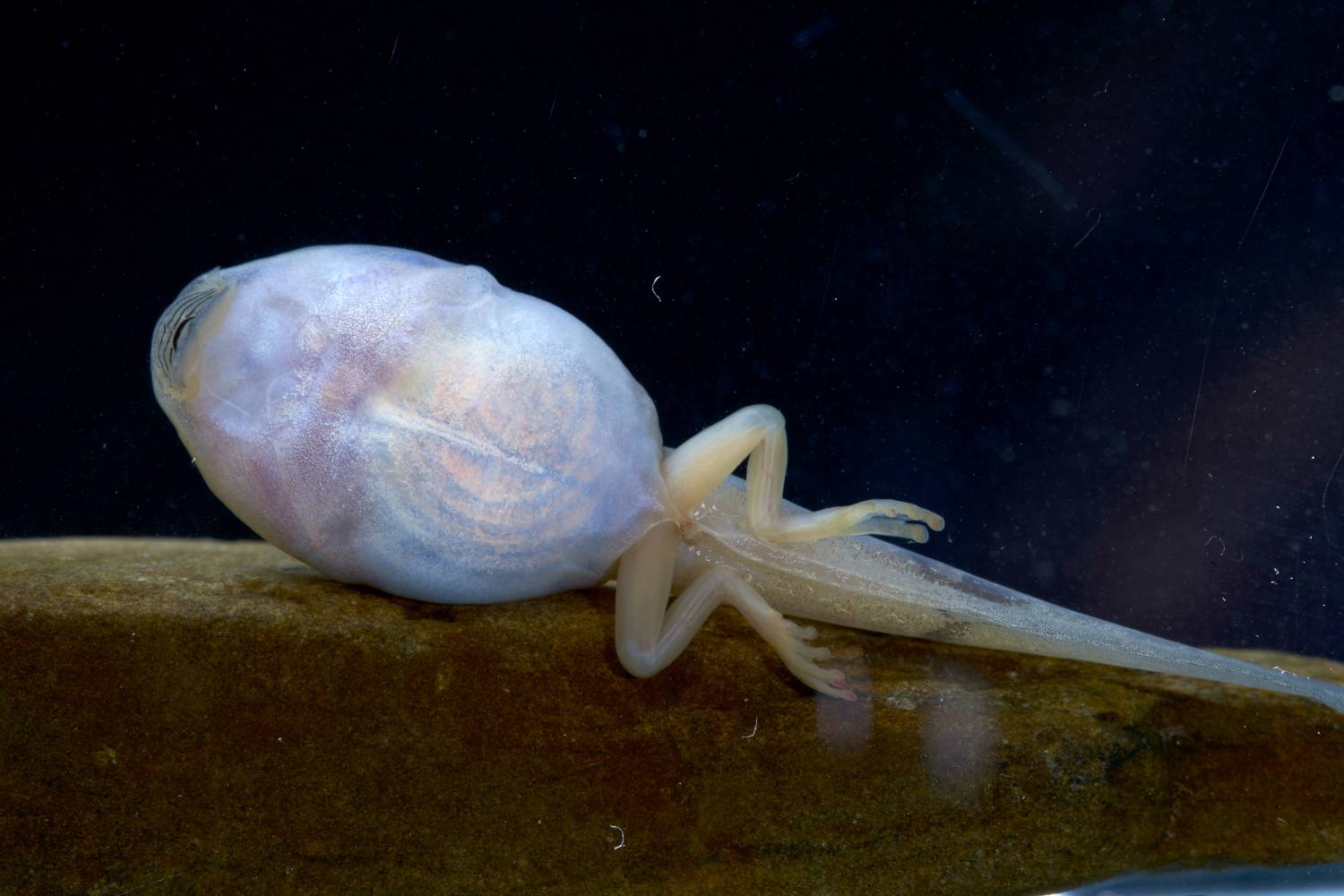
Body and tail beige to uniformly gray or olive dorsally, without distinct spotting. The braincase and vertebral column may appear more darkly pigmented. Lower flanks dusted with iridophores. Flank and abdominal skin semi-opaque; lungs and gut coils not clearly discernible. Distal two thirds of the tail black (night coloration), often sharply demarcated from the lighter proximal portion by an abrupt, nearly vertical boundary. Tail coloration variable; during daytime, the dark distal portion becomes lighter due to contraction of melanocytes, revealing scattered iridophores in the distal tail fins. Ventral surface predominantly covered by silvery, golden, or coppery iridophores and overlain by milky, semi-opaque skin. A median silvery streak present on the anterior abdomen. Internal organs (heart, gills, gut) only diffusely visible.

Snout

In dorsal view, snout tapering, terminating in a narrowly rounded tip. In lateral view, relatively long, with profile slightly angled at the level of the nostrils.

Oral Disc

Oral disc subterminal. Marginal papillae present on the lower lip and lateral portions of the upper lip. Upper lip with a broad medial area lacking papillae; lower lip with a narrow but distinct medial gap in papillation. Marginal papillae arranged predominantly in biserial rows on the lower lip and a single row on the upper lip. Papillae moderately long and blunt. Emarginations present between upper and lower lips. LTRF 5(2–5)/3. Peripheral keratodont rows extend across most of both lips. Beaks well keratinized but narrow; jaw edges sharply serrated. Upper beak broadly and shallowly arched, lacking pronounced medial convexity. Lower jaw V-shaped.

Body

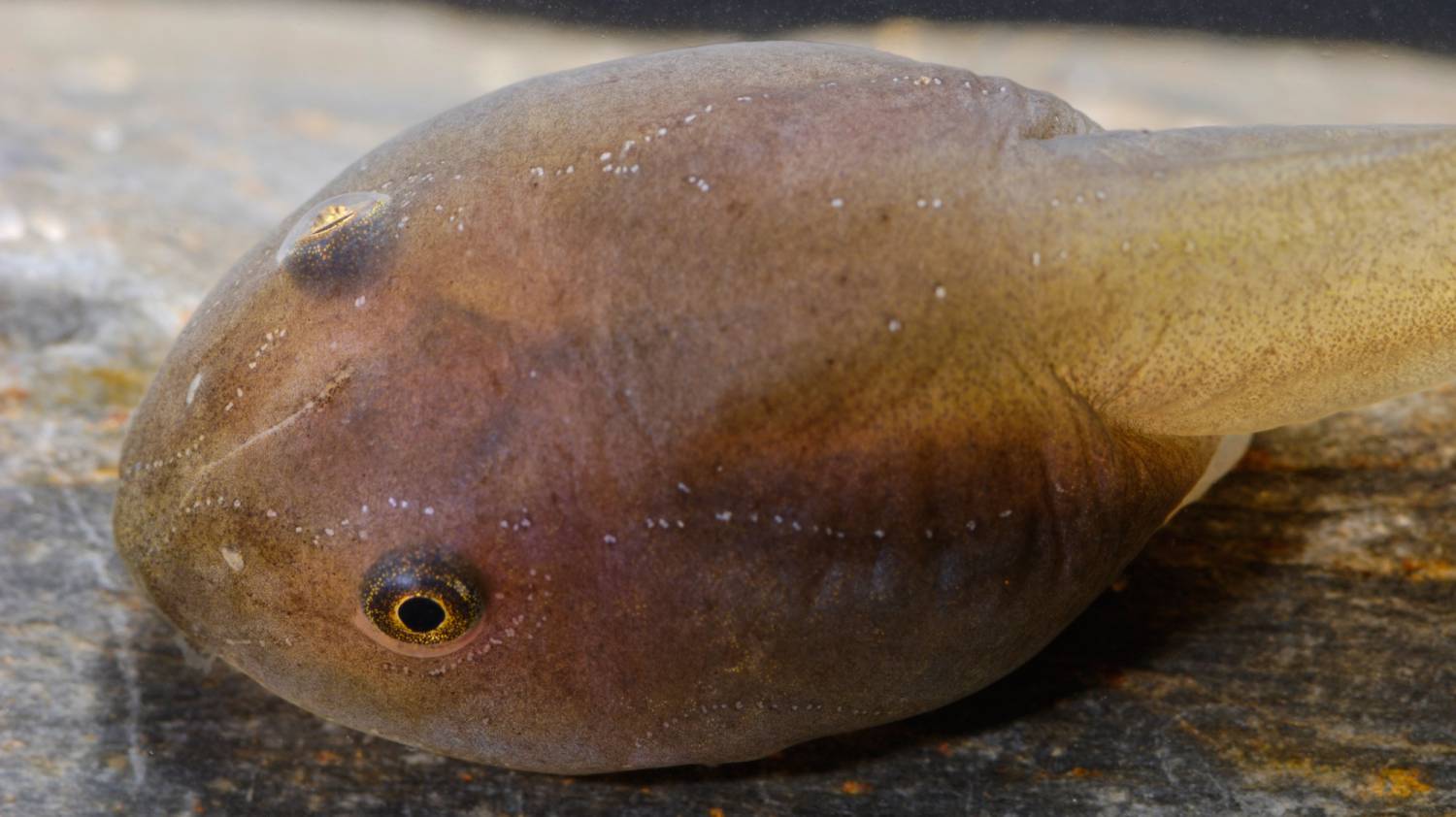
Medium to large. Body depressed, ovoid in lateral view, with trunk deeper than head region. In dorsal view, body outline broadly oval, with maximum width at the gill region. Spiracle sinistral. Spiracular tube opening posterolaterally and dorsally. Spiracular orifice relatively large, oval, and positioned well below the longitudinal body axis in lateral view. Medial margin of spiracular orifice attached to the abdominal wall. Lateral line organ visible.

Eyes & Nostrils

Eyes dorsolateral. Iris black, densely stippled with golden iridocytes; around the pupil, stippling forms a continuous ring. Sclera similarly stippled with silver and golden iridocytes on a dark background. In dorsal view, nostrils closer to the snout than to the eyes, opening anteriorly. Orbitonasal streak weak and indistinct.

Tail

Tail long, approximately 64–70% of total length. Muscular portion moderately strong. Upper fin originates at or slightly anterior to the trunk-tail junction. In lateral view, dorsal fin arched. Margins of both fins converge gradually into a narrowly rounded, acute tip. Upper fin higher than lower fin. Maximum tail height at approximately 45% of tail length. Lateral tail vein present but sometimes indistinct; myosepta likewise indistinct.

Similar Species

Tadpoles of Rhacophorus borneensis may be confused with those of R. nigropalmatus. Descriptions of R. nigropalmatuslarvae (e.g., Inger 1985) resemble specimens of R. borneensis. R. nigropalmatus differs in larger size, more robust body proportions (rendering the eyes proportionally smaller), a dorsal fin extending further anteriorly, and differences in LTRF and papillation pattern. Rhacophorus pardalis may be similar in general coloration; however, most (though not all) R. pardalis tadpoles exhibit high-contrast cheek markings. A sharply demarcated black distal portion of the tail, as observed in R. borneensis, is absent in both R. pardalis and R. nigropalmatus.

Literature

Males call from trees around forest ponds. The call is a rapid wooden knock, reminiscent of a woodpecker. We have observed males come gliding down from a tree and plunging into a pond. Mating Rhacophorus borneensis produce a foam nest on low vegetation overhanging the pond. Prefeeding development of the tadpoles takes place in the nest. Finally they make their way out through the bottom of the nest and drop into the pond below where they begin to feed.
Inger, R.F. (1985) Tadpoles of the forested regions of Borneo. Fieldiana Zoology new series 26: 1–89.