
Frogs of Borneo

Frogs of Borneo

Frogs of Borneo

Frogs of Borneo

Frogs of Borneo

Frogs of Borneo

Frogs of Borneo

Frogs of Borneo

Frogs of Borneo

Frogs of Borneo

Frogs of Borneo
File-eared Tree Frog
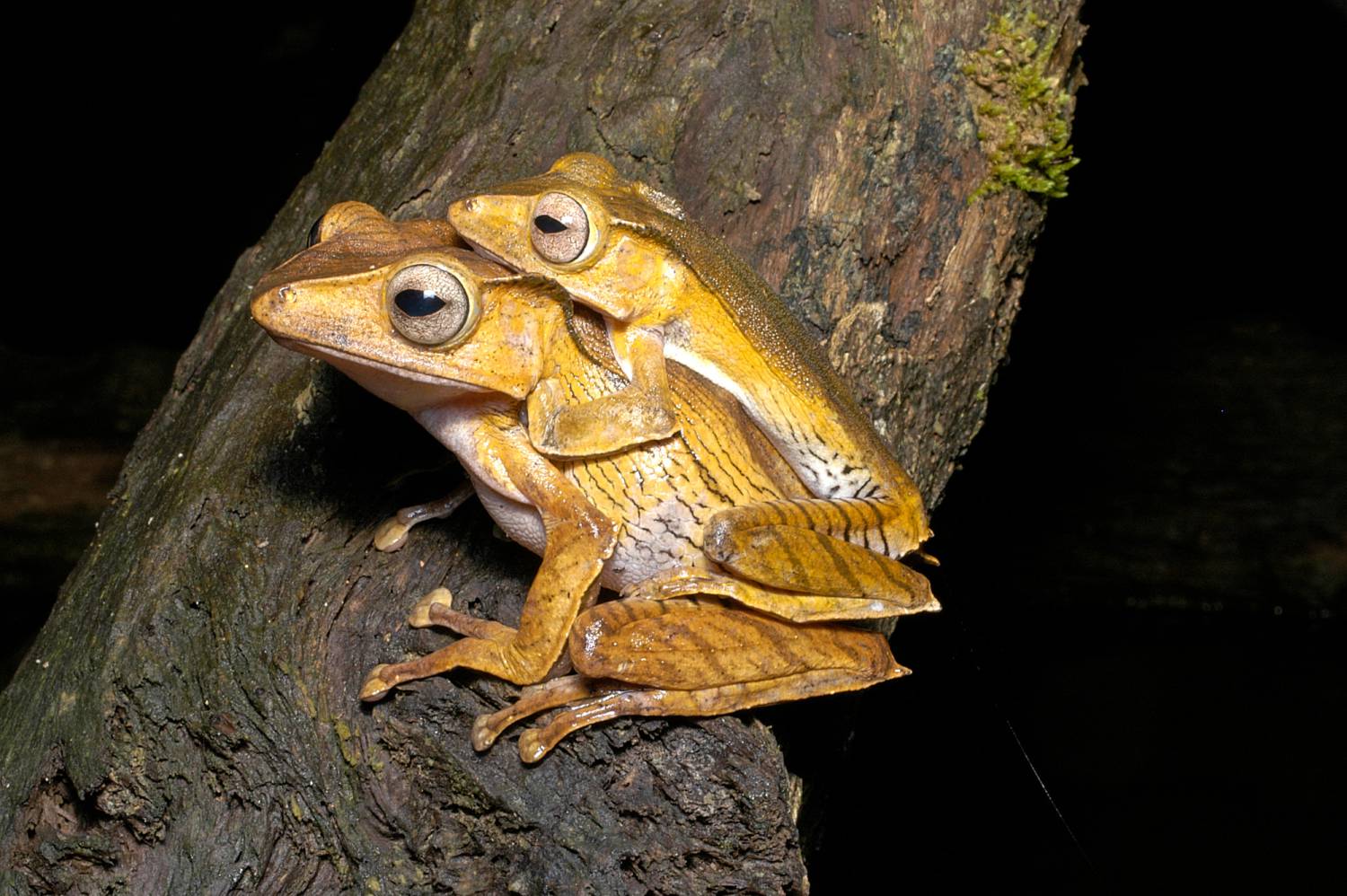
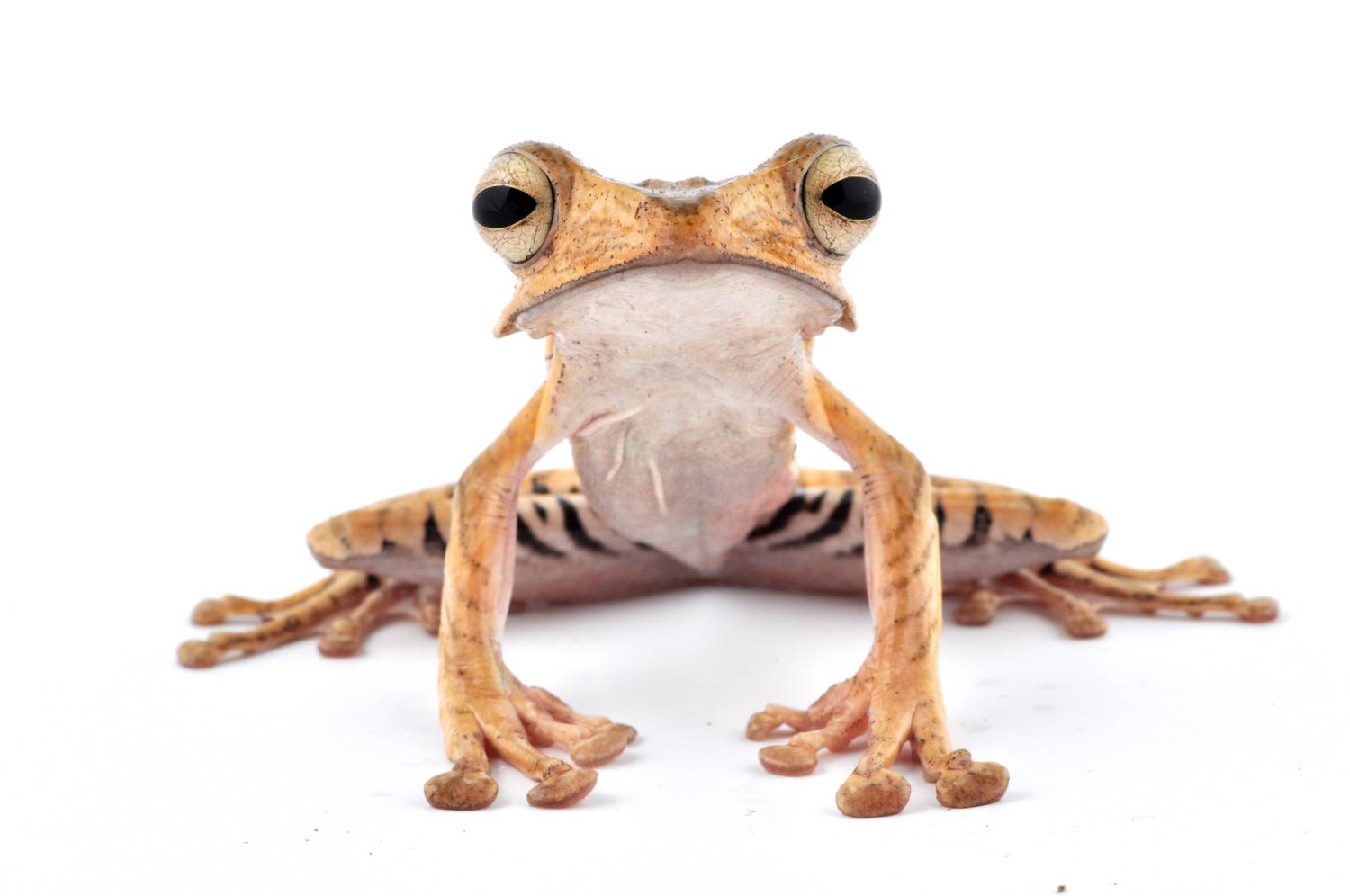
Polypedates otilophus is a spectacular tree frog. The type locality is “Bongon, N. Borneo”, Malaysia (Boulenger 1893). Although most frequently encountered in lowland habitats, individuals have been recorded up to 1,100 m a.s.l. The species emits a distinct and unpleasant odor. The features described below make it a unique and readily identifiable species in the field.
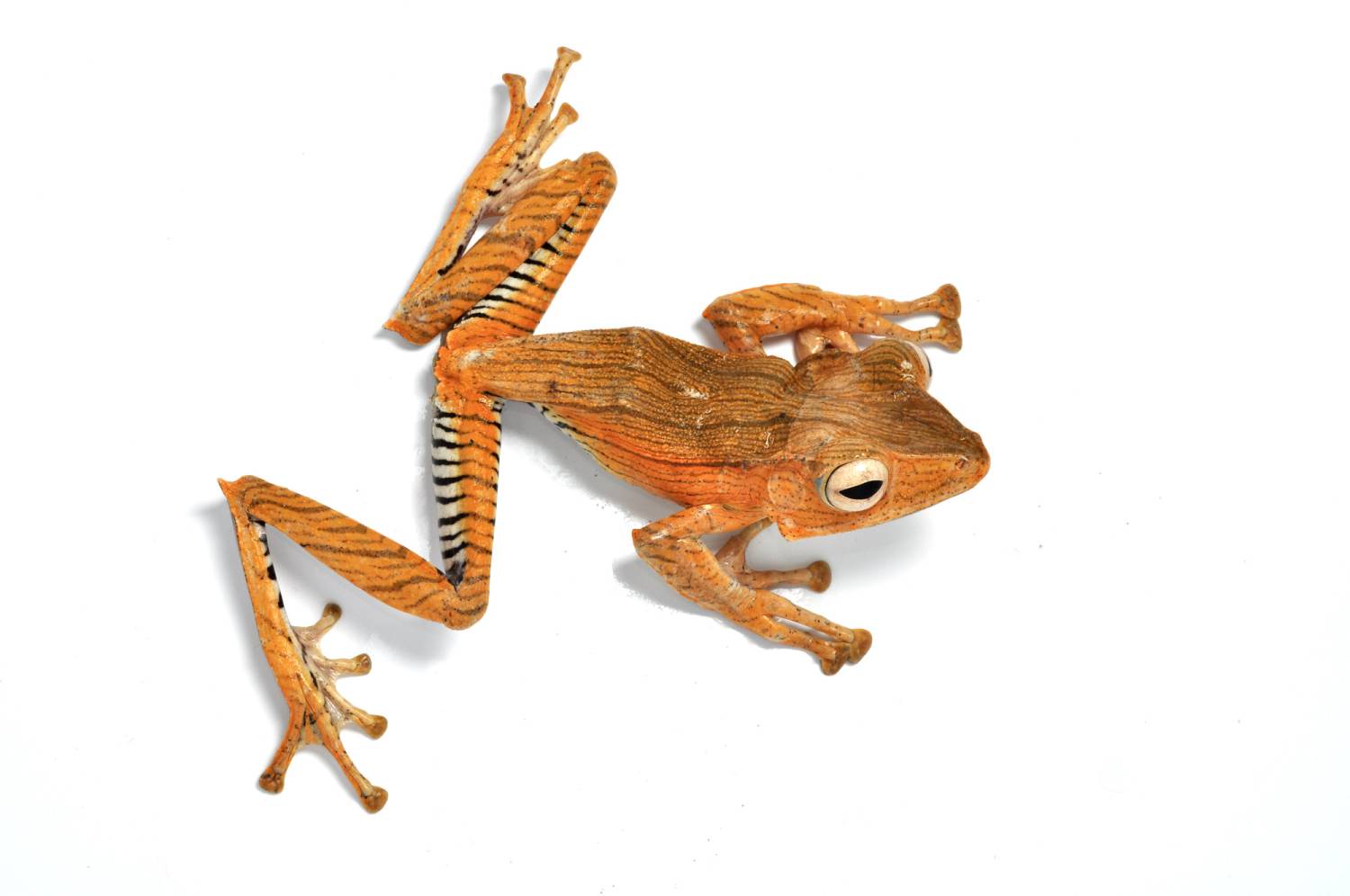
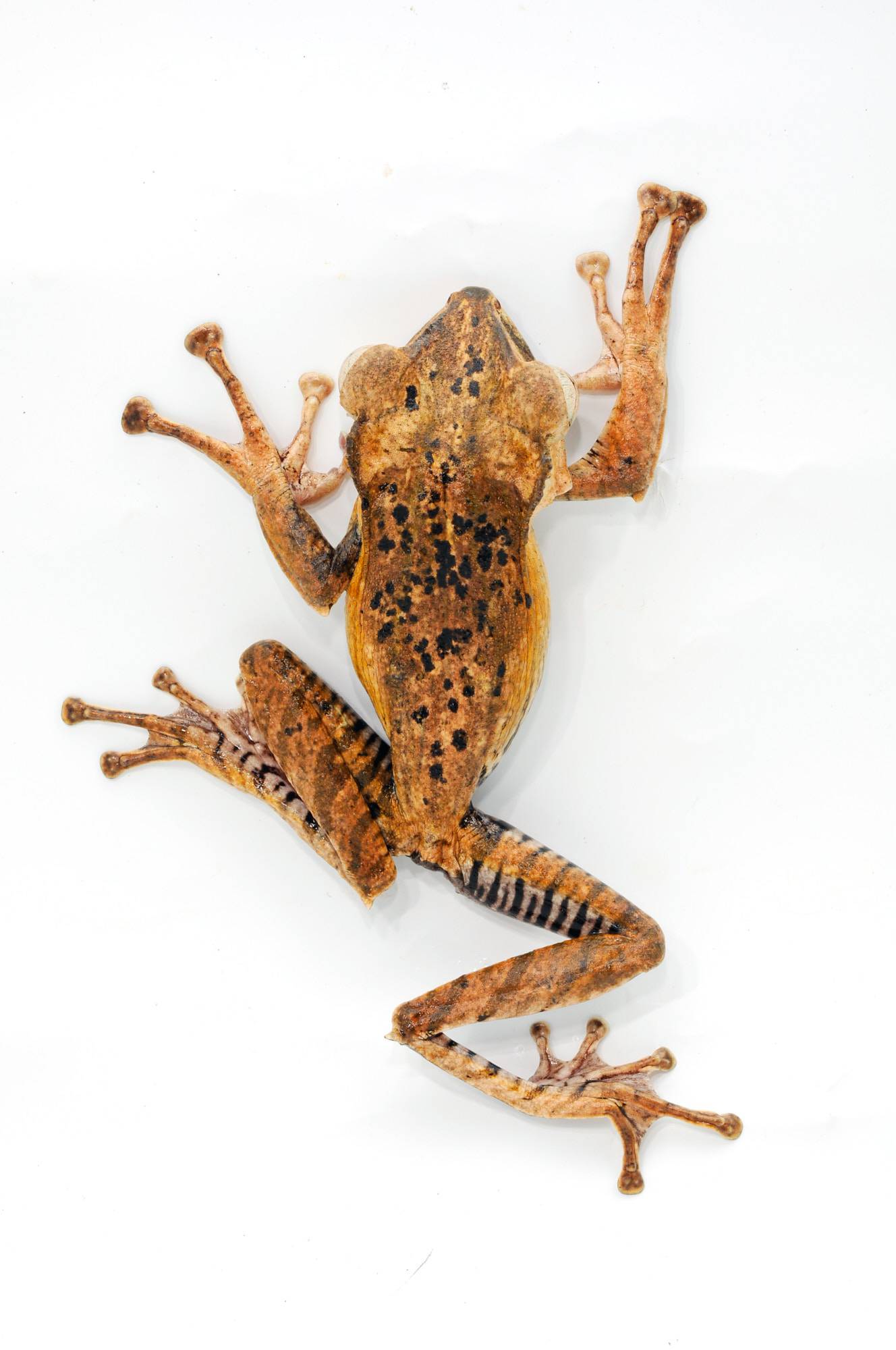
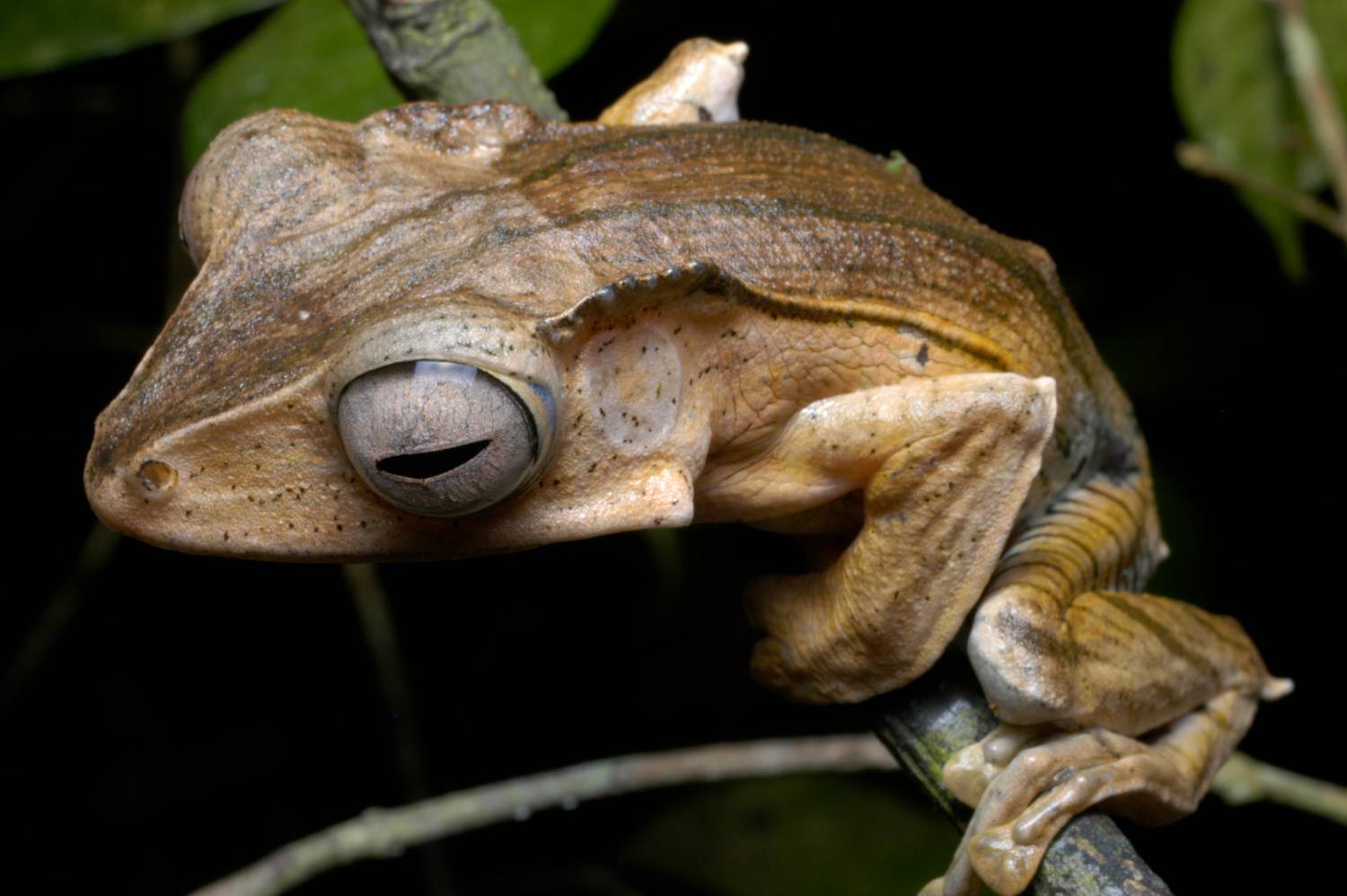
Males reach up to 80 mm and females up to 100 mm in snout–vent length. As expected for an arboreal species, the body is relatively slender, with long limbs, elongated digits, broad adhesive discs, and large, slightly forward-directed eyes. The head is notably large and triangular in dorsal view, with laterally projecting jaw angles that accentuate its width. A conspicuous, serrated bony crest rises above the eardrum. The canthus rostralis is sharp. The pupil is horizontal and elliptical, and the eardrum is large and distinct. The dorsal skin is smooth. Ridges of skin run along the outer edges of the forearms and feet, expanding into triangular projections at the elbow and heel.
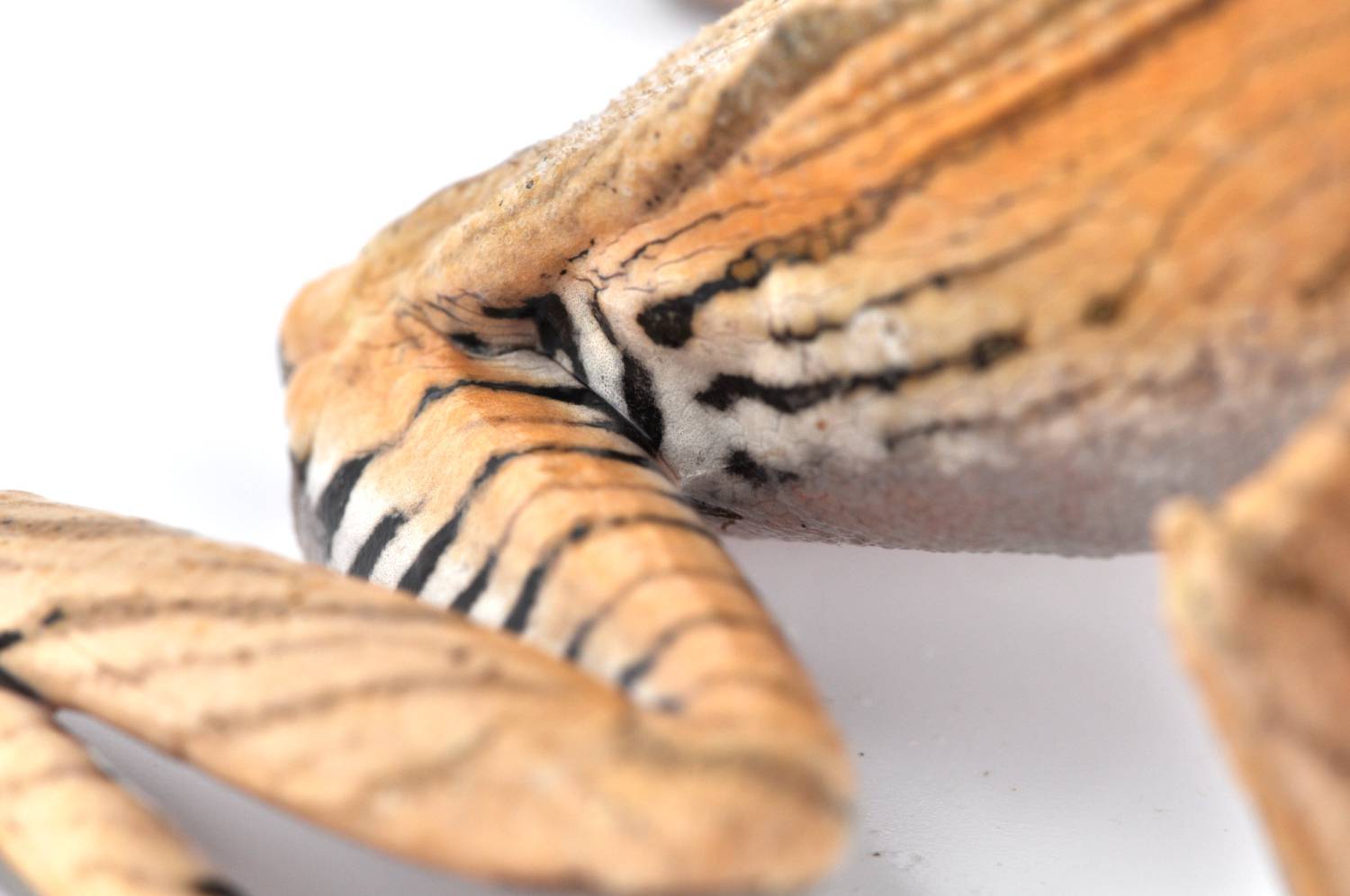
The dorsal coloration is typically yellowish brown to medium brown, sometimes with a slight reddish tint. The dorsal pattern may be finely striped or dotted. A hallmark character of the species is the bold black-and-white “zebra” pattern on the posterior thighs and groin. The ventral surface is whitish. The iris is very pale bronze to almost silver, with fine dark reticulation.
This frog is most often encountered at breeding sites, where adults perch 1–4 m above ground on vegetation. For reproduction, the species prefers stagnant forest pools—such as uprooted tree basins or pig wallows—with turbid, muddy water. Eggs are deposited in foam nests attached to branches or trunks overhanging the water. The call has been described by Inger et al. (2017) as "a series of slurred, rasping notes follwed by several "chucks""
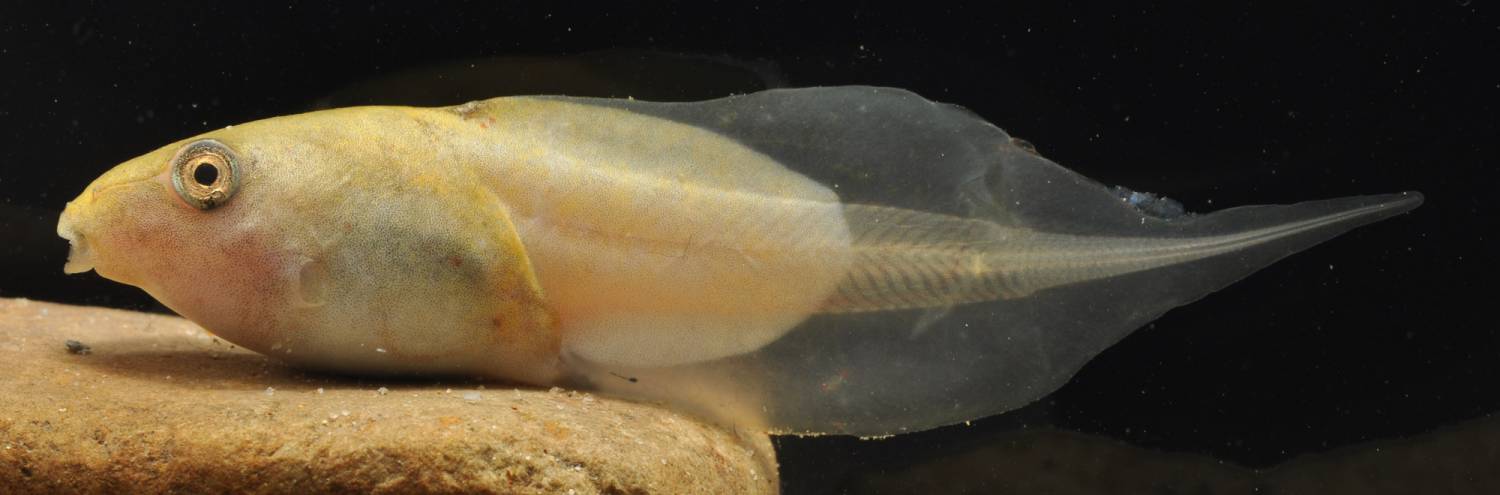
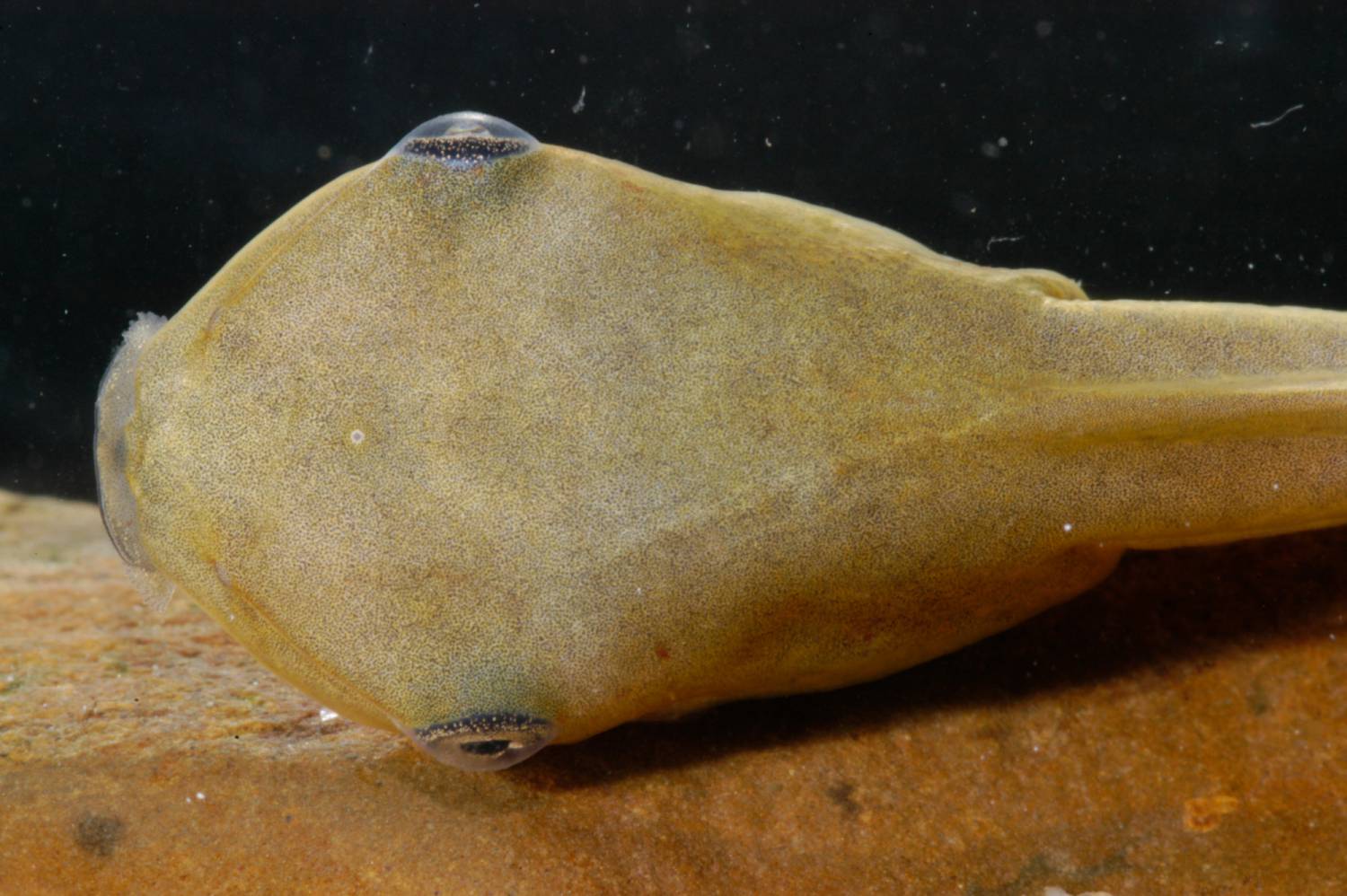
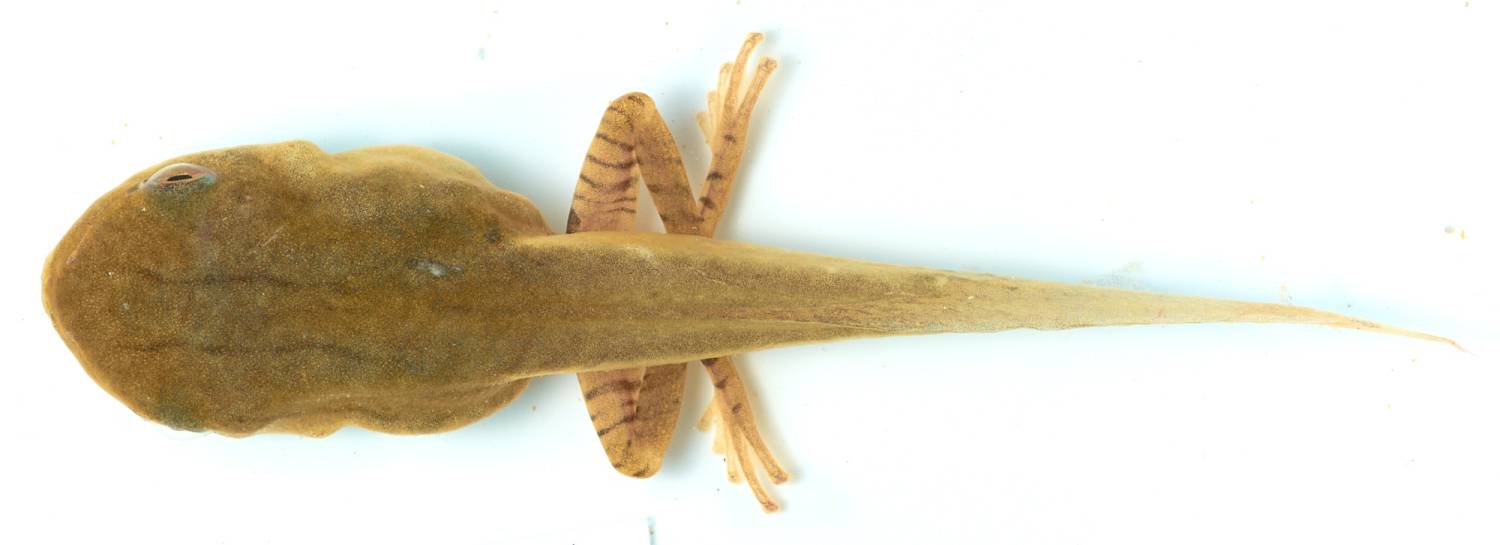
Tadpoles grow large, reaching up to about 60 mm in total length. They are uniformly greenish-grey above, with a white belly. The tail bears a distinct fleshy patch along the proximal half of its length (also in other Polypedates). During the day, tadpoles rest on the pond bottom; only occasionally do they rise briefly to the surface to take a gulp of air (sometimes watched closely by kingfishers). At night, tadpoles often move into more exposed positions and may float near the surface. At the slightest disturbance, they rapidly dart downward to hide among leaf litter and mud.